 Tampa Siding
 Why Carrollwood Siding Takes a Different Kind of Punishment
Carrollwood is one of the more established, tree-shaded communities in the Tampa area, and that mature oak canopy is a double-edged sword for siding. It keeps yards cool, but it also keeps siding wet longer after every afternoon storm, drops limbs and debris during wind events, and creates shaded, damp micro-climates where algae and mildew take hold on north- and east-facing walls. Add in the rest of what a Hillsborough County exterior deals with year-round — intense UV that bakes paint and caulk, wind-driven rain that gets pushed sideways into seams and trim, and the salt-laden humidity that reaches well inland from Tampa Bay — and you have a climate that is genuinely hard on exterior materials.
None of this means Carrollwood homes need constant siding work. It means the repairs that do come up need to be done correctly the first time, with materials and techniques suited to this specific climate, not a generic patch job. A repair that ignores moisture behavior or uses the wrong fastening approach usually fails again within a season or two, right in the same spot.
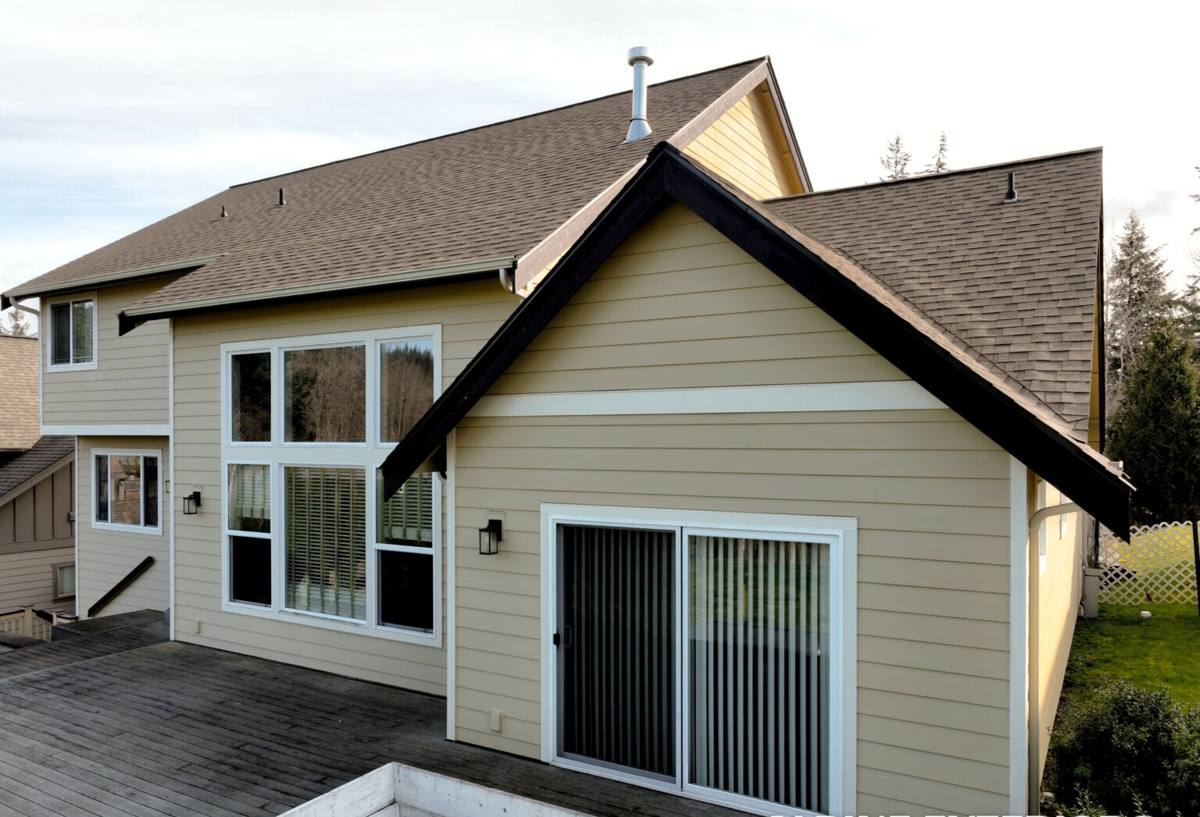
Signs Your Siding Needs Repair (Not Full Replacement)
Most siding problems we see in Carrollwood are localized — a section damaged by storm debris, a corner where moisture has been getting behind the boards, or trim that's separated from years of expansion and contraction in the Florida heat. Catching these early is what keeps a repair a repair instead of turning into a bigger project. Watch for:
- Cracked, chipped, or missing sections of siding, especially after a storm with heavy wind or falling debris
- Soft or spongy spots when you press on the siding near the bottom courses or around window and door trim
- Visible gaps at seams, corners, or butt joints where caulk has shrunk, cracked, or pulled away
- Streaking, dark staining, or a persistent mildew film that keeps coming back in shaded areas
- Paint that's chalking, peeling, or fading unevenly compared to the rest of the house
- Warping, buckling, or boards that no longer sit flush against the wall
- Interior clues — a musty smell, discoloration on interior drywall, or peeling interior paint on an exterior wall
Any one of these on its own is usually a straightforward repair. Several showing up together, especially with interior signs, often points to moisture that's been getting behind the siding for a while, which changes the scope of the work.
What a Correct Siding Repair Actually Involves
A siding repair that holds up in this climate is about more than swapping a damaged board for a new one. It starts with figuring out why that section failed in the first place — a flashing gap, a caulk joint that was never sealed properly, a fastening pattern that let water track behind the panel — and fixing that root cause, not just the visible symptom.
What's Underneath Matters More Than What's On Top
Every repair we open up gets inspected down to the water-resistive barrier and framing before anything new goes back on. If there's hidden rot, compromised sheathing, or a flashing detail that was done wrong originally, patching over it just hides the problem for another year. We repair what's underneath first, then rebuild the exterior layer correctly — proper house wrap or building paper overlap, correct flashing at any penetrations, and fasteners driven to the manufacturer's specification rather than just "close enough."
Matching the Existing Siding
If your home already has James Hardie siding, matching is straightforward — we can source the correct profile, exposure, and ColorPlus finish so the repaired section blends in rather than standing out as an obvious patch. If your home has an older material we don't install — vinyl, an older fiber cement brand, or painted wood — we'll be upfront that an exact match isn't always possible, and we'll walk you through the honest options: a careful color-matched repair now, or transitioning that section (or the whole elevation) to Hardie so future repairs actually match going forward.
Repair or Replace? How We Make That Call
Not every damaged section needs to become a full re-side, and we don't push replacement when a repair will genuinely hold. The decision usually comes down to a few factors:
| Factor | Points Toward Repair | Points Toward Replacement |
|---|---|---|
| Extent of damage | Isolated to one section or elevation | Spread across multiple walls |
| Underlying moisture | Localized, caught early | Widespread rot or long-term water intrusion |
| Age and condition of remaining siding | Siding is younger and structurally sound elsewhere | Siding is near end of life, chalking, or brittle throughout |
| Material on the house now | Existing Hardie siding, easy to match | Older or discontinued material that can't be matched well |
| Your plans for the home | Staying put, want to preserve current look | Planning to sell, or want a full warranty reset |
We'll always give you a straight answer on which side of that table your situation falls on, including when a repair is the right call even if a full replacement would be the bigger job for us.
Why We Repair (and Rebuild) With James Hardie Fiber Cement Only
When a repair calls for new siding material — whether it's a single damaged board or a larger section — we use James Hardie fiber cement exclusively. We don't install vinyl, LP SmartSide, or other fiber cement brands, and it's worth explaining why that matters for a repair specifically, not just a full install.
Fiber cement is non-combustible and dimensionally stable, so a Hardie patch doesn't expand and contract against the surrounding siding the way some materials do in Tampa's heat swings, which is one of the more common reasons a "repaired" seam opens back up. Hardie's ColorPlus factory finish is baked on and warrantied against fading, chipping, and cracking, so a properly matched repair keeps its color instead of visibly aging faster than the boards around it — a real problem with field-painted repairs on other materials. Hardie also engineers its siding by climate: the formulation used in Florida is built for constant humidity and pest exposure rather than freeze-thaw cycling, which is the actual condition Carrollwood siding lives in. And because Hardie backs its products with a strong, transferable warranty, a repair done with Hardie material stays inside that warranty coverage — patching with a mismatched or lesser material can complicate that.
Our Process for a Carrollwood Repair Call
- Inspection. We look at the damaged area and the surrounding siding, and check for moisture intrusion, hidden rot, or flashing issues before quoting anything.
- Honest scope. We tell you plainly whether it's a contained repair, a larger section, or something that's better addressed as a full re-side — and why.
- Material sourcing. For Hardie homes, we match plank profile, exposure, and ColorPlus color. For other materials, we explain your realistic matching options.
- Repair the cause, not just the symptom. Any compromised sheathing, house wrap, or flashing gets addressed before new siding goes back on.
- Install to spec. Correct fastener type and spacing, proper joint treatment, and manufacturer-specified clearances and sealant, not shortcuts that fail in a year.
- Final walkthrough. We show you the completed work and explain what we found and fixed underneath, so you're not left guessing.
Common Repair Scenarios We See Around Carrollwood
A few patterns come up often enough in this neighborhood's mix of home ages and tree cover that they're worth calling out specifically:
Storm and Debris Impact
Wind gusts and falling limbs from mature trees cause cracked or punched-through siding, usually concentrated on one side of the home facing the prevailing storm direction. These are typically clean, contained repairs if addressed before rain gets behind the damaged section.
Shaded-Wall Moisture and Growth
Walls that stay shaded most of the day dry out slower after rain, which shows up as recurring mildew staining or, in older siding, softening at seams. The fix usually includes addressing drainage and airflow around the affected section, not just cleaning and repainting.
Aging Trim and Caulk Failure
UV exposure breaks down caulk and sealant faster in Florida than in milder climates. Once a joint opens up, wind-driven rain finds its way in during the next storm. This is one of the most common "small job now, bigger job later" scenarios if it sits too long.
What Affects the Cost of a Siding Repair
Repair costs vary enough house to house that we won't quote a number without seeing the damage, but a few factors consistently drive the price up or down:
| Factor | Impact on Cost |
|---|---|
| Size of the damaged area | A single board or corner costs far less than a full section or elevation |
| Hidden moisture or rot | Repairs to sheathing or framing add labor and material beyond the visible siding |
| Height and access | Second-story or hard-to-reach areas take more time and equipment |
| Color and profile matching | Matching existing Hardie ColorPlus finishes is straightforward; matching discontinued materials can add cost or limit options |
| Underlying cause | Fixing a flashing or drainage issue properly costs more up front but avoids repeat repairs |
As a general rule, most contained repairs run in the low hundreds to a couple thousand dollars depending on those factors, while anything involving multiple sections or significant hidden damage starts to approach the cost of a partial re-side. We'll always break down what's driving the number before you commit to anything.
Why It Matters That We Already Work in Carrollwood
A crew that regularly works this neighborhood already knows what tends to fail here and why — which walls take the worst of the afternoon storms, how the tree canopy affects drying time, and what kind of exterior guidelines show up in Carrollwood's HOA and deed-restricted communities when it comes to matching color and material. That familiarity means fewer surprises, a faster and more accurate inspection, and a repair that's built for the conditions your specific home actually faces rather than a one-size-fits-all patch.
If you've got damaged, aging, or failing siding on a Carrollwood home, we're happy to take a look and give you a straight, no-pressure assessment of what it actually needs. Use the form below to request a free estimate — there's no obligation, and no upsell to a bigger job than what the siding calls for.