 Tampa Siding
 Why Land O' Lakes Homes Wear Differently Than You'd Expect
Land O' Lakes sits just north of Tampa in a part of the Tampa Bay region defined by its water — dozens of small lakes and ponds dot the landscape, which is exactly why the community got its name. That water table does something most homeowners never think about until it shows up as a problem: it keeps ambient humidity higher, longer, than areas further inland. Combine that with the same brutal Gulf Coast sun, afternoon thunderstorm pattern, and hurricane exposure the rest of the Tampa Bay area deals with, and you get a climate that's genuinely tough on exterior building materials — just with an extra moisture variable layered on top.
Siding here isn't decorative. It's the first line of defense against wind-driven rain, standing humidity, and UV that degrades weaker materials faster than most manufacturers' marketing admits. We've built our whole business around installing one product system that's engineered to handle it, and we want to walk through why — honestly, not with a sales pitch.
What the Local Climate Actually Does to Siding
Humidity and Moisture Exposure
Land O' Lakes' lake-dotted terrain means more evening dew, more standing humidity around foundations and landscaping, and slower drying times after storms than you'd get in a drier inland community. Siding materials that absorb moisture — or that trap it behind their surface — are working against the local environment from day one. Over years, that shows up as swelling, soft spots, warping, or paint failure, especially on north-facing walls and areas shaded by trees, which are common in this community's more established, tree-canopied neighborhoods.
UV and Heat
Central Florida sun is intense and close to year-round. Painted and coated surfaces chalk, fade, and break down faster here than almost anywhere in the continental U.S. A siding product's factory finish — how it's baked on, what it's made of, how it's warrantied against fading — matters more in Land O' Lakes than it would in a milder climate.
Wind and Storm Exposure
Hillsborough and Pasco County both sit in a hurricane-exposure zone. Wind-driven rain during tropical systems doesn't just fall — it gets forced sideways and upward under laps, seams, and trim if a siding system isn't installed with the right flashing, fastening, and clearances. Wind gusts also test how well a product holds its fasteners and resists cracking or blow-off over repeated storm cycles, not just one big event.
Salt Air Influence
While Land O' Lakes is further from the immediate coastline than some Tampa Bay communities, the broader region still sees salt-laden air move inland during onshore wind events, particularly ahead of and during tropical systems. Over time, that accelerates corrosion on fasteners, trim, and any material that isn't rated for it.
Why We Only Install James Hardie Fiber Cement
We get asked regularly why we don't offer vinyl, LP SmartSide, or other fiber cement brands like Cemplank or Allura. It's a fair question, and the honest answer is that we made a standard for ourselves based on what holds up in this exact climate, not what's cheapest to install or easiest to sell.
What We Don't Install, and Why
- Vinyl siding: It's affordable and low-maintenance in mild climates, but it softens and can warp under sustained heat, becomes brittle with age, and has a lower wind-load ceiling than fiber cement — a real concern in a hurricane-exposure zone. It also can't be painted a darker color in intense sun without risking heat-related warping.
- LP SmartSide (engineered wood): It performs well when installed and maintained perfectly, but it's a wood-based product — it needs consistent caulking, painting, and edge sealing to keep moisture out. In a humid, storm-prone climate like this one, that maintenance margin for error is thinner than we're comfortable standing behind.
- Primed spruce or cedar: Real wood siding is beautiful, but it's the most maintenance-intensive option in a high-humidity, high-UV environment, and it's the most vulnerable to moisture-related rot if upkeep slips even one season.
- Other fiber cement brands (Cemplank, Allura): These are legitimate fiber cement products, not junk. Our decision here is about product line depth, factory-finish warranty terms, and installation support in this market — not a claim that they fail in the field.
What James Hardie Gets Right for This Climate
James Hardie fiber cement is non-combustible, doesn't support pest damage the way wood-based products can, and is engineered specifically for high-moisture, high-heat climates through its HZ5 product line — built for exactly the humidity and storm exposure Land O' Lakes and the broader Tampa Bay area deal with. Its ColorPlus factory finish is baked on and warrantied against fading and chipping, which matters enormously under Florida sun. It carries a strong transferable limited warranty, which protects resale value if you sell the home down the road.
Hardie Product Lines We Work With
| Product | Best For | Notes |
|---|---|---|
| HardiePlank lap siding | Most homes, traditional look | Available in smooth or cedar-textured finish |
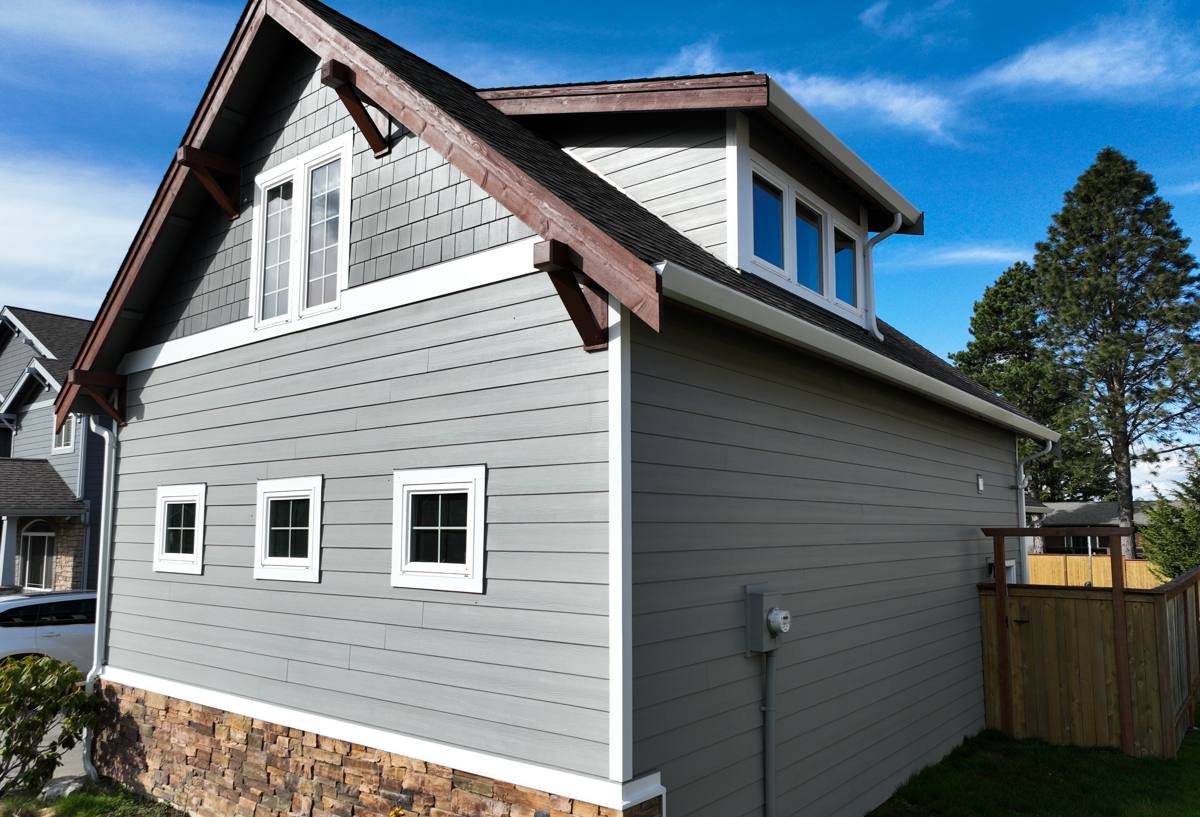
| HardieShingle | Accent areas, gables, dormers | Staggered or straight-edge panel options |
| HardiePanel | Modern/vertical siding looks | Often paired with board-and-batten trim |
| HardieTrim | Corners, window and door surrounds | Matches ColorPlus finish system |
What Correct Installation Actually Involves
Fiber cement is only as good as its installation. A large share of the siding failures we get called out to inspect on other contractors' work trace back to installation shortcuts, not the product itself. In a Land O' Lakes climate, the details that matter most are:
- Proper starter strip and clearance from grade, roofing, and decking to prevent wicking moisture
- Correct nail placement and fastening pattern rated for local wind exposure
- Weather-resistant barrier and flashing detail at every window, door, and penetration
- Sealed, painted cut edges on every field cut — factory finish alone doesn't protect a raw cut edge
- Proper lap and joint spacing to allow for expansion without gapping or cracking
These aren't optional refinements. They're the difference between siding that holds up through a decade of Gulf Coast storm seasons and siding that needs early repair.
Beyond Siding: Roofing, Windows, and Decks
Siding rarely fails in isolation. A roof that's shedding water poorly, windows with failed flashing, or a deck ledger that's trapping moisture against the house all put extra stress on the wall system next to them. Because we handle roofing, windows, and decks in addition to siding, we look at a home's exterior as one connected system rather than a single component — which matters in a climate where water finds every weak transition point during a storm.
Why a Local Crew Matters Here
A crew that works this area regularly knows what Land O' Lakes and the greater Tampa Bay market actually throws at a home: the storm season timing, the humidity patterns tied to the area's lakes and low-lying terrain, and the kind of tree canopy that keeps certain walls shaded and slower to dry. That's not something a crew unfamiliar with the region picks up on a single job. It affects where extra flashing attention goes, how a job gets sequenced around Florida's summer storm pattern, and what maintenance advice actually applies to your specific lot.
What Drives Cost on a Land O' Lakes Siding Job
| Factor | Why It Matters |
|---|---|
| Home size and wall complexity | More corners, gables, and trim detail increase labor and material |
| Extent of substrate repair | Rotted sheathing or framing found during tear-off adds cost but shouldn't be skipped |
| Product line and texture selection | Shingle or panel accents typically cost more per square foot than straight lap |
| Color and finish choice | Factory ColorPlus finish vs. field-painted affects both cost and long-term fade performance |
| Access and site conditions | Tree cover, fencing, and lot layout affect setup time and equipment needs |
A Practical Checklist Before You Hire
- Ask what siding brand and product line they're quoting, specifically — not just "fiber cement"
- Confirm they'll replace and paint every field-cut edge, not just factory edges
- Ask how they handle flashing at windows, doors, and roof-to-wall transitions
- Check that their fastening pattern is rated for local wind exposure, not a generic minimum
- Get the manufacturer's warranty terms in writing, including whether it's transferable
- Ask how they sequence work around Florida's summer storm season
If your siding is showing early wear, or you're planning ahead of the next storm season, we're happy to take a look and walk you through what we see — no pressure, no obligation. Reach out for a free estimate using the form below.