 Tampa Siding
 What LP SmartSide Actually Is
LP SmartSide is an engineered wood siding product made from wood strands, resin, wax, and zinc borate, pressed and formed into panels or lap boards, then primed at the factory. It's a step up from the plain OSB (oriented strand board) you'd see in construction sheathing, and LP treats it with what they call SmartGuard, a process meant to improve resistance to moisture, fungal decay, and termites. It's a real product with a real place in the market, and plenty of homes across the country wear it without issue.
Homeowners in Tampa ask us about it because it's widely marketed, generally cheaper than fiber cement, and easy to find at building supply stores. We get the appeal. But we don't install it, and we think you deserve the actual reasons why, not a sales pitch against a competitor's product.
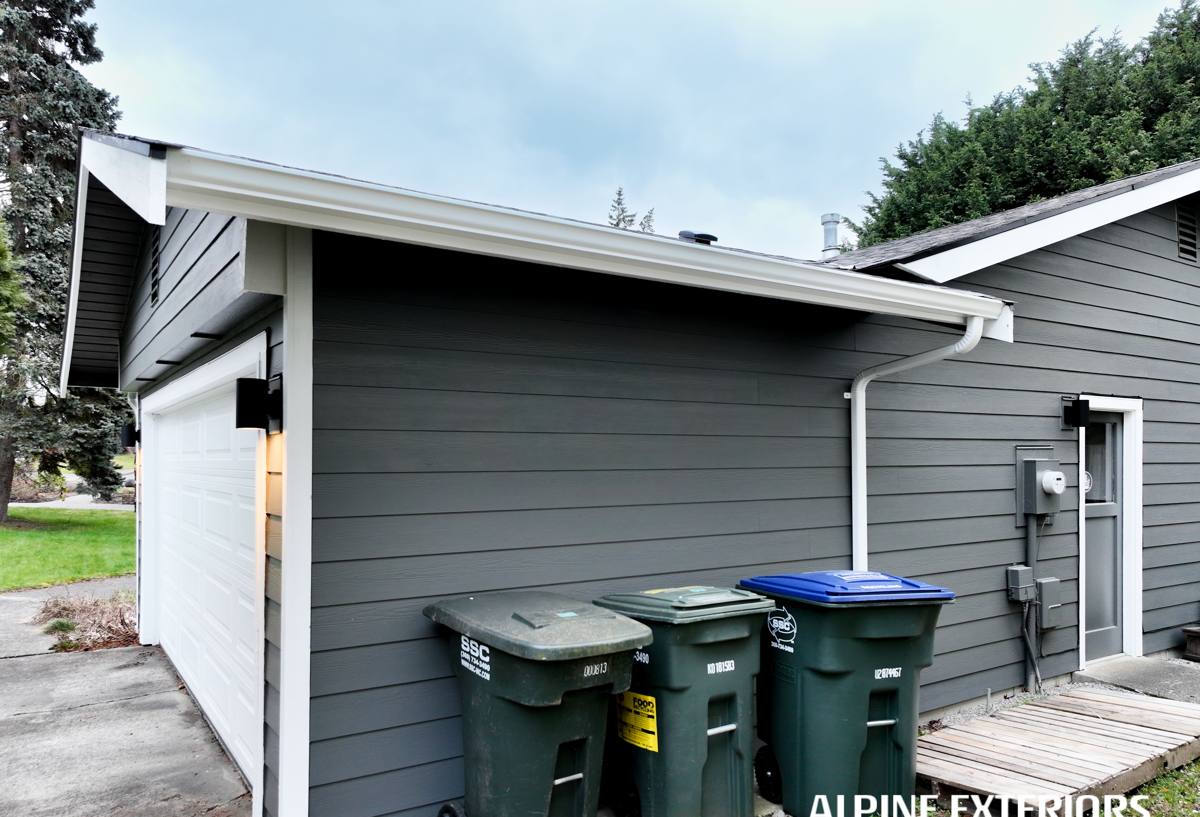
What LP SmartSide Gets Right
To be fair to the product: it's lighter than fiber cement, which makes it easier and faster to handle and cut on site. It holds a nail well, takes paint reasonably, and has a workable, wood-grain texture that some homeowners like for a traditional look. LP backs it with a warranty that, on paper, is competitive. For a contractor who wants speed and lower material cost, and for a climate that isn't constantly testing the seams, it can be a reasonable choice.
None of that is in dispute. The issue isn't whether LP SmartSide can perform — it's whether it performs reliably in a climate like ours, installed by crews working at production pace, over a 20- or 30-year ownership horizon.
The Core Trade-Off: It's Still Wood
Strip away the branding and the treatment process, and LP SmartSide is a wood-based product. Wood-based products absorb moisture. When wood strands take on water, they swell; when they dry, they shrink. Do that cycle enough times, especially at cut edges, fastener holes, and seams where the factory coating doesn't reach, and you get the classic failure pattern engineered wood siding is known for: edge flare, delamination, soft spots, and paint failure at the joints.
Fiber cement, which is what we install, doesn't have that vulnerability. It's cement, sand, and cellulose fiber, cured into a rigid board that doesn't swell and shrink with moisture the way wood does. That single material difference is the whole reason this page exists.
Why Installation Sensitivity Matters Here
LP SmartSide's own installation instructions are strict for a reason: every cut edge, every fastener penetration, every joint has to be sealed and primed correctly, every time, or the manufacturer's warranty coverage narrows and the water-intrusion risk goes up. That's manageable in a dry climate with occasional rain. It's a much higher bar in Tampa, where:
- Afternoon thunderstorms are a near-daily occurrence for much of the year, so the window for a crew to seal a fresh cut before it's rained on is short.
- Wind-driven rain during tropical systems and hurricane season doesn't fall straight down — it gets pushed sideways and upward into laps, seams, and fastener lines that would stay dry in a calmer climate.
- High year-round humidity means wood-based products spend more time near their moisture threshold to begin with, so there's less margin for a missed seal or a skipped detail.
We're not saying every LP SmartSide job in Hillsborough County fails. We're saying the product's performance is more dependent on perfect field execution than fiber cement is, and we'd rather install a material that isn't asking for perfection from every worker on every board, on every house, for the life of the warranty.
Fire, Wind, and Salt Air: The Local Factors
Three things about our part of Florida shape how we think about exterior materials specifically:
Wind and windborne debris
Tampa sits in a hurricane-exposed wind zone, and the Florida Building Code holds coastal Hillsborough County construction to a high standard for wind and impact performance. Fiber cement's density and rigidity give it strong resistance to wind-driven debris impact compared to lighter wood-based panels, which matters when a storm is throwing branches and yard debris at your walls at 90-plus miles an hour.
Combustibility
Fiber cement is non-combustible. LP SmartSide, as a wood-based product, is not, even with its treatment process. For homeowners who weigh fire exposure — brush fires, neighboring structure fires, or simply wanting one less combustible material on the exterior of the home — that's a meaningful, factual difference, not a scare tactic.
Salt air and UV
We're not immediately coastal in most of Tampa, but salt-laden air still reaches well inland from Tampa Bay, and it accelerates wear on coatings and fasteners across the whole region. Combine that with intense, nearly year-round UV exposure, and any exterior finish here is under more stress than the same product would face in a milder climate. A factory-cured finish holds up to that combination differently than a field-painted, moisture-sensitive substrate does.
Finish and Long-Term Maintenance
This is where the ownership cost really shows up. LP SmartSide comes primed, not finish-painted — you or your contractor apply the topcoat after installation, and that paint job is what's actually protecting the wood substrate underneath. Paint on any exterior wood product has a service life, and in Tampa's UV and humidity combination, that clock runs faster than it would up north. When the paint film starts to fail, especially at seams and edges, the underlying wood strand material is exposed to exactly the moisture cycling that causes swelling and delamination.
James Hardie's ColorPlus finish is baked on at the factory under controlled conditions, engineered specifically to hold color and resist cracking and fading longer than field-applied paint on wood substrates. It's not that painted wood siding can never look good for years — it's that the maintenance interval and the consequence of falling behind on it are both worse with a moisture-sensitive substrate underneath.
LP SmartSide vs. James Hardie Fiber Cement
| Factor | LP SmartSide (Engineered Wood) | James Hardie (Fiber Cement) |
|---|---|---|
| Core material | Wood strands + resin, zinc borate treated | Cement, sand, cellulose fiber |
| Moisture behavior | Absorbs water; swells/shrinks if seals fail | Dimensionally stable; doesn't swell with moisture |
| Combustibility | Combustible (wood-based) | Non-combustible |
| Factory finish | Primed only; field paint required | ColorPlus baked-on finish available |
| Installation sensitivity | High — every cut edge/fastener must be sealed | Lower — cement core isn't moisture-reactive |
| Wind/impact resistance | Good for a wood-based panel | Strong; dense, rigid board |
| Typical repaint interval | Shorter, UV and humidity dependent | Longer with factory ColorPlus finish |
| Warranty structure | Manufacturer warranty, install-dependent | Strong transferable warranty when installed to spec |
Why We Standardized on James Hardie
We made a decision, some years back, to stop offering a menu of siding materials and instead install one system correctly: James Hardie fiber cement. Part of that decision was climate-driven — a non-combustible, moisture-stable board with a factory finish is simply a better match for Hillsborough County's combination of heat, humidity, wind-driven rain, and storm exposure than a wood-based product asking for flawless field sealing on every house we touch.
Hardie also builds climate-specific product lines — their HZ5 formulation is engineered for regions like ours with higher humidity and moisture exposure, which is a level of climate-matching most engineered wood products don't offer. Combined with a strong, transferable warranty when the installation is done to Hardie's specification, it's the system we're willing to put our name behind for the long haul, not just for the first few years after installation.
This isn't a knock on every homeowner who has LP SmartSide on their house today. It's a statement about what we, as a company, are willing to install and stand behind in this specific climate.
Checklist: Questions to Ask Before Choosing an Engineered Wood Siding
- Will every cut edge and fastener penetration be factory-primed or field-sealed before it's exposed to weather, with no exceptions?
- What is the manufacturer's warranty position if a seal or edge treatment is skipped or done incorrectly?
- Who is responsible for repainting down the road, and what's the realistic interval for this climate — not the manufacturer's best-case estimate?
- Is the product rated non-combustible, and does that matter for your insurance or personal risk tolerance?
- How does the installer plan to handle wind-driven rain exposure on the sides of the home that face prevailing storm direction?
- What does the transferable warranty actually cover if you sell the home in 10 or 15 years?
If you're weighing siding materials for a home in Tampa or elsewhere in Hillsborough County, we're happy to walk through what we see in this climate and why we install James Hardie the way we do. Reach out for a free, no-pressure estimate — we'll look at your home, not a brochure.