 Tampa Siding
 What Is Cemplank, and Why Does It Come Up?
If you've gotten more than one siding quote in the Tampa Bay area, there's a decent chance one of them included Cemplank. It's a fiber cement siding product, similar in basic composition to James Hardie — a blend of Portland cement, sand, and cellulose fibers pressed into planks and panels. It's sold through many of the same building supply distributors that carry Hardie, and some contractors like it because it's often priced a step below Hardie's product line.
We get asked about it often enough that it's worth a straight answer: we install James Hardie fiber cement exclusively, on every siding job we take on in Hillsborough County. This page explains what Cemplank does well, where it falls short of what we're willing to put our name behind, and why Hardie is the only fiber cement system we install.
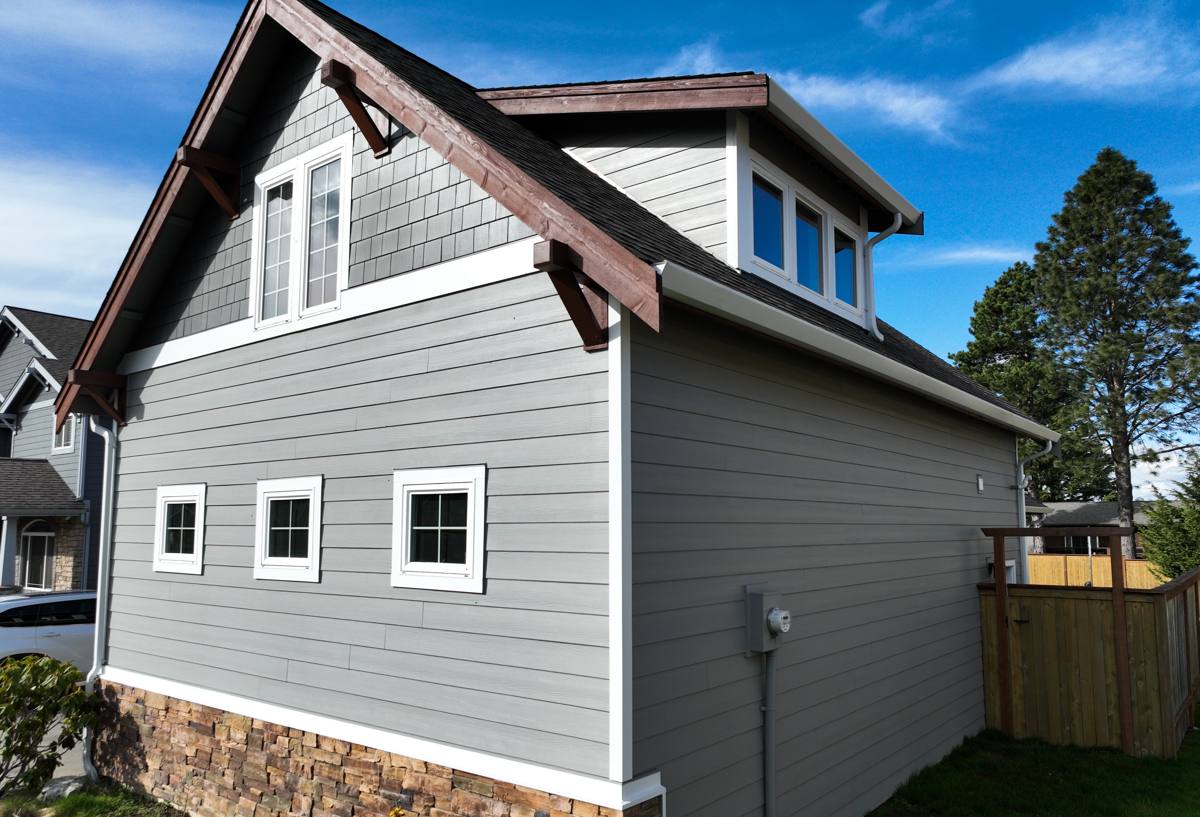
Where Cemplank Gets It Right
To be fair to the product, fiber cement as a category is a real upgrade over wood, vinyl, or engineered wood siding for a climate like ours. Cemplank shares the core advantages of fiber cement:
- It's non-combustible, which matters for insurance ratings and fire safety alike.
- It doesn't rot, warp, or attract termites the way wood and wood-composite siding can.
- It holds paint and takes texture better than vinyl, giving it a more authentic wood-grain or smooth-finish look.
- It stands up to wind-driven rain far better than vinyl lap siding, which can flex and let water track behind it in a bad storm.
None of that is marketing spin — it's genuinely true of fiber cement as a material class, Cemplank included. If the only question were "wood fiber cement vs. everything else," Cemplank would be a reasonable answer. The question we actually have to answer, though, is which specific fiber cement system we're willing to install and stand behind for the next 30-plus years on a Tampa roofline.
Why We Don't Install It on Tampa Homes
Factory Finish Coverage and Color Consistency
James Hardie's ColorPlus finish is baked on in a controlled factory environment, cured, and backed by a dedicated finish warranty separate from the product warranty itself. Cemplank's factory-finish color program is narrower, and a larger share of Cemplank installations end up field-painted after the fact — which shifts the finish quality, and the finish warranty, onto whatever paint and labor go into that job site. In a climate that gets this much direct UV exposure and this much wind-driven rain, a factory-cured finish with its own backed warranty is not a small detail. It's the difference between a color that fades evenly (or not at all, if it's holding up correctly) and one that chalks, streaks, or needs a repaint inside a decade.
Climate-Engineered Product Lines
James Hardie builds region-specific formulations — engineered for humid, high-moisture climates like the Gulf Coast — with different moisture and mold resistance profiles than the versions sold in drier parts of the country. Cemplank's product line doesn't offer that same level of regional engineering. Fiber cement is fiber cement at a basic chemistry level, but Hillsborough County's combination of near-constant humidity, salt air drifting in off Tampa Bay, and a hurricane season that runs six months a year is exactly the environment where those engineering differences show up over time, not on day one.
Warranty Structure and Transferability
James Hardie backs its siding with a long, clearly documented warranty that's transferable to a subsequent homeowner — a real factor when a house eventually sells. Cemplank's warranty terms and transfer process are less standardized in the market, and because it moves through fewer certified-installer programs, the paper trail a homeowner needs to make a warranty claim years down the road is often thinner. We'd rather hand a client a warranty book with a well-known name on it and a process we've used before than explain, five years after the fact, why a claim is complicated.
Installer Network and Specification Support
James Hardie runs a formal contractor certification program — training on fastener patterns, clearances, flashing details, and joint treatment specific to their product. That training pipeline, plus a large installed base across Florida, means specification questions have known answers and inspectors have seen the product hundreds of times before. Cemplank simply doesn't have the same depth of installer training infrastructure behind it, which means more of the installation quality rides on a given crew's general fiber cement experience rather than product-specific training. Fiber cement is forgiving of good workmanship and unforgiving of bad workmanship — cut it wrong, gap it wrong, or fasten it wrong and moisture problems follow. We don't want to be guessing on specification details for a coastal-exposure product with less documented support behind it.
Cemplank vs. James Hardie at a Glance
| Factor | Cemplank | James Hardie |
|---|---|---|
| Base material | Fiber cement | Fiber cement |
| Factory-applied finish | Limited color program; more field-painting | ColorPlus factory finish, wide color range |
| Finish warranty | Varies, often tied to paint contractor | Dedicated factory finish warranty |
| Climate-specific engineering | Single general formulation | HZ5 and other zone-engineered lines for humid/coastal climates |
| Installer certification program | Limited | Formal certified contractor program |
| Warranty transferability | Less standardized | Documented, transferable to new owners |
| Market presence in Florida | Smaller | Widely installed, well known to inspectors and appraisers |
What Hillsborough County's Climate Actually Demands
Tampa siding doesn't get an easy life. Between hurricane-season wind loads, wind-driven rain that finds any weak seam or gap, salt air drifting in from the Bay that accelerates corrosion on fasteners and trim, and UV exposure that runs strong essentially year-round, siding here ages faster than the same product would in a milder climate. That's exactly why the gap between "fiber cement" as a category and a specific engineered, factory-finished, warranty-backed fiber cement system matters more here than it would in, say, the upper Midwest. A product that's a reasonable choice in a drier, cooler market can be a marginal choice on a Gulf Coast roofline.
We're not saying Cemplank will fail on a Tampa home. We're saying that when we're the ones specifying fastener patterns, flashing details, and finish quality for a 30-year exterior, we want the deepest bench of climate-specific engineering, factory finish backing, and installer training we can put behind that decision — and for us, that's James Hardie.
What We Install Instead: James Hardie
Every siding job we take on uses James Hardie fiber cement, specified for our climate zone. That means:
- ColorPlus factory-finished panels and lap siding, cured and warrantied before they ever reach the job site.
- HZ product lines engineered for humid, high-moisture, coastal-adjacent climates like ours.
- A documented, transferable warranty that follows the house, not just the original owner.
- Installation to Hardie's published fastener, clearance, and flashing specifications — the details that actually determine whether siding lasts 10 years or 40.
It's a narrower product lineup than if we installed three or four fiber cement brands. That's intentional. We'd rather be excellent at installing one system correctly than spread thin across several, guessing at spec differences between them.
A Practical Checklist for Comparing Fiber Cement Quotes
If you're getting multiple siding quotes and want to compare fiber cement options honestly, ask each contractor:
- Is the finish factory-applied and warrantied, or will it be field-painted after installation?
- Is the specific product line engineered for humid or coastal climates, or is it a general-purpose formulation?
- Is the installer certified by the manufacturer for this specific product?
- Is the warranty transferable if you sell the home, and what's the actual claims process?
- How widely is this product used and inspected in your county — will an appraiser or inspector recognize it?
The answers to those five questions will tell you more about long-term value than the quoted price per square foot.
Cost Factors Worth Weighing
Cemplank often prices below James Hardie on the material line item, and that's real — it's not a myth. But the full cost comparison over the life of the siding includes more than the initial material price: repaint cycles if the finish isn't factory-cured, the value of a transferable warranty at resale, and the labor cost of correcting installation issues on a product with less specification support behind it. None of those show up on the initial quote, but they show up eventually. We'd rather walk a homeowner through that full picture up front than let a lower number on day one turn into a bigger number in year eight.
If you're weighing siding options for a home in Tampa or elsewhere in Hillsborough County, we're glad to walk through what we install, why, and what it would look like on your specific house. Reach out for a free, no-pressure estimate — no obligation, just a straight answer about what your home actually needs.