 Tampa Siding
 What Is Primed Spruce Siding?
Primed spruce siding is solid wood lap siding, typically finger-jointed or clear spruce boards that arrive from the mill with a factory or site-applied primer coat. It's meant to be a base layer only — the homeowner or contractor still has to apply a full exterior paint system after installation. For decades it was one of the default choices for traditional lap siding because the material was affordable, easy for crews to cut and nail, and gave homes a genuine wood-grain look that some other products only imitate.
We get asked about it fairly often, especially on older Tampa homes and bungalows in neighborhoods like Seminole Heights and Hyde Park where wood siding was the original material. We want to be upfront about why we don't install it anymore, and what we install instead.
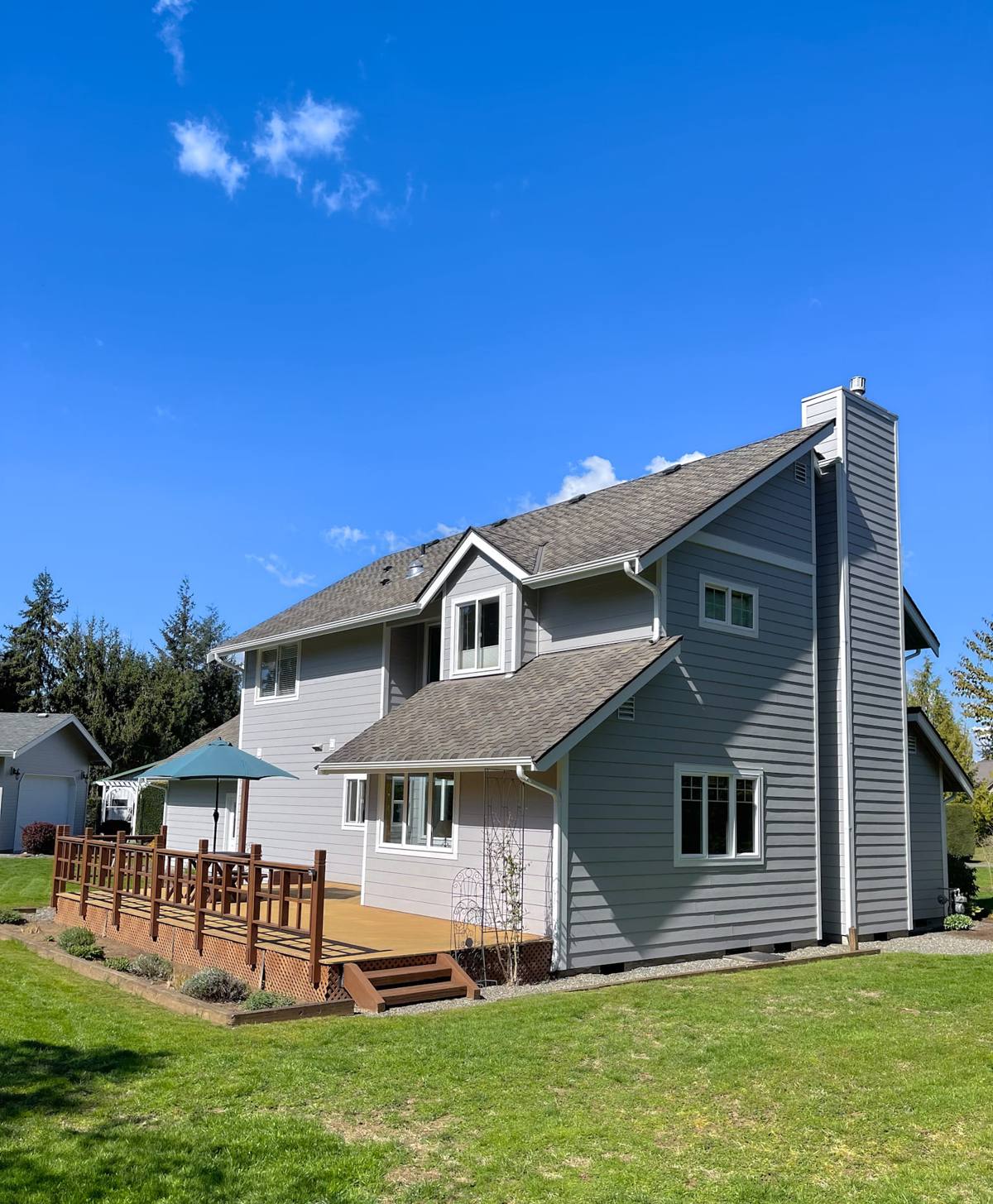
What Primed Spruce Siding Gets Right
Before we get into the trade-offs, it's worth saying plainly what this product does well, because it's not a bad material — it's a material that's a poor match for this specific climate.
- It's real wood, with the grain, texture, and slight imperfections that some homeowners specifically want, especially on historic or craftsman-style homes.
- Material cost is generally lower than most engineered or fiber cement alternatives.
- It's easy to field-cut, notch, and repair with common carpentry tools.
- Damaged sections can often be patched or replaced piece by piece rather than requiring a full panel swap.
For a mild, dry climate with moderate humidity, primed spruce can perform reasonably well for years with diligent upkeep. Tampa isn't that climate.
Why Tampa's Climate Puts Primed Wood Siding to the Test
Hillsborough County sits in a subtropical zone with a rare combination of stressors working on exterior wood at the same time, year-round, not just during storm season.
Year-Round UV Exposure
Tampa gets intense sun exposure nearly every month of the year. UV radiation breaks down paint and primer film over time, causing chalking, cracking, and eventually loss of adhesion. Once the finish coat starts to fail, the primer underneath — and the bare wood behind it — is exposed directly to moisture.
Humidity and Wind-Driven Rain
Wood siding relies on its finish system to keep moisture out. Tampa's humidity keeps ambient moisture content elevated most of the year, and hurricane-season squalls drive rain sideways into laps, seams, and fastener penetrations that a calmer climate would rarely test. Wood swells when it absorbs moisture and shrinks as it dries, and that repeated movement is exactly what causes paint film to crack and pull away at the joints first.
Hurricane-Force Wind
Solid wood boards can split, cup, or crack under sustained wind loading and wind-borne debris impact. Once a board is compromised, water intrusion behind the siding becomes a when, not an if.
Salt Air
Being close to Tampa Bay, many homes in the area deal with a steady low-level salt aerosol that accelerates coating breakdown and corrodes exposed fasteners faster than it would inland. Salt-air exposure is one of the more underestimated stressors on painted wood siding in this part of Florida.
The Maintenance Burden Homeowners Don't Expect
Primed spruce siding is a maintenance commitment, not a one-time installation. In a climate like Tampa's, that commitment is heavier than most homeowners are told upfront.
- Full repainting is typically needed every 3 to 6 years, compared to a much longer interval for factory-finished products.
- Caulking at joints, corners, and trim needs regular inspection and touch-up — dried, cracked caulk is a direct path for water behind the siding.
- Every cut edge made on-site needs to be back-primed before installation, and re-sealed if it's ever exposed later.
- Bottom courses near grade and areas near sprinklers or landscaping need extra attention, since splash-back moisture accelerates rot in exactly those spots.
None of this is unusual for painted wood — it's simply what wood siding requires. The issue is that Tampa's climate compresses that maintenance cycle, so the "repaint every several years" conversation becomes a real, recurring cost most homeowners don't budget for when they first compare material prices.
Moisture, Rot, and Wood-Boring Insects
Wood is an organic material, and organic materials that stay damp for extended periods are vulnerable to decay fungi and to the wood-destroying insects common throughout Hillsborough County. The vulnerable points are predictable: end cuts, nail penetrations, the bottom edge of each board, and anywhere caulking has failed. Even a well-installed system depends entirely on the finish coat staying intact — and in a climate that's hard on finishes, that's asking a lot of a maintenance schedule to hold up perfectly for the life of the siding.
Once moisture gets behind painted wood siding, it can sit there without an obvious surface sign for a while. By the time paint failure or soft boards are visible from the outside, there's often already damage to the sheathing or framing behind it.
Installation Sensitivity — Why a Prime Coat Isn't a Finish Coat
A big part of why primed wood siding underperforms in the field isn't the material itself — it's how unforgiving the installation process is. The primer is a base layer, not a protective finish, and most manufacturers specify that a full topcoat has to go on within a defined window after installation, often 30 to 90 days. If that window slips — which happens easily on a job with weather delays or a full project schedule — the primer starts breaking down before the finish system is ever applied.
On top of that, every single field cut needs to be back-primed by hand before the board goes up, gaps need to be left for wood movement, and fasteners need to be set correctly to avoid splitting. This is slow, detail-heavy work, and it's easy for a crew under time pressure to cut corners in ways that don't show up as a problem until a year or two later. We'd rather not install a product where a rushed Tuesday afternoon can quietly undercut the whole system's performance.
Cost and Performance Comparison
| Factor | Primed Spruce Siding | James Hardie Fiber Cement |
|---|---|---|
| Upfront material cost | Lower | Moderate to higher |
| Repainting interval | Roughly every 3-6 years | Factory ColorPlus finish, no repainting for many years |
| Moisture/rot resistance | Vulnerable at cuts, joints, and grade contact | Engineered fiber cement, climate-specific HZ formulations |
| Insect resistance | Susceptible to termites and wood-boring insects | Non-organic material, not a food source for insects |
| Wind and impact durability | Can split or crack under wind-driven debris | Engineered for high-wind performance |
| Salt air performance | Coating and fasteners degrade faster near the bay | Formulated for coastal exposure |
| Combustibility | Combustible | Non-combustible |
| Warranty structure | Limited primer/product warranty; workmanship separate | Long-term limited substrate warranty plus factory finish warranty |
The upfront cost gap is real, and we won't pretend otherwise. But when you factor in a repaint cycle every few years against Tampa's UV and humidity, the total cost of ownership over 20-30 years usually favors the product that doesn't need repeated refinishing.
Questions to Ask Before Choosing Wood Siding
- Who is responsible for the finish topcoat, and how soon after installation will it be applied?
- How will every field-cut edge be back-primed before it goes on the wall?
- What's the manufacturer's stated maximum window between priming and topcoating?
- What does the workmanship warranty cover if caulking or paint fails prematurely in a coastal climate?
- Who is doing the repainting in five years, and what will that cost?
Why We Install James Hardie Instead
We standardized on James Hardie fiber cement siding because it's engineered to handle the exact conditions Hillsborough County throws at a house: sustained heat and UV, high humidity, wind-driven rain, hurricane-force gusts, and salt air near the bay. It's non-combustible, which matters in a region where wildfire and electrical exposure risk get more attention every year. The ColorPlus factory finish is baked on under controlled conditions rather than applied on a ladder in the field, and it carries a strong, transferable finish warranty on top of Hardie's substrate warranty — so homeowners aren't stuck on a repainting treadmill a few years after installation. Because we install one system across every job, our crews know its details cold: fastening patterns, clearances, flashing details, and the caulking points that actually matter. That kind of repetition is part of how we avoid the installation-sensitivity problems that hurt wood siding in this climate.
We're not saying primed spruce siding is a bad product everywhere — it just isn't the right match for a coastal, hurricane-exposed, high-UV climate like Tampa's, and we'd rather tell you that upfront than sell you a material we know will need repainting sooner than expected.
If you're weighing siding options for a home in Tampa or anywhere in Hillsborough County, we're happy to walk your property, look at your current siding condition, and give you a straightforward, no-pressure estimate on what a James Hardie installation would look like for your home.