 Tampa Siding
 Two Different Materials, One Big Decision
If you're re-siding a home in Tampa or anywhere else in Hillsborough County, you'll almost certainly run into two names: James Hardie fiber cement and LP SmartSide engineered wood. Both are legitimate upgrades over old vinyl or worn wood lap siding, and both show up on reputable contractors' price sheets. But they are fundamentally different materials — one is cement-based, the other is wood-based — and that difference matters more in a climate like ours than it does almost anywhere else in the country.
This page lays out what each product actually is, where LP SmartSide performs well, where it runs into trouble on Gulf Coast homes, and why our company made the decision to install James Hardie exclusively. We're not going to tell you SmartSide is a bad product — it isn't. We're going to tell you why it wasn't the right fit for what we build here.
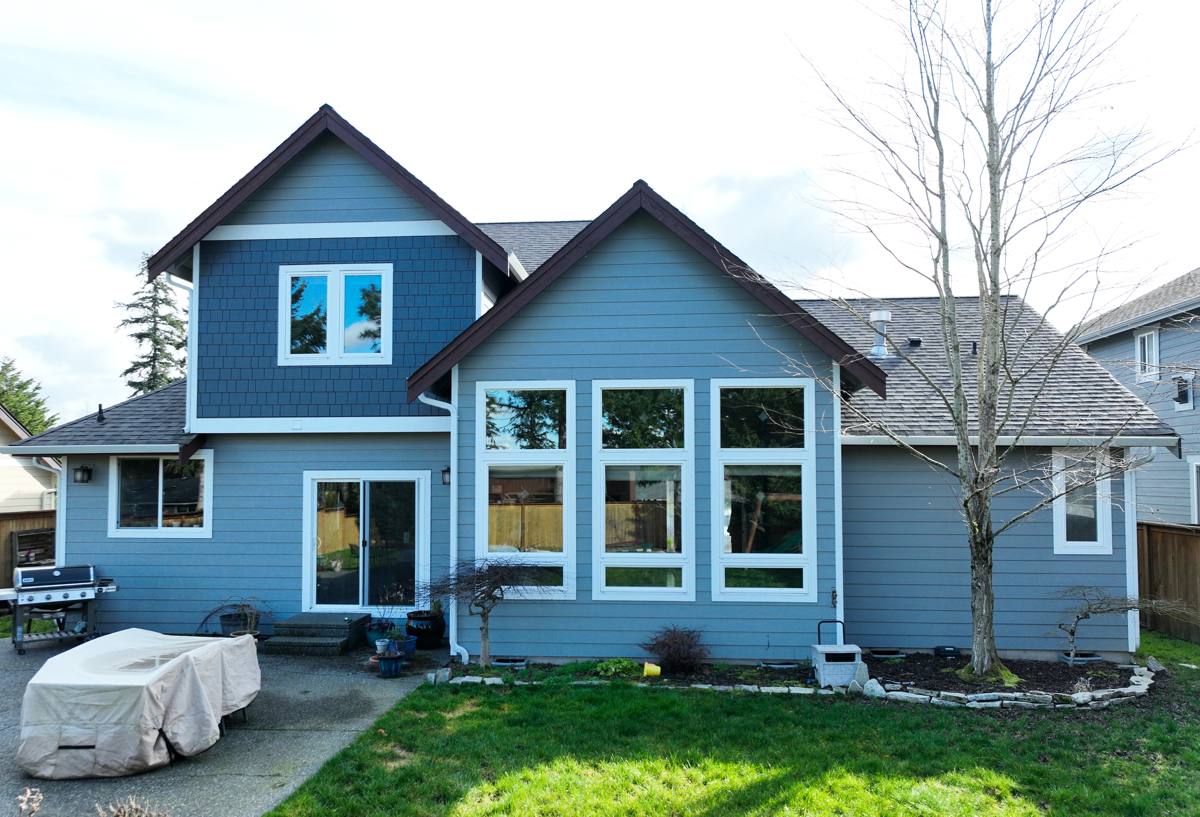
What LP SmartSide Does Well
LP SmartSide is an engineered wood product — strand-based substrate, usually made from wood fiber and resin, pressed and treated with a zinc borate formulation to resist fungal decay and termites, then coated with a factory finish. It has real advantages:
- Lighter than fiber cement, which can mean faster installation and less strain on trim carpentry
- Easier to cut, nail, and shape on site without the silica dust fiber cement produces
- A warmer, more traditional wood-grain look that some homeowners prefer over cement board texture
- Generally a lower material cost than James Hardie in most markets
For builders in drier, more temperate climates, SmartSide has been a solid mid-tier alternative to solid wood siding for years. The zinc borate treatment genuinely does help with rot and pest resistance compared to untreated wood.
Where Engineered Wood Meets Tampa's Climate
The trouble isn't the product in a vacuum — it's the product against Hillsborough County's weather. Tampa sees intense, near-constant UV exposure, wind-driven rain that comes in sideways during summer storms, salt-laden air moving in off the Bay, and the real possibility of hurricane-force wind events. Engineered wood, no matter how well it's treated, is still a wood-fiber product at its core, and wood fiber's weak point is sustained moisture exposure at cut edges, seams, and fastener penetrations.
Edge and Seam Vulnerability
Every cut end, corner joint, and butt seam on an engineered wood panel needs to be properly sealed and primed on-site, every time, or moisture will find its way into the substrate. In a climate where wind-driven rain hits a wall assembly dozens of times a year rather than a handful, any gap in that sealing discipline shows up faster — as edge swelling, telegraphing seams, or soft spots — than it would in a milder region.
Maintenance Cadence
Engineered wood siding needs repainting and re-caulking on a tighter schedule here than in cooler, drier states, simply because UV breaks down caulk and paint film faster and humidity keeps the substrate closer to its moisture threshold for more of the year. That's not a defect in the product — it's a mismatch between a wood-based material's maintenance needs and a subtropical maintenance calendar.
What James Hardie Fiber Cement Is Actually Made Of
James Hardie siding is cement, sand, and cellulose fiber, autoclaved into a rigid, non-combustible plank. It doesn't have organic wood fiber for moisture or insects to feed on, and it doesn't expand and contract with humidity the way wood-based products do. James Hardie also builds regional formulations — their HZ5 product line is engineered specifically for climates with more extreme temperature swings, moisture exposure, and coastal conditions, which is the category Tampa falls into.
The factory finish, ColorPlus, is baked on in a controlled environment rather than site-applied, which means the color and protective coating are more consistent than a product finished in the field, and it holds up to UV fade differently than a site-primed and painted product.
Side-by-Side: Composition, Warranty, and Maintenance
| Factor | James Hardie Fiber Cement | LP SmartSide Engineered Wood |
|---|---|---|
| Core material | Cement, sand, cellulose fiber | Wood strand/fiber with resin, zinc borate treated |
| Combustibility | Non-combustible | Combustible (wood-based) |
| Moisture behavior | Does not rot; dimensionally stable | Resists decay when sealed properly; vulnerable at unsealed cut edges |
| Factory finish | ColorPlus baked-on finish available | Factory-primed or pre-finished options, site touch-up common |
| Typical warranty structure | Long-term limited warranty on the product, separate finish warranty on ColorPlus | Limited warranty, often prorated after an initial full-coverage period |
| Maintenance in Gulf Coast climate | Occasional wash and caulk check | More frequent recaulking/repainting recommended |
| Relative material cost | Higher | Lower to mid |
Warranty terms and coverage details change over time and vary by product line, so always ask any contractor to show you the current manufacturer warranty document in writing rather than relying on a verbal summary.
Installation Sensitivity Matters More Than the Brand Name
Neither product performs well if it's installed poorly, and this is where a lot of siding failures actually originate — not in the material itself, but in shortcuts taken during installation. Both James Hardie and LP SmartSide have manufacturer-published installation specs covering fastener type, spacing, clearance from grade, flashing details around windows and doors, and gap/caulking requirements at butt joints.
Why This Is Worse for Wood-Based Products in Wind-Driven Rain
With engineered wood, a missed caulk joint or an under-flashed window head isn't just a cosmetic issue down the road — it's a direct path for wind-driven rain to reach a moisture-sensitive substrate. With fiber cement, the same installation mistake is still a problem worth fixing, but the material itself isn't going to swell or rot from that one exposure point the way engineered wood can.
This is a big part of why we don't take on installation of engineered wood products at all: we'd rather stand behind one system, installed to one exacting standard, than split our crews' attention and installation discipline across multiple product lines with different tolerances for error.
Cost Factors to Weigh, Not Just the Sticker Price
It's tempting to compare these two products on material price per square foot alone, but that number doesn't capture the full picture over the life of the siding:
| Cost Factor | What to Consider |
|---|---|
| Material price | Fiber cement typically costs more upfront than engineered wood |
| Labor | Fiber cement is heavier and requires specialized blades/tools, which can affect labor pricing |
| Repaint/recaulk cycles | Engineered wood generally needs more frequent touch-up in Florida's UV and humidity |
| Storm damage risk | Non-combustible, rigid materials tend to hold up differently in wind-driven debris events |
| Resale/appraisal perception | Fiber cement is widely recognized by appraisers and buyers as a premium, low-maintenance upgrade |
Why We Standardized on Hardie for Hillsborough County Homes
We made a deliberate decision years ago to only install James Hardie fiber cement — not LP SmartSide, not vinyl, not primed spruce or cedar. It comes down to matching the material to the actual climate our customers live in. Tampa homes take on hurricane-force wind loads, sustained high humidity, intense year-round UV, and salt air blowing in off the water. A non-combustible, dimensionally stable cement product with a climate-specific HZ5 formulation and a factory-applied finish is simply better matched to that combination of stresses than an engineered wood product designed for broader, milder markets.
That doesn't mean LP SmartSide is a scam or a bad product elsewhere — it means we'd rather install one system extremely well, understand its warranty inside and out, and stand behind it, than offer a menu of products with different failure modes and different maintenance obligations.
A Practical Checklist Before You Choose
- Ask for the manufacturer's current written warranty document, not a verbal summary
- Confirm which specific product line is being quoted (e.g., Hardie HZ5 vs. a standard line, or a specific SmartSide profile)
- Ask how the contractor handles cut-edge sealing and caulking at seams and corners
- Ask about the maintenance schedule the manufacturer recommends for your climate zone
- Check whether the installer is certified or trained specifically on the product they're proposing
- Get the flashing and fastener spec in writing, not just a general "we install to code" answer
- Compare total cost of ownership, not just the quoted material price per square foot
If you're weighing siding options for a home in Tampa or elsewhere in Hillsborough County, we're happy to walk your property, look at your current siding's condition, and give you a straight, no-pressure estimate for James Hardie fiber cement — including which product line and color system actually fits your home.