 Tampa Siding
 Why Westchase Homes Put Extra Demands on Siding
Westchase sits inland from Tampa Bay, but "inland" in Hillsborough County doesn't mean sheltered. Homes here still take a beating from the same forces that hit the coast: hurricane-force wind gusts during tropical systems, wind-driven rain that gets pushed sideways into every seam and joint, and some of the most intense, sustained UV exposure of any climate in the continental United States. Add in humidity that rarely lets up and the salt-laden air that drifts well inland on a sea breeze, and you have a combination that ages ordinary building materials fast.
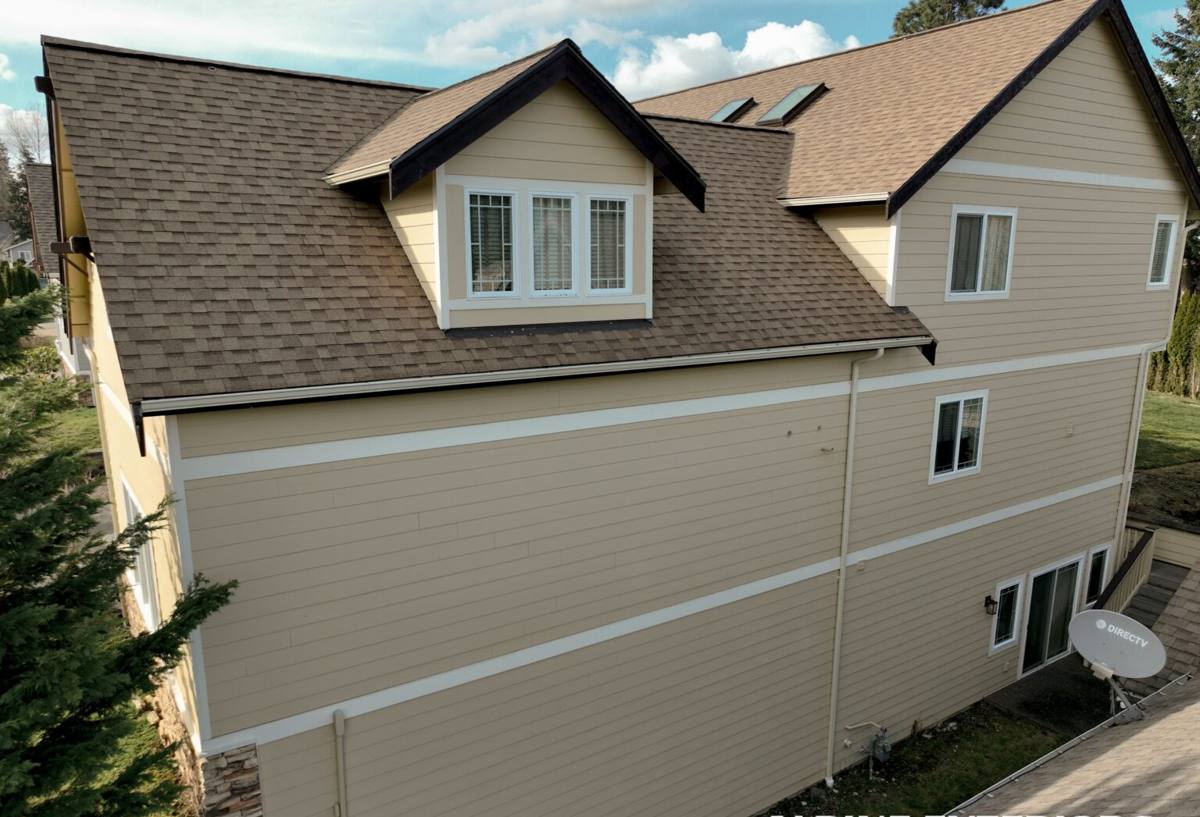
Westchase's mix of housing stock — mostly homes built from the late 1980s through the 2000s, many with stucco accents, tile roofs, and Mediterranean or Florida-vernacular detailing — means siding often shows up as accent material on gables, dormers, and second-story elevations, or as the primary cladding on certain home models throughout the community. Whichever role it plays, it's exposed to the same climate stress as everything else on the exterior, and it needs to be engineered for it, not just painted to look the part.
What Ordinary Siding Materials Struggle With Here
Plenty of siding products work fine in mild, dry climates. Tampa isn't one. The specific stresses that show up on a Westchase home over a 10-15 year span include:
- UV breakdown: Florida gets more annual sun exposure than almost anywhere in the country, and constant UV degrades paint film, cracks caulking, and fades color on lower-grade products years before it should.
- Moisture cycling: Humidity swings combined with sudden downpours mean siding is constantly absorbing and releasing moisture. Materials that swell, warp, or wick water at cut edges and seams fail faster in this cycle than in a dry climate.
- Wind-driven rain intrusion: During tropical storms and hurricanes, rain doesn't just fall — it's driven horizontally into laps, corners, and penetrations. Siding and the water-resistive barrier behind it have to work together to keep that water out.
- Wind load: Hillsborough County's wind zone requirements exist because sustained tropical-storm and hurricane winds put real uplift and lateral load on wall cladding. Fastening pattern and product wind rating matter, not just appearance.
- Salt air and airborne corrosives: Even well inland, Tampa Bay's salt air reaches fasteners, trim, and finishes over time, accelerating corrosion on anything not rated for it.
Why We Standardized on James Hardie
We install James Hardie fiber cement siding exclusively — not vinyl, not LP SmartSide, not Cemplank, not Allura, not primed wood. That's a deliberate standard, not a default. Fiber cement is non-combustible, dimensionally stable, and doesn't rely on paint film alone to survive UV exposure the way vinyl and engineered wood products do. James Hardie's HardieZone system is engineered specifically for climate: homes in our area fall under the HZ5 product formulation, built to resist the moisture behavior and humidity cycling that's normal here, not exceptional.
The factory-applied ColorPlus finish is a big part of why this matters for a Westchase home specifically. Field-applied paint on any siding material starts breaking down under Florida sun within a handful of years — chalking, fading, and needing recoating. ColorPlus is baked on in a controlled factory environment with a finish warranty backing it, so the color and finish are engineered to hold up to the UV load Tampa throws at it, not just tinted to match a swatch.
What Correct Fiber Cement Actually Resists
Properly installed, James Hardie siding doesn't rot, doesn't provide a food source for termites (a real consideration in Central Florida), and won't warp or delaminate from humidity the way lower-grade wood-based products can. It's also rated for the wind exposure categories relevant to Hillsborough County when installed per manufacturer fastening specifications — which is the operative phrase, because the product is only as good as the installation behind it.
Product Lines That Fit Westchase Homes
Not every Hardie product is the right fit for every home style, and part of doing this correctly is matching the product line to the architecture already on the block.
| Product | Typical Use | Why It Fits Westchase |
|---|---|---|
| HardiePlank lap siding | Primary wall cladding | Clean horizontal lines that suit Florida ranch and traditional elevations; available in smooth or cedar-textured finish |
| HardieShingle | Gable accents, dormers | Adds dimension to Mediterranean and craftsman-influenced homes common in the neighborhood |
| HardiePanel | Vertical accent sections, porch gables | Pairs well with stucco transitions and board-and-batten style accents |
| HardieTrim | Corners, fascia, window/door surrounds | Matches the crisp trim lines Florida architectural styles rely on and resists the moisture exposure trim takes at penetrations |
On a lot of Westchase homes, siding shows up as a complement to stucco rather than a full wall replacement — which makes the transition detailing between materials just as important as the siding installation itself. Done wrong, that transition is where water gets in.
What a Correct Installation Actually Involves
Fiber cement siding is unforgiving of shortcuts in a climate like ours. The material itself is durable; failures almost always trace back to installation, not the product. A correct job includes:
- A properly lapped and sealed water-resistive barrier behind the siding, installed to shed water downward and outward at every seam
- Correct fastener type, spacing, and penetration depth per James Hardie's published specifications for our wind zone
- Proper clearance between siding and grade, roofing, decks, and other horizontal surfaces to prevent wicking
- Flashing at every window, door, and penetration — not caulk used as a substitute for flashing
- Correct joint treatment at butt seams, with factory-primed or pre-finished cut edges sealed per manufacturer spec
- Proper starter strip installation at the base of the wall so the first course sits and drains correctly
- Caulking only where specified, with a product rated for exterior UV and movement, not as a blanket fix for gaps
Skipping any one of these doesn't usually cause an immediate, visible problem. It shows up two, five, or ten years later as trapped moisture, a rotted substrate behind good-looking siding, or a section that fails in the next tropical storm. That's the gap between siding that's installed and siding that's installed correctly.
The Substrate Question
Before any new siding goes up, what's underneath it matters as much as the product itself. On re-side projects, we check the sheathing and framing behind the existing siding for moisture damage before closing anything up. Installing new siding over a compromised substrate just hides a problem instead of fixing it — and in Tampa's humidity, hidden moisture problems don't stay small.
Our Process for a Westchase Siding Project
- On-site inspection and estimate: We walk the home, assess current siding condition (or new-construction/addition scope), check for moisture or substrate issues, and measure for an accurate material takeoff.
- Product and color selection: We help match HardiePlank, HardieShingle, or HardiePanel — and a ColorPlus finish — to the home's existing architecture and any HOA guidelines that apply in the community.
- Tear-off and substrate check: Old siding comes off in sections so we can inspect sheathing and framing as we go, not just at the start.
- Weather barrier and flashing installation: This is the layer that actually keeps wind-driven rain out — installed and lapped correctly before a single piece of siding goes up.
- Siding installation to manufacturer spec: Correct fastening pattern, clearances, and joint treatment for our wind zone and climate designation.
- Trim, caulking, and final detailing: Corners, window and door surrounds, and transitions to stucco or masonry get finished to shed water, not just to look clean.
- Final walkthrough and warranty registration: We review the completed work with the homeowner and register the installation for the applicable James Hardie warranty coverage.
Cost Factors Worth Understanding
Every siding estimate is different, but the variables that actually move the number on a Westchase home are consistent:
| Factor | Why It Matters |
|---|---|
| Scope (full re-side vs. accent areas) | Whole-house replacement costs more upfront than gable or accent sections, but treats the whole envelope consistently |
| Substrate condition | Rotted or moisture-damaged sheathing found during tear-off adds repair cost before new siding can go on |
| Product line and profile | HardiePlank, HardieShingle, and HardiePanel carry different material and labor costs |
| Trim and detail work | Homes with more corners, dormers, and transitions to stucco or masonry require more precision labor |
| Story height and access | Second-story and steep-roofline sections require additional staging and labor time |
We don't quote broad ballpark figures without seeing the home — a small accent area and a full two-story re-side aren't in the same conversation. What we can tell you upfront is that the cost difference between doing it right the first time and redoing a poorly installed job in five to seven years almost always favors doing it right the first time.
Why Local Installation Experience Matters
A crew that already works in and around Westchase and greater Tampa knows the practical details that don't show up in a manufacturer spec sheet: how local wind zone requirements translate into fastening schedules, what Hillsborough County permitting and inspection actually expect on a siding job, and how common HOA architectural guidelines in this area tend to run on color and material choices. That familiarity shows up in fewer surprises mid-project and a smoother permitting and inspection process.
It also matters after the job is done. Manufacturer warranties are only as good as the installer standing behind the workmanship portion of the job, and a contractor with an established local presence is the one still around to answer a warranty question five or ten years down the road — not just at closeout.
Maintenance in Tampa's Climate
One of the practical advantages of correctly installed James Hardie siding with a ColorPlus finish is how little ongoing maintenance it asks for compared to painted or wood-based alternatives. That said, "low-maintenance" isn't "no-maintenance" in this climate:
- Rinse siding periodically to clear salt residue, pollen, and general grime buildup
- Inspect caulking at trim and penetrations annually, especially after hurricane season
- Keep gutters and downspouts clear so water is directed away from siding, not running down it
- Trim vegetation and irrigation spray back from siding to reduce constant moisture contact
- Have any impact damage from storm debris inspected and repaired promptly rather than left exposed
None of this is heavy upkeep — it's the kind of routine attention that lets correctly installed fiber cement siding go the distance in a climate that isn't gentle on building materials.
If you're planning a siding project in Westchase or elsewhere in the Tampa area, we're happy to take a look at your home and walk you through what it would actually involve — no pressure, no obligation. Fill out the form below for a free estimate.