 Tampa Siding
 What Seminole Heights Homes Are Up Against
Seminole Heights is one of Tampa's older residential neighborhoods, built up mostly in the 1920s through the 1950s with bungalow and craftsman-style houses under a mature tree canopy. That combination — older wall construction, decades of prior repairs and additions, and heavy shade from established oaks — means siding here has to do more than look good. It has to hold up to direct sun where the canopy thins, shed water fast where it doesn't, and stay fastened tight through whatever spins up off the Gulf each summer and fall.
A lot of the siding failures we get called out to inspect in this neighborhood aren't dramatic. They're slow: a soffit that's stayed damp for years, a lap that was face-nailed instead of blind-nailed, a paint job that couldn't keep up with Tampa's UV load and started chalking and cracking within a few seasons. None of that shows up the day the siding goes up. It shows up five, ten, fifteen years later — which is exactly why the installation details matter more than the brand name on the invoice.
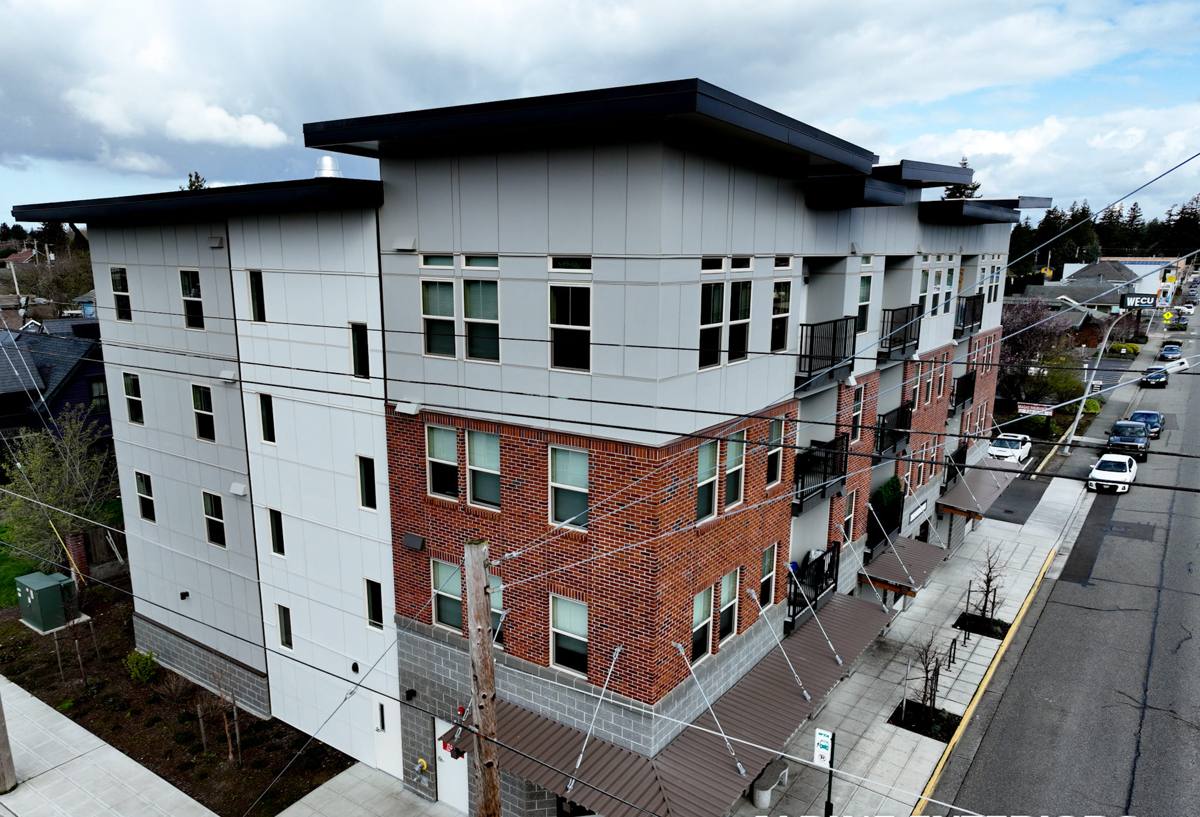
Four Things Hillsborough County's Climate Does to Siding
Every siding material sold in Florida claims to be built for "Florida weather." In practice, four specific stresses do the damage, and they compound each other:
- Hurricane-force and tropical-storm wind: Even a near-miss storm track pushes sustained wind and gusts through Tampa Bay that will find any siding panel that isn't fastened to the manufacturer's actual nailing schedule — not a shortcut version of it.
- Intense, year-round UV: Tampa gets strong sun in every month of the year, not just summer. Factory-cured, UV-stable finishes hold color; field-applied paint and stain do not hold up nearly as long, especially on south- and west-facing walls.
- Wind-driven rain: Afternoon storms in this part of Florida don't fall straight down — wind pushes rain sideways and up under laps, around trim, and behind poorly flashed penetrations. Water intrusion here is a horizontal problem as much as a vertical one.
- Salt air: Seminole Heights sits inland from Tampa Bay, but salt-laden air still moves across the whole metro on prevailing winds. Over years, it accelerates corrosion in fasteners, flashing, and any hardware that isn't rated for it.
None of these four is exotic — every siding contractor in the Tampa Bay area deals with all of them. What separates a siding job that lasts twenty-plus years from one that needs attention in year seven is whether the installer actually built in margin against all four, or just met code on paper.
What Correct Installation Actually Involves
Moisture Management Comes First
Siding is the visible layer, but the water-resistive barrier and flashing underneath it are what actually keep a Seminole Heights wall dry. On older homes especially, we don't just re-side over whatever housewrap or building paper is already there. We inspect the sheathing once the old siding is off, replace anything soft or delaminated, and install a continuous, properly lapped weather barrier with flashing integrated at every window, door, and penetration — lapped shingle-style so water is always directed out and down, never into a seam.
Fastening and Layout for Wind, Not Just for Looks
James Hardie publishes a specific fastening schedule — nail type, spacing, and placement — engineered around wind-zone testing. Blind-nailing where the product calls for it, hitting studs consistently, and keeping the correct gap at butt joints and trim aren't cosmetic choices; they're what the product's wind rating and warranty are actually built on. Skipping or shortcutting this schedule is the single most common way a siding job looks fine at final walkthrough and then fails in a storm two years later.
Trim, Caulking, and Transitions
Most water intrusion happens at transitions, not in the middle of a flat wall — around window and door trim, at the base of the wall, where siding meets roof flashing, and at outside corners. We treat these as the highest-risk part of the job, using the caulk and sealant systems James Hardie specifies rather than whatever's fastest off the shelf.
Choosing a Siding Material for a Seminole Heights Home
Homeowners in this neighborhood ask us to compare materials constantly, usually after getting quotes for something cheaper than fiber cement. Here's an honest side-by-side of how the common options actually perform under Tampa's specific mix of wind, sun, rain, and salt air:
| Material | Wind performance | UV / color stability | Moisture behavior | Long-term maintenance |
|---|---|---|---|---|
| James Hardie fiber cement | Engineered and tested for high-wind zones when installed to spec | Factory-baked ColorPlus finish resists fading and chalking | Non-combustible, dimensionally stable, doesn't rot | Repaint not required for many years; occasional caulk/inspection |
| Vinyl | Can deform, crack, or blow off in high gusts; thin profiles are especially vulnerable | Fades and becomes brittle under sustained heat and sun | Doesn't rot itself, but traps moisture behind it if installed loose | Low upkeep but limited lifespan in intense sun; can't be repainted easily |
| Engineered wood (e.g., LP SmartSide) | Reasonable if fastened correctly | Requires factory or field finish maintenance to resist fading | Wood-based core is more moisture-sensitive; edges need diligent sealing | Needs ongoing caulk and paint attention, especially at cut edges |
| Untreated or primed wood/cedar | Performs as well as its fasteners and framing | Finish breaks down fastest of any option in year-round UV | Most vulnerable to rot, insects, and swelling in humid climates | Highest ongoing maintenance; repainting and spot repair are recurring costs |
This is exactly why we standardized on James Hardie and only install James Hardie. We're not against other products because of a sales preference — we've watched how each of them ages on real Tampa Bay homes over years, not just at the walkthrough. Fiber cement is the one material on that list that isn't fighting its own core material against this climate.
Why James Hardie for This Climate Specifically
James Hardie makes climate-engineered product lines, and the HZ5 formulation is built for humid, high-moisture, hot-and-cold-swing climates like ours — it's not a one-size-fits-all product being sold everywhere regardless of region. For Tampa and the rest of Hillsborough County, that means a board engineered against moisture absorption and swelling in exactly the humidity range we live in, not a generic version optimized for a drier climate.
The ColorPlus factory finish matters just as much as the board itself. It's baked on in a controlled environment rather than sprayed or brushed on site, which is why it holds color and resists the chalking and fading that field-applied paint shows after a few Florida summers. Add in that fiber cement is non-combustible and doesn't feed pests or rot the way wood-based products can, and you get a wall assembly that's actually matched to what Hillsborough County weather does to a house year after year. The transferable warranty backing it is also only meaningful if the installation itself follows Hardie's specified methods — which is the whole reason our process below exists.
How Our Process Works in Seminole Heights
- On-site assessment: We walk the whole exterior, check for soft sheathing, existing moisture damage, and any areas where prior repairs or additions created transitions that need special attention.
- Tear-off and sheathing inspection: Old siding comes off in sections so we can inspect what's underneath rather than covering up problems. Any compromised sheathing gets replaced before anything new goes on.
- Weather barrier and flashing: A continuous, correctly lapped water-resistive barrier goes on first, with flashing integrated at every window, door, and penetration point.
- James Hardie installation to spec: Panels and boards go up following the manufacturer's fastening schedule for our wind zone — correct nail type, spacing, and clearances, not a generalized approach.
- Trim, caulk, and detail work: The transitions most likely to leak get finished with the sealant systems Hardie specifies, not a one-size-fits-all caulk.
- Final walkthrough: We check the completed job against the same standard we'd want on our own home, not just against what passes inspection.
What Actually Drives the Cost of a Seminole Heights Siding Job
Two houses of similar size in this neighborhood can come in at noticeably different quotes, and it's rarely because one contractor is padding the number. It usually comes down to a handful of real factors:
| Cost factor | Why it matters here |
|---|---|
| Condition of existing sheathing | Older Seminole Heights homes sometimes need sheathing repair or replacement once old siding comes off, which isn't always visible until tear-off starts |
| Trim and architectural detail | Bungalow and craftsman-style homes often have more trim, eave, and porch detail than a plain box house, which adds labor |
| Access and site conditions | Mature trees, tight lot lines, and older driveways can affect staging, scaffolding, and material handling |
| Board profile and accessories | Lap width, trim style, and corner treatment all affect material cost and installation time |
| Full tear-off vs. overlay | We don't install over compromised or unknown substrates, so tear-off scope depends on what's actually under the existing siding |
We'd rather walk a homeowner through these factors up front than quote a flat number that doesn't reflect the actual house. A fair quote for James Hardie siding installation should always be specific to your home, not a generic per-square-foot estimate given over the phone.
What to Look for When Hiring for a Job in This Neighborhood
Because Seminole Heights homes tend to be older and more detail-heavy than newer Tampa construction, the contractor's experience with this specific housing stock matters. Before hiring anyone for siding work here, it's worth confirming:
- They install to James Hardie's published fastening schedule for our wind zone — not a generic or shortcut nailing pattern
- They inspect and address sheathing condition before installing, rather than covering over unknown substrate
- They can explain, specifically, how they'll flash windows, doors, and other penetrations against wind-driven rain
- They carry proper licensing and insurance for exterior work in Hillsborough County
- They've actually worked on homes of similar age and construction in this neighborhood, not just newer builds
- Their warranty and Hardie's manufacturer warranty are both explained clearly in writing before work starts
If a contractor can't answer these plainly, that's worth treating as a warning sign — siding is one of the few home improvements where the parts you can't see after the walkthrough matter more than the parts you can.
If you're weighing a siding project on a Seminole Heights home, we're glad to walk the exterior with you, point out what we actually see, and put together a straightforward, no-pressure estimate — no obligation either way. Use the form below to get started.