 Tampa Siding
 Why South Tampa Decks Take More Punishment Than Most
South Tampa sits close enough to the bay and the Gulf that salt air is part of daily life, even a few miles inland. Add in Hillsborough County's long, humid summers, near-constant UV exposure, and the wind-driven rain that comes with every serious storm, and you've got a climate that is genuinely hard on exterior building materials. A deck here isn't just furniture in the backyard — it's an exterior structure that has to survive the same conditions as your siding and roof.
Composite decking holds up well against most of that, but only when it's specified and installed correctly for this environment. A board that's rated fine for a dry, mild climate can still underperform in South Tampa if the substructure, fasteners, and drainage details aren't built with salt air and hurricane-force wind in mind. That's the gap we focus on closing.
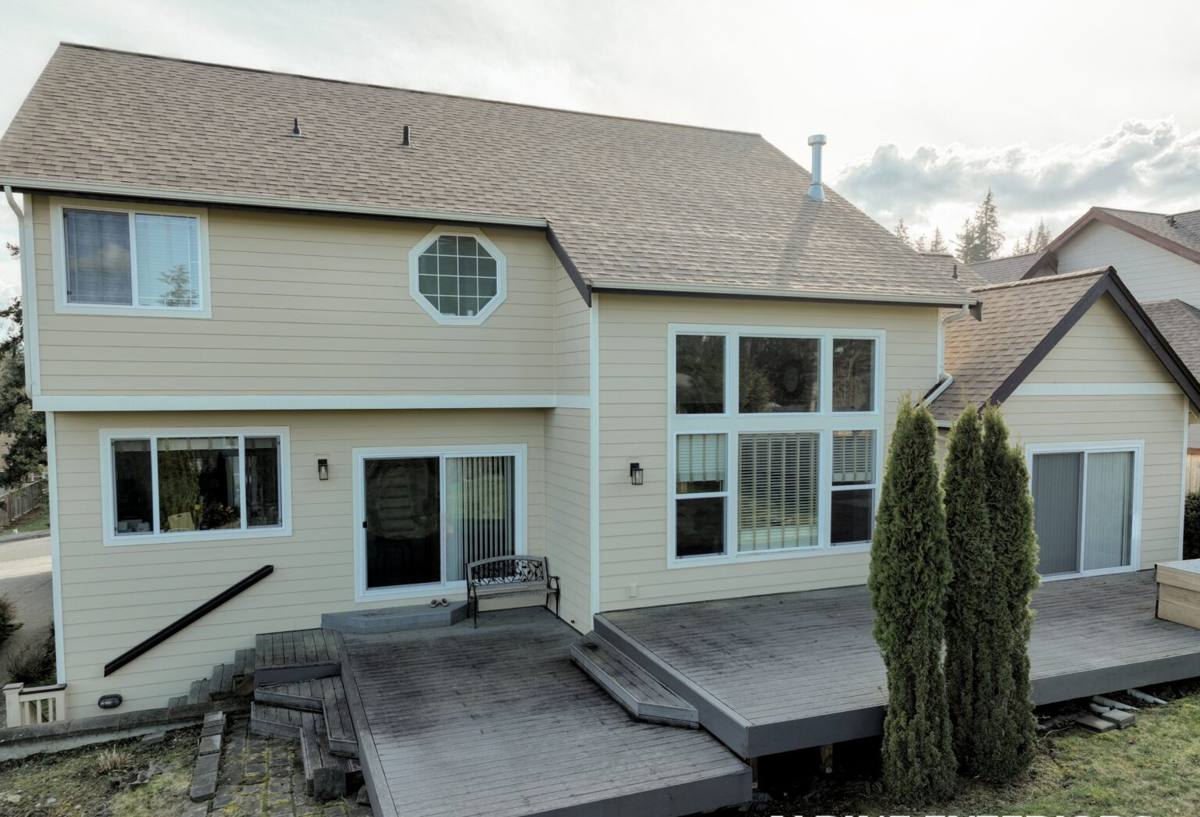
What Local Homes Actually Need From a Composite Deck
Moisture and Humidity Resistance
Tampa's humidity doesn't let up for months at a time. Composite boards resist rot better than wood, but the boards are only part of the system — trapped moisture underneath, at the ledger board, or around fasteners is where problems actually start. A correct installation manages moisture at every layer, not just at the walking surface.
UV Stability
Year-round sun in this region fades and chalks lower-quality decking faster than in most of the country. Capped composite boards with UV-stabilized outer layers hold their color far longer than uncapped boards, which matters more here than it would in a climate with a real winter to slow down sun exposure.
Wind and Storm Resilience
Hurricane-force wind doesn't just threaten the boards themselves — it puts uplift and lateral load on the whole deck structure, especially attached decks and any railing or pergola built on top. Framing, ledger attachment, and hardware all need to be sized and fastened for that load, not just for everyday use.
Salt Air Corrosion Resistance
Anything metal on or under the deck — joist hangers, screws, post bases, railing brackets — is exposed to salt-laden air even if the house isn't waterfront. Standard zinc-coated hardware corrodes faster here than the manufacturer's generic warranty language usually assumes.
Composite vs. Other Decking Materials for This Climate
Homeowners usually compare composite against pressure-treated wood or PVC/vinyl decking. Here's how they stack up specifically for South Tampa's conditions:
| Factor | Pressure-Treated Wood | Capped Composite | PVC/Vinyl Decking |
|---|---|---|---|
| Humidity & rot resistance | Fair — needs regular sealing | Good to very good | Very good |
| UV fade resistance | Fades and grays without upkeep | Good, varies by product line | Good to very good |
| Salt air tolerance (with correct hardware) | Fair | Good | Very good |
| Upfront cost | Lowest | Mid | Highest |
| Ongoing maintenance | Annual sealing/staining | Periodic cleaning | Minimal |
| Underfoot heat in direct sun | Moderate | Moderate to warm (color-dependent) | Moderate to warm (color-dependent) |
Composite lands in a practical middle ground for most South Tampa homeowners: meaningfully less upkeep than wood, without the top-end cost of full PVC systems. The right choice still depends on your budget, how the deck is used, and how much sun exposure it gets.
Choosing the Right Composite Board for This Environment
Not all composite decking is built the same, and the differences matter more in a coastal, high-UV climate than they would elsewhere.
Capped vs. Uncapped Composite
Capped boards have a protective polymer shell around a wood-plastic composite core. That cap is what actually resists staining, fading, and moisture absorption. Uncapped composite is more affordable but absorbs more moisture over time and shows wear faster under intense, year-round sun — a real consideration this far south.
Color and Heat
Darker composite boards run noticeably hotter underfoot on a sunny Tampa afternoon than lighter, sun-reflective tones. If the deck gets full afternoon sun with little shade, that's worth factoring into color choice, not just aesthetics.
Board Profile and Ventilation
Grooved-edge boards with hidden fasteners look clean, but they rely on consistent airflow underneath to perform well in humid conditions. Solid-core boards handle standing moisture differently than lighter, vented profiles. We match the board profile to how open or enclosed the space under your deck actually is.
What's Underneath Matters as Much as the Boards
Most composite decking problems we get called to look at aren't failures of the boards themselves — they're failures in the substructure or fastening that the boards were installed over.
Framing Material
Pressure-treated lumber framing is standard and workable, but it needs to be properly dried, spaced, and protected with joist tape or flashing where composite boards will sit directly on top. Composite or aluminum joist systems cost more but remove wood-on-wood moisture contact entirely, which is worth discussing for decks with heavy shade or poor airflow underneath.
Fasteners and Hardware
In a coastal-adjacent climate, we spec stainless steel or marine-grade coated fasteners and hardware over standard galvanized wherever it's exposed to the elements — ledger bolts, joist hangers, post bases, and hidden-fastener clips included. It costs a bit more up front and saves you from hardware corrosion showing through the decking years before it should.
Ledger Attachment and Flashing
Where a deck attaches to the house, proper flashing keeps wind-driven rain from working its way behind the siding and into the wall assembly. This is one of the most common places we find corner-cutting on decks that weren't built for this climate, and it's not something you can inspect once the deck is finished.
Our Installation Process
- On-site assessment: We look at sun exposure, drainage, existing structure (if replacing an old deck), and how the space will actually be used.
- Material and layout planning: We recommend a board line, color, and framing approach based on the site conditions above, not a one-size-fits-all package.
- Permitting: We handle the permit application and inspection scheduling required for decks in the City of Tampa or unincorporated Hillsborough County, depending on your address.
- Demolition (if applicable): Old decking, and any deteriorated framing underneath, is removed and hauled off.
- Framing and structural work: Ledger flashing, joists, blocking, and hardware are installed to current code and wind-load requirements.
- Decking installation: Boards are laid, fastened, and finished per manufacturer spec, including proper expansion gaps for our temperature swings.
- Railing and finishing details: Railings, stairs, fascia, and post caps are installed and checked for level, plumb, and secure attachment.
- Final walkthrough and inspection: We walk the finished deck with you and coordinate the final inspection sign-off.
Maintaining a Composite Deck in Tampa's Climate
Composite decking is genuinely lower-maintenance than wood, but "low-maintenance" doesn't mean "no maintenance," especially with salt air and heavy pollen/mildew conditions typical of this area.
- Rinse the deck surface every few weeks to clear salt residue, pollen, and organic debris before it can stain the cap layer.
- Clean with a soft-bristle brush and a manufacturer-approved composite deck cleaner — avoid pressure washers on the highest settings, which can damage the cap.
- Check hardware and railing connections once or twice a year for corrosion or loosening, particularly after hurricane season.
- Keep gutters and downspouts near the deck clear so runoff isn't dumping extra water onto or under the decking.
- Trim back landscaping that keeps sections of the deck shaded and damp longer than the rest.
- Address any mildew spots promptly — humidity here lets it spread faster than in drier climates.
Permitting and Code Considerations Locally
Decks attached to a home, or built above a certain height, require a permit in both the City of Tampa and unincorporated Hillsborough County, along with inspections at the framing and final stages. Wind-load and attachment requirements reflect our hurricane exposure, which is part of why ledger flashing and hardware selection aren't optional upgrades here — they're what gets a deck through inspection and keeps it standing through storm season. We manage this permitting and inspection process as part of every project so you're not tracking it down yourself.
Why Hire a Crew That Already Works in South Tampa
A contractor who mainly builds decks inland or in a different climate zone can still do competent carpentry, but they may not default to stainless hardware, proper ledger flashing for wind-driven rain, or board selection that accounts for constant salt air and UV — because their usual jobs don't demand it. Working in and around South Tampa regularly means those details aren't an afterthought; they're just how the job gets built. It also means faster familiarity with local permitting timelines and inspection expectations, so your project doesn't stall waiting on paperwork.
If you're planning a new composite deck or replacing an aging one, we're glad to take a look at your space and talk through what makes sense for your budget and how you use it. Reach out for a free, no-pressure estimate using the form below.