 Tampa Siding
 Why Town 'n' Country Homes Are Hard on Siding
Town 'n' Country sits in Hillsborough County, inside the same humid subtropical belt that makes the whole Tampa Bay area tough on exterior building materials. It's not any one thing that wears siding out here — it's the combination. Intense, nearly year-round UV breaks down pigments and plastics faster than it does in most of the country. Summer storms and hurricane season bring wind-driven rain that doesn't just fall on a wall, it gets forced sideways into any gap, seam, or loose joint. Tropical-storm and hurricane-force wind gusts put real load on fasteners and panel edges, especially on corners and gable ends. And because the neighborhood isn't far from Tampa Bay, salt-laden air is a slow, steady factor working on any exposed metal hardware and lower-grade finishes.
None of this is unique to one house — it's the baseline every siding product on a Town 'n' Country home has to survive, year after year, without a full repaint or premature failure. That's the lens we use when we talk about what actually belongs on a wall here, and it's why we don't treat siding material choice as a cosmetic decision.
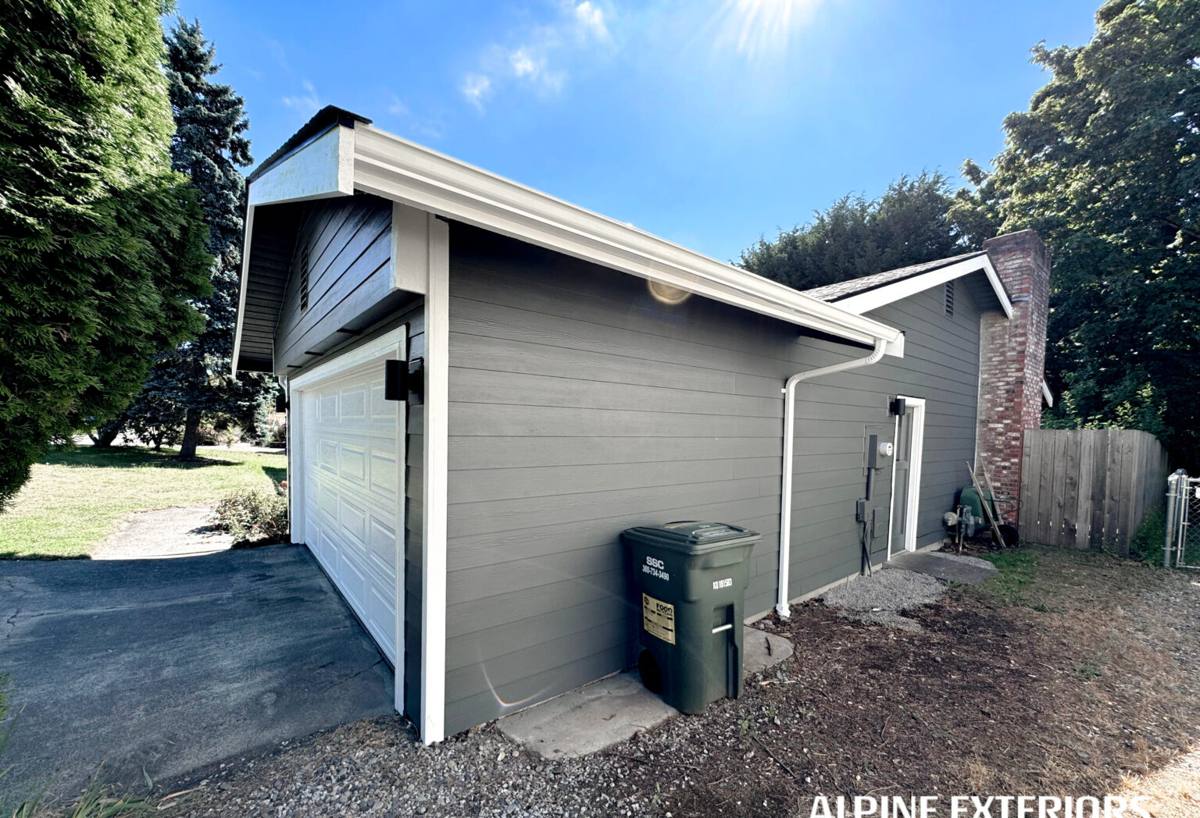
What James Hardie Actually Brings to This Climate
James Hardie fiber cement is engineered around exactly the stresses described above, not as a marketing claim but as product design. Two things matter most for this area:
Climate-Zone Engineering
Hardie makes region-specific product formulations under its HZ system, and the version specified for Florida and the broader Gulf Coast is built around this area's humidity and moisture exposure. It's not the same board that gets shipped to a dry climate — the composition and installation guidance both account for how much moisture the walls of a Tampa-area home actually see over a year.
ColorPlus Factory Finish
Instead of a field-applied paint job that starts breaking down under UV within a few years, ColorPlus color is baked on at the factory in multiple coats, with a warranty specifically covering finish performance. In a market with this much sun exposure, that difference shows up as fading and chalking resistance most site-applied paint jobs can't match over the same time frame.
Fiber cement is also non-combustible and doesn't provide a food source for termites or other wood-destroying insects — a real, ongoing concern for homes in this part of Florida, and one more reason it holds up differently than wood-based or wood-look products over a full ownership period.
What a Correct Installation Involves
James Hardie siding performs the way it's engineered to only when it goes on the way Hardie specifies. This is where most of the difference between a good job and a problem job actually lives — not in the material itself.
Fastening and Spacing
Hardie publishes fastener type, spacing, and placement requirements that vary by wind zone and installation method (face-nailed vs. blind-nailed). In a coastal-influenced, hurricane-exposed area, using the correct corrosion-resistant fastener (stainless steel or hot-dip galvanized, not standard electro-galvanized) and following the wind-zone-appropriate nailing pattern isn't optional — it's what keeps panels attached and keeps rust streaks from bleeding through the finish over time.
Clearances and Water Management
Every board needs proper clearance from rooflines, decks, patios, and grade so water can't wick up into the bottom edge of the siding. A weather-resistant barrier goes behind the boards, laps are overlapped correctly, and flashing is installed at every horizontal joint, window, door, and penetration — the places wind-driven rain actually finds a way in.
Cut Edges and Caulking
Factory edges come primed or finished; field cuts don't, and they need to be sealed or touched up with color-matched product so the plank doesn't have an exposed, unprotected edge sitting in Florida humidity. Joints get caulked with a quality, paintable sealant rated for exterior movement — not just gapped or left to the trim to hide.
Skip any one of these steps and the board itself being a good product stops mattering. Moisture gets behind it, fasteners corrode early, or wind gets a purchase point it shouldn't have.
James Hardie Product Lines: What Fits This Kind of Home
Hardie's lineup covers a range of looks, and the right choice depends on the home's existing style and what the homeowner wants to see from the street.
| Product | Look | Typical Use |
|---|---|---|
| HardiePlank | Traditional horizontal lap siding | Most common choice for full re-siding on ranch and traditional Florida home styles |
| HardiePanel | Vertical panel, board-and-batten | Accent walls, gables, and homes going for a more modern or farmhouse look |
| HardieShingle | Staggered or straight-edge shingle profile | Accent areas, dormers, and homes wanting a coastal or craftsman feel |
| HardieTrim | Smooth or woodgrain trim boards | Corners, window and door surrounds, fascia — finishes out any of the above |
Most full-home projects in this neighborhood end up using HardiePlank as the primary field material with HardieTrim for corners and openings, sometimes with a HardieShingle or HardiePanel accent on a gable or entry feature. We'll walk through what actually suits the house rather than defaulting to one look.
Where Installations Go Wrong When They're Not Done to Spec
We get called to look at other contractors' work often enough to know the failure patterns. They're almost never about the siding material — they're about shortcuts taken during installation:
- Nails driven too close to panel edges or spaced too far apart, leading to buckling or panels working loose in high wind
- Boards installed too close to grade, decks, or roof flashing, so the bottom edge sits in standing water or splashback
- Standard fasteners used instead of corrosion-resistant ones, causing rust bleed within a few years in salt-influenced air
- Cut ends left unsealed, allowing moisture into the core of the board at the one place it isn't factory-protected
- Caulk joints skipped or done with the wrong sealant, leaving gaps for wind-driven rain to exploit
- Touch-up paint that doesn't match the ColorPlus finish, creating a visibly different appearance at every cut and corner
Every one of these is preventable. None of them require a better product — they require someone installing to the manufacturer's written specification instead of a generic "siding is siding" approach.
Our Process, Start to Finish
- On-site walkthrough and measurement, including a look at current siding condition, sheathing, and any trouble spots around windows, roofline, or grade
- Product and color selection from the ColorPlus palette, matched to the home's style and any HOA or neighborhood expectations
- Written scope covering fastener type, clearances, flashing details, and trim — so there's no ambiguity about what "installed to spec" means on this job
- Permitting through Hillsborough County/local jurisdiction as required
- Removal of old siding and inspection of the sheathing underneath for any hidden moisture or rot damage before anything new goes up
- Installation of weather-resistant barrier, flashing, and Hardie siding per manufacturer spec for this wind zone and climate designation
- Trim, caulking, and touch-up finishing
- Final walkthrough with the homeowner before the job is called complete
Cost Factors for a Town 'n' Country Siding Project
We don't publish flat prices because every home is different, but these are the variables that actually move a project's cost up or down:
| Factor | Why It Matters |
|---|---|
| Home size and number of stories | More square footage and taller walls mean more material and labor, plus added equipment for upper stories |
| Siding profile and trim detail | A straightforward lap job costs less than a home with multiple accent materials, shingle sections, and heavy trim work |
| Condition of existing sheathing | Hidden rot or moisture damage found during tear-off adds repair work before new siding can go on |
| Removal of old siding material | Tear-off and disposal of the existing siding adds labor and hauling costs versus installing over new construction sheathing |
| Access and site conditions | Tight lot lines, landscaping, fencing, or limited driveway access can add time for material staging and equipment |
| Color and finish selection | Standard ColorPlus colors versus premium or custom options can shift material cost |
Maintenance After Installation
One of the practical advantages of a correctly installed James Hardie system in this climate is how little upkeep it demands compared to wood or vinyl. That said, a few habits matter:
- Rinse the siding periodically with a garden hose to clear salt residue, pollen, and dirt buildup — a low-pressure approach protects caulk lines and finish
- Avoid pointing a pressure washer directly at seams, caulk joints, or trim edges; too much pressure can force water behind the boards
- Do a visual check after hurricane season for any loosened fasteners, cracked caulk, or storm debris impact
- Watch for any hardware or fastener corrosion streaks, which can signal a fastener issue worth addressing before it spreads
- Keep an eye on caulk joints around windows and trim over the years — sealant is the one component that needs periodic renewal
Why a Crew That Already Works Town 'n' Country Matters
Siding installation quality depends on details that are easy to get wrong from a general playbook and easy to get right when a crew already knows the conditions. A contractor who regularly works Town 'n' Country and the surrounding Tampa area already understands the wind-load and Florida Building Code requirements that apply locally, has a working relationship with Hillsborough County permitting, and has seen firsthand how the area's UV, humidity, and storm exposure affect siding over time — not in theory, but on homes down the street. That local track record is also accountability: a crew with an ongoing presence in the neighborhood has a reason to get the flashing, fastening, and clearances right the first time, because the work is visible to people who will see it again.
If you're weighing a siding replacement or want a second opinion on an existing installation, we're happy to take a look and give you a straightforward, no-pressure estimate — fill out the form below to get started.