 Tampa Siding
 Wesley Chapel's Climate Is Hard on Windows
Wesley Chapel sits in one of the fastest-growing corners of the Tampa Bay area, and the homes here take a beating from the same weather that makes Florida living appealing in the first place. Long, humid summers push heat and UV radiation through glass and frames every single day. Hurricane season brings sustained high winds and wind-driven rain that finds every gap in a poorly sealed window. And even though Wesley Chapel isn't right on the coast, salt-tinged air still moves inland across west-central Florida, slowly working on metal hardware and untreated frame materials.
Windows that weren't built or installed with this climate in mind show it early. Aluminum hardware pits and seizes. Vinyl frames that aren't UV-stabilized can warp, yellow, or go brittle. Insulated glass units fog between the panes when the seal fails from constant thermal cycling. And any gap in the flashing or sealant around the frame becomes a path for wind-driven rain during the next tropical system. None of this is dramatic on day one — it shows up two, five, ten years later as a stuck sash, a water stain on drywall, or a spike in the cooling bill.
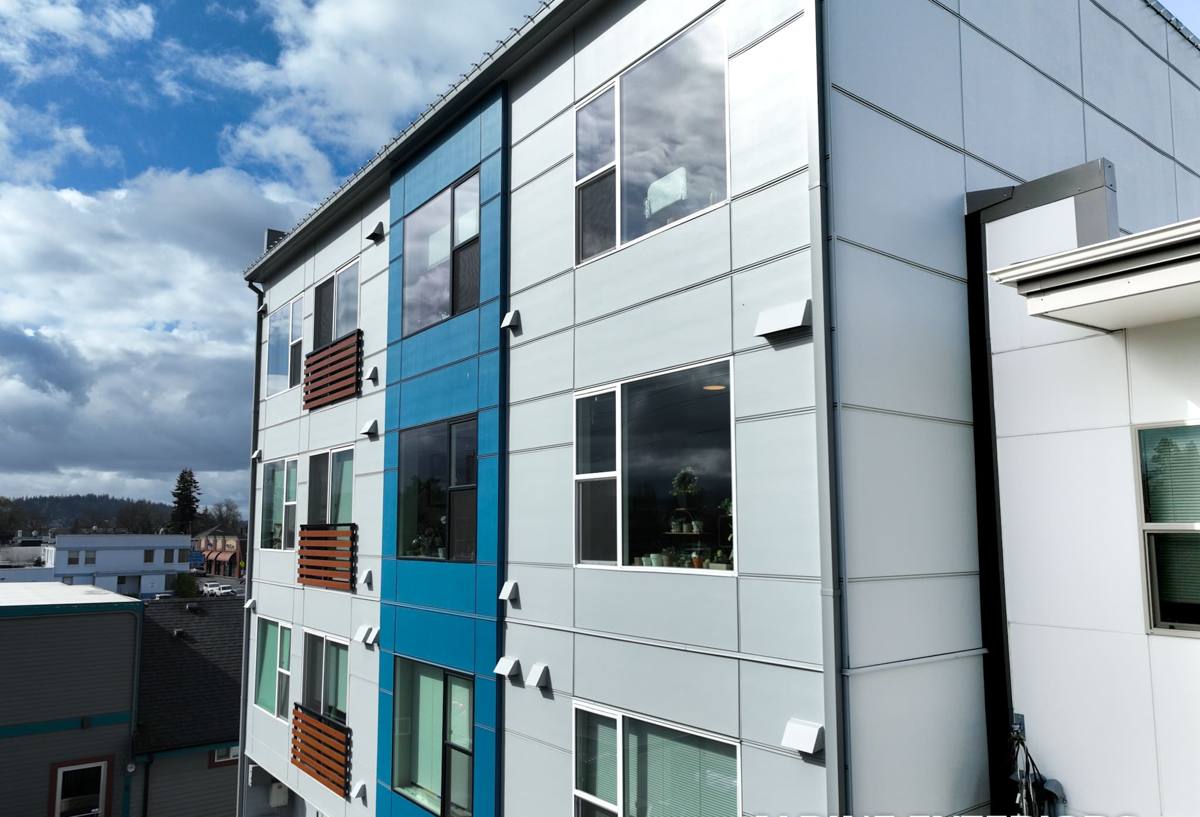
What "Custom" Should Mean for Your Home
"Custom" gets used loosely in this industry, so it's worth being specific about what it actually means for a Wesley Chapel project. At its core, a custom window is built to your exact rough opening rather than pulled from a limited set of stock sizes and then shimmed and packed out to fit. That matters more than people expect — homes in this area range from older construction with settled, slightly irregular openings to newer production-built homes where the openings are consistent but the builder-grade windows installed at construction were chosen for cost, not performance.
Custom work also covers matching your home's architecture: arched or transom shapes over doors, grid patterns that match neighboring windows, frame colors that satisfy an HOA's approved palette (common in Wesley Chapel's many planned communities), and glass tint or coating choices that suit a west- or south-facing wall differently than a shaded north side. Bedroom windows also have to meet egress requirements — a minimum openable area and sill height so they can serve as a fire exit — which a true custom approach accounts for at the design stage, not after the window is already ordered.
Common Reasons Wesley Chapel Homeowners Go Custom
- Replacing worn, foggy, or storm-damaged original windows with something built for the current climate
- Odd-shaped or oversized openings that stock sizes can't fill without excessive shimming
- Upgrading to impact-rated glass for storm protection and insurance considerations
- Matching a home addition or renovation to the sightlines of existing windows
- Improving energy performance to reduce cooling costs during peak summer months
Choosing the Right Frame Material
Frame material is one of the first real decisions in a custom window project, and it's worth understanding the trade-offs rather than defaulting to whatever's cheapest per unit. We steer homeowners toward materials that hold up to heat cycling and humidity without excessive long-term maintenance, since a window that looks good on install day but needs constant attention isn't actually saving anyone money.
| Frame Material | Heat & UV Behavior | Salt Air / Corrosion | Maintenance |
|---|---|---|---|
| Vinyl | Good if UV-stabilized; lower-grade vinyl can warp or discolor over time | Doesn't corrode; hardware quality still matters | Low — no painting, occasional cleaning |
| Aluminum | Conducts heat, so thermal breaks matter for energy performance | Prone to pitting/corrosion without a quality finish | Moderate — finish needs monitoring over the years |
| Fiberglass/composite | Very stable under heat and sun, minimal expansion/contraction | Highly resistant to corrosion | Low, but higher upfront cost |
There isn't a single "correct" answer for every home — a beach-adjacent condo and an inland single-family home in Wesley Chapel don't have identical exposure. Our job is to walk through your specific orientation, sun exposure, and budget and recommend a material that will still be performing well a decade from now, not just on move-in day.
Glass Packages and Storm Protection
Glass is where most of a window's real-world performance actually happens. For Wesley Chapel homes, we typically discuss three layers of protection, and they aren't mutually exclusive:
- Impact-rated laminated glass — a plastic interlayer bonded between two panes so the glass stays intact under wind-borne debris impact. It stays in place during a storm, meaning no separate shutter deployment, and it also cuts outside noise and adds a layer of forced-entry resistance.
- Low-E coatings and gas fills — a microscopically thin coating that reflects heat while still letting visible light through, often paired with argon gas between panes. This is what actually keeps summer heat gain down in a climate where the sun is intense nearly year-round.
- Code-rated shutters or panels — a lower upfront-cost route to storm protection, paired with standard glass. The trade-off is that they have to be installed before every storm and removed after, and they don't do anything for daily UV or heat performance.
We're upfront about the trade-offs rather than pushing the most expensive option by default. Impact glass costs more per opening but removes the "will I get the shutters up in time" problem entirely and quietly improves comfort every day it's not storming. Shutters lower the upfront window cost but shift ongoing effort onto you every hurricane season. Either can be a sound decision depending on your budget and how many openings you're doing at once.
Permitting and Wind Code Considerations
Window replacement in this part of Florida isn't a grab-a-unit-and-swap-it job — it's governed by the Florida Building Code's wind load requirements, and the products used have to carry a valid product approval for the design pressure your specific openings are exposed to. That approval isn't optional paperwork; it's what ties the window's rated performance to how it actually gets installed (anchoring pattern, fastener spacing, and sealant type all matter as much as the window itself).
Because Wesley Chapel sits near the line between Hillsborough and Pasco counties, the permitting office your project routes through can depend on exactly where your home is. We handle that determination and pull the correct permit either way — permitted, inspected work is what protects you if there's ever an insurance claim or a home sale where a buyer's inspector asks for documentation.
Our Custom Window Installation Process
Measure and Design
We measure every opening individually — not just one representative window and assume the rest match. On older homes especially, openings settle unevenly over the years, and treating them as identical is how gaps and callbacks happen.
Product Selection and Ordering
We go over frame material, glass package, grid pattern, and color together, factoring in your home's sun exposure and any HOA architectural guidelines that apply. Custom units are built to order, so this step also sets realistic lead-time expectations.
Permitting
We pull the permit before work starts, using the product approval documentation tied to your specific windows and design pressure requirements.
Removal and Opening Prep
Old windows come out carefully to avoid damaging stucco, drywall, or framing. We inspect the opening for rot, moisture damage, or structural issues before anything new goes in — problems found now are far cheaper to fix than problems sealed behind a new window.
Setting, Flashing, and Sealing
The window is set plumb and level, anchored per the manufacturer's tested installation instructions, and flashed so that any water reaching the opening drains back out rather than into the wall cavity. Sealant is applied at every joint the manufacturer specifies — this step is where a huge share of long-term leak problems either get prevented or get built in.
Final Inspection and Walkthrough
The local building inspector signs off on the permitted work, and we walk the finished openings with you — operation, locks, screens, and finish — before calling the job done.
What a Correct Installation Involves
A lot of window problems we get called out to fix didn't start with a bad window — they started with a rushed or incomplete installation. Here's what should happen on every job, whether it's one window or a whole house:
- Opening measured individually, not assumed to match a "standard" size
- Opening substrate checked for rot or moisture damage before the new window goes in
- Correct anchoring pattern and fastener type per the product's tested approval
- Flashing installed so water drains outward, not into the wall
- Sealant applied at every manufacturer-specified joint, not just the visible exterior bead
- Shims set correctly so the frame isn't under stress that can crack glass or bind hardware later
- Interior and exterior trim finished cleanly, matching existing sightlines
- Permit pulled and inspection completed and documented
Typical Cost Factors
We don't publish flat per-window pricing because the real cost depends on several variables that change from house to house. This table covers the main drivers so you know what actually moves the number, without us throwing out a figure that doesn't apply to your home:
| Factor | Why It Matters |
|---|---|
| Frame material | Vinyl, aluminum, and fiberglass carry different material and hardware costs |
| Glass package | Impact-rated laminated glass costs more upfront than standard glass plus shutters |
| Opening size and shape | Oversized, arched, or non-standard openings require more custom fabrication |
| Number of openings | Doing a whole house at once typically costs less per window than one-off replacements |
| Condition behind the old window | Rot or moisture repair adds labor beyond a straightforward swap |
| Trim and finish work | Matching existing interior trim or stucco detailing adds finish labor |
A realistic project budget generally lands somewhere between a modest per-opening replacement and a much higher number for large, impact-rated, custom-shaped openings — the range is wide because the variables above are wide. We give you real numbers for your actual home during a site visit rather than a ballpark that doesn't hold up once we see the openings.
Why a Crew That Already Works Wesley Chapel Matters
Familiarity with an area shows up in small ways that add up to a smoother project. We already know that many of Wesley Chapel's newer neighborhoods are subject to HOA architectural review, so we build that approval step into the timeline instead of surprising you with it after ordering. We're used to the builder-grade windows that production builders installed on a lot of homes in this area during their original construction, so we know what we're typically dealing with when we pull one out. And because we're already routing permits through the local jurisdictions that cover this part of the Tampa Bay area, we're not learning that process for the first time on your job.
There's also a simple accountability piece to hiring local: we're not a crew that installs once and disappears out of the area. If a question comes up after the install — a hardware adjustment, a warranty question — we're still working in Wesley Chapel next month and next year, not just passing through.
Caring for Your New Windows
Custom windows built for this climate still need basic upkeep to hit their full lifespan. Rinse frames and tracks periodically to keep salt residue and pollen from building up in the hardware. Check weep holes at the base of the frame occasionally to make sure they're clear — that's how water drains back out after rain. Operate locks and hardware a few times a year even on windows you rarely open, since hardware that sits unused is more likely to seize. And keep an eye on exterior sealant lines; caulking has a service life, and catching a cracked bead early is a five-minute fix compared to what happens if water gets behind it for a season.
If you're weighing custom windows for a Wesley Chapel home, we're glad to walk your openings, talk through material and glass options honestly, and put together a written estimate — no pressure, no obligation. Use the form below to get started.