 Tampa Siding
 Why Westchase Siding Takes a Different Kind of Beating
Westchase sits inland from Tampa Bay, but "inland" in Hillsborough County doesn't mean sheltered. Homes here still take the same year-round sun load, the same summer storm pattern, and enough salt-laden air moving in off the bay and the Gulf to matter over time. Siding on a Westchase home is working against four things at once: hurricane-force wind gusts during the active season, intense UV exposure nearly twelve months a year, wind-driven rain that gets pushed sideways into seams and laps instead of just running down the wall, and salt air that slowly breaks down finishes and fasteners that weren't built for it.
None of that is unique to any one house. What is worth paying attention to is how it shows up differently across a planned community like Westchase, where a lot of homes were built in the same era, with the same siding products, facing the same weather. When one material starts failing on one house, it's usually starting to fail — just less visibly — on the identical house three doors down.
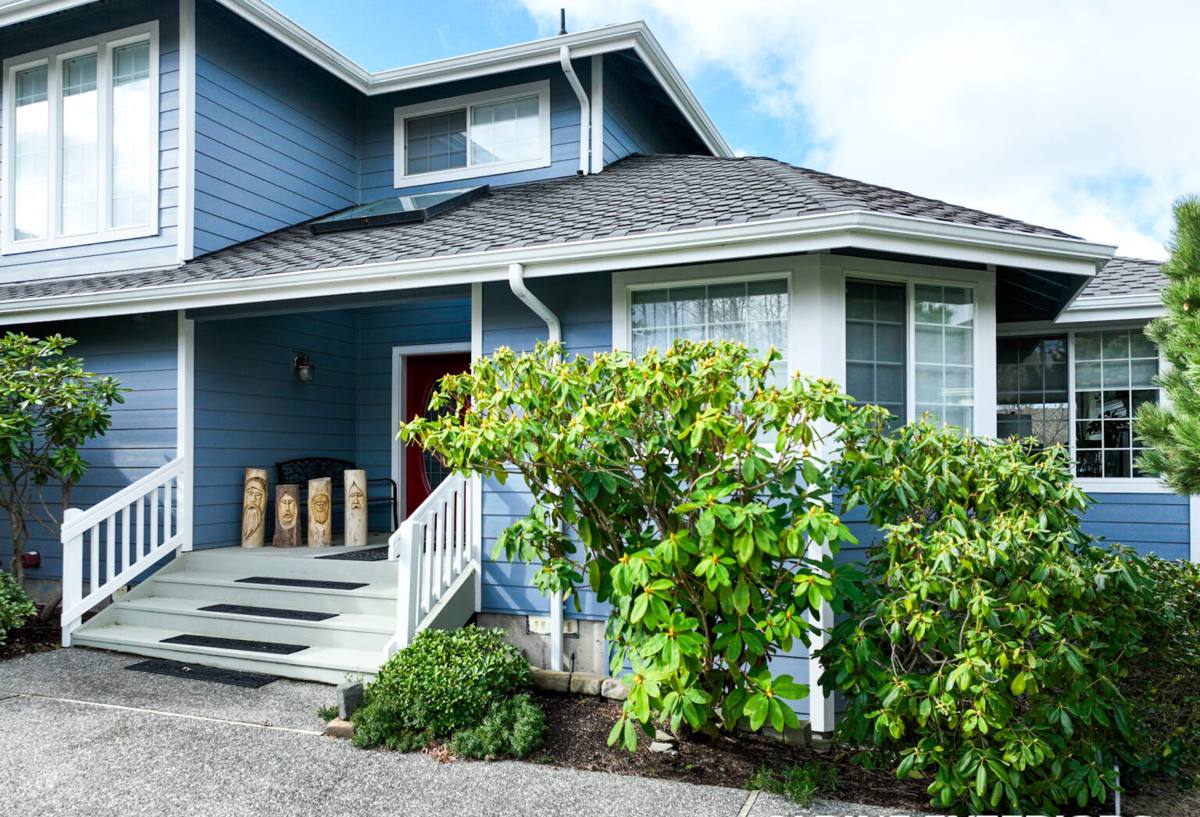
Signs Your Westchase Home Needs Replacement, Not Another Repair
Repainting or patching a section of siding can buy time, but it doesn't fix a material or installation problem underneath. Before spending money on another round of touch-ups, it's worth knowing which symptoms mean the siding itself is done.
- Boards that are visibly warped, bowed, or buckling away from the wall
- Soft or spongy spots when you press on a panel, especially near the bottom courses
- Paint or finish that's failing every two to three years instead of holding for a decade or more
- Seams and joints that have separated, cracked, or opened up gaps you can see daylight through
- Staining, streaking, or dark discoloration that keeps coming back after cleaning
- Soft entry points where insects or moisture have clearly gotten behind the siding
- A noticeable jump in cooling bills that lines up with when the siding started deteriorating
If you're seeing two or more of these, you're past the point where repair makes financial sense. The labor to patch a small section often costs close to what it would cost to do that wall correctly the first time.
What a Correct Siding Replacement Job Actually Involves
A siding replacement is not just pulling off old boards and nailing up new ones. Done correctly, it's a sequence where every layer depends on the one before it being right.
Tear-off and sheathing inspection
Once the old siding comes off, the sheathing underneath gets inspected before anything new goes up. This is the point where hidden moisture damage, soft wood, or rot from years of wind-driven rain finally becomes visible. Any compromised sheathing needs to be repaired or replaced before a new weather-resistive barrier goes on — covering a problem back up with new siding just resets the clock on the same failure.
Weather-resistive barrier and flashing
A correctly lapped weather-resistive barrier, with flashing detailed properly around every window, door, and penetration, is what actually keeps wind-driven rain out of the wall assembly. Siding sheds the bulk of the water, but it's not the only line of defense — in Tampa's climate, where storms push rain sideways more often than straight down, the barrier and flashing behind the siding matter as much as the siding itself.
Fastening for wind exposure
Hillsborough County isn't in the state's High-Velocity Hurricane Zone, but it's still governed by Florida Building Code wind speed requirements, and homes with more open exposure — corner lots, larger elevations, taller walls — need fastening schedules that match. That means following the manufacturer's high-wind installation specification for nail type, spacing, and embedment, not a generic pattern. This is one of the most common places corners get cut on a siding job, and it's invisible once the siding is up.
Comparing Siding Materials for a Tampa Climate
Homeowners replacing siding usually get quoted on more than one material. Here's how the common options actually hold up against Hillsborough County's combination of heat, UV, wind, and moisture.
| Material | Typical Lifespan | Maintenance Burden | Wind & Moisture Behavior |
|---|---|---|---|
| Vinyl | 15–25 years | Low, but fades and becomes brittle with sustained UV exposure | Can warp, crack, or blow off in high wind; not a moisture barrier itself |
| Engineered wood (e.g. LP SmartSide) | 20–30 years with diligent upkeep | Requires consistent caulking and repainting to keep moisture out of the strand core | Vulnerable to swelling and edge deterioration if moisture gets in and isn't caught early |
| Fiber cement (James Hardie) | 30+ years | Low; factory finish holds color without regular repainting | Non-combustible, dimensionally stable, engineered for high-moisture, high-heat climates |
Cost follows a similar order — vinyl is typically the least expensive up front, engineered wood sits in the middle, and fiber cement carries a higher installed cost. The gap narrows considerably once you factor in how often each material needs repainting, caulking, or partial repair over a 20-year ownership period.
Why We Install Only James Hardie Fiber Cement
We made a decision to standardize on one manufacturer rather than offer a menu of siding materials, and it's worth explaining why. Vinyl handles Florida's UV load poorly over time — it fades unevenly and can become brittle enough to crack in wind events, and it isn't a structural or moisture-managing material on its own. Engineered wood products can perform well, but they depend heavily on the homeowner keeping every seam, cut edge, and joint caulked and painted for the life of the siding; in a climate with this much wind-driven rain, a missed maintenance cycle can let moisture into the wood fiber core before it's visible from outside.
James Hardie's fiber cement is non-combustible, doesn't expand and contract the way wood-based products do in Tampa's heat swings, and comes with a factory-applied ColorPlus finish engineered to resist UV fading rather than relying on field-applied paint. Hardie also builds region-specific product lines — its HZ5 formulation is engineered for hot, humid, high-moisture climates like ours, rather than a one-size-fits-all product. That combination, backed by a strong transferable warranty, is why it's the only material we put on homes.
Our Process for a Westchase Siding Replacement
- On-site assessment and measurement — we look at every elevation, note exposure, existing damage, and substrate condition before quoting anything.
- Product and color selection — choosing plank profile and ColorPlus finish color, factoring in what reads well against the home's roofline, trim, and neighboring houses.
- Permitting — pulling the correct permit through Hillsborough County or the City of Tampa depending on the property's jurisdiction, and handling HOA architectural review submission where a community requires it.
- Tear-off and substrate repair — removing the old siding, inspecting sheathing, and repairing anything compromised before moving forward.
- Weather barrier, flashing, and installation — installed to the manufacturer's high-wind fastening specification, not a generic schedule.
- Final walk-through and cleanup — confirming the finished job against what was quoted before we consider it done.
Why Local Experience in Westchase Matters
A crew that's worked in Westchase before already knows how permitting timelines run through Hillsborough County, and knows that many Westchase communities operate under an HOA with an architectural review process for exterior changes — including siding color and style. Submitting the right documentation up front avoids delays that catch homeowners off guard mid-project.
There's also a practical benefit to familiarity with the neighborhood's housing stock: knowing the typical substrate conditions and siding profiles common to homes built during Westchase's main development period means fewer surprises once tear-off starts, and a better sense of what plank profile and color will look consistent with the surrounding streetscape rather than standing out as an obvious repair.
A Practical Checklist Before You Sign a Contract
- Get the manufacturer and product line specified in writing, not just "fiber cement" or "siding"
- Confirm who is pulling the permit and whether HOA approval is included in the scope
- Ask what happens if sheathing damage is found during tear-off, and how that's priced
- Verify the fastening schedule follows the manufacturer's high-wind installation instructions
- Get the warranty terms — both material and labor — in writing before work starts
Caring for New Siding in Tampa's Climate
Fiber cement siding installed correctly needs very little upkeep, but a few habits extend its life even further in this climate. Rinse the exterior periodically to clear salt residue, pollen, and organic buildup before it stains the finish. Check caulking at trim, window, and door joints once a year, since caulk fails well before the siding does. Keep irrigation heads from spraying directly onto the wall, and after any significant storm, do a quick visual check for impact damage from wind-blown debris.
If you're weighing a siding replacement for your Westchase home, we're happy to come take a look, walk the exterior with you, and give you a straight answer on what condition it's actually in — no pressure, no obligation. Use the form below to request a free estimate.