 Tampa Siding
 Siding Replacement for Brandon Homes
Brandon sits inland from Tampa Bay but still takes the full brunt of Hillsborough County's climate: long, humid summers, intense UV exposure nearly every day of the year, and the wind-driven rain that rides in on afternoon thunderstorms and tropical systems. Homes here are also close enough to the bay that salt-laden air reaches many neighborhoods, especially on breezy days. None of that is unusual for the Tampa area, but it adds up over the life of a siding system, and it's why the material and the installation matter more here than in milder climates.
When a Brandon homeowner calls us about siding replacement, we're usually looking at one of three situations: siding that's failed early from moisture intrusion, siding that's simply aged out after 20-plus years of Florida sun, or a remodel where the owner wants something more durable before the next hurricane season. Whatever the starting point, the goal is the same — a siding system engineered for this climate, installed by a crew that has done this work throughout the Tampa area and knows what actually fails here and why.
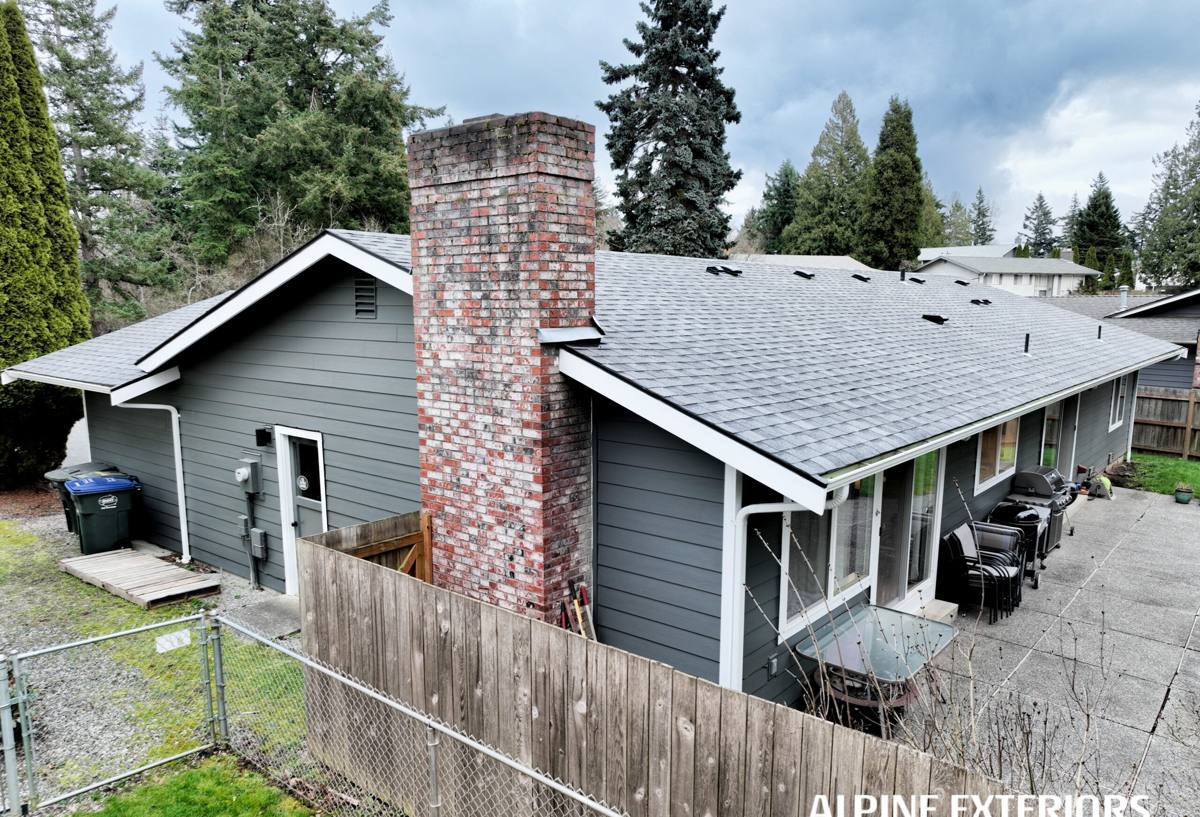
What Brandon's Climate Does to Siding Over Time
UV and Heat
Florida gets more sun hours per year than almost anywhere else in the country. On siding, that UV load breaks down cheap coatings, fades color unevenly (worse on south and west-facing walls), and — on materials with a plastic or resin-based finish — can cause warping or softening as surface temperatures climb well above ambient air temperature on a summer afternoon.
Wind-Driven Rain
Afternoon storms in Hillsborough County don't just fall straight down — wind pushes rain sideways into wall assemblies, especially around windows, corners, and butt joints. Any siding product with gaps, poor flashing, or a tendency to absorb moisture at the edges will eventually let water behind the cladding. Once that happens, the sheathing and framing behind the siding are at risk, not just the siding itself.
Humidity and Salt Air
Even away from the immediate coastline, Tampa Bay's humidity keeps siding surfaces damp longer than they'd stay in a drier climate, which favors mold and mildew growth on porous or wood-based products. Salt content in the air, carried inland on bay breezes, accelerates corrosion of fasteners and metal trim if they aren't rated for it.
Why We Install James Hardie Fiber Cement — and Nothing Else
We made a deliberate decision to install only James Hardie fiber cement siding, and we don't install vinyl, LP SmartSide, primed wood, cedar, or other fiber cement brands. That's not a marketing line — it's a standard we hold because of what we've seen these products do (and not do) in exactly the climate Brandon sits in.
Vinyl siding is affordable and low-maintenance in mild climates, but in direct Florida sun it can warp, fade, and become brittle faster than in northern states, and it isn't rated to stand up to the highest wind speeds without extra fastening — something worth weighing given Hillsborough County's storm exposure. Wood and engineered wood products like LP SmartSide can perform well when maintained aggressively, but they're organic materials in a humid climate, which means ongoing vigilance against moisture and rot that many homeowners underestimate at the time of installation. Other fiber cement brands aren't necessarily bad products, but we've standardized on one system so our crews install it correctly every time, and so our warranty backing is consistent and strong.
James Hardie fiber cement is non-combustible, doesn't expand and contract with heat the way vinyl does, resists the moisture problems that plague wood-based products, and comes with a factory-applied ColorPlus finish that's baked on and warrantied against fading — a real advantage under Florida's UV load. It's also engineered in HZ5 formulations specifically for high-humidity, high-moisture climates like Florida's, which is a meaningful distinction from siding designed for a generic national market.
What a Correct Siding Replacement Involves
Replacing siding well is mostly about what happens before the new panels ever go up. A fast tear-off-and-reinstall job that skips the details underneath is how homes end up with hidden rot five years later.
- Full removal of old siding and trim, not overlay installation on top of existing material
- Inspection of the sheathing and framing underneath for existing moisture damage or rot, with repairs made before new siding goes on
- Installation of a weather-resistant barrier (house wrap) that's properly lapped and sealed, since this is the layer that actually stops wind-driven rain that gets past the siding
- Correct flashing at every window, door, and roofline intersection — the single most common failure point we find on older homes
- Proper fastener selection and spacing rated for local wind exposure, using corrosion-resistant fasteners appropriate for humid, salt-influenced air
- Correct panel gapping and caulking per manufacturer specification, since Hardie board needs room to handle Florida's temperature and humidity swings
- Factory-finished ColorPlus panels installed without field-painting cut edges left exposed, using touch-up product where cuts occur
Skipping any one of these steps doesn't usually show up as a problem on day one. It shows up two, five, or ten years later as a soft spot near a window, a streak of mildew at a butt joint, or paint that's failing years ahead of schedule. Correct installation is the difference between siding that lasts its full rated life and siding that becomes a recurring repair.
Our Process for a Brandon Siding Replacement
| Step | What Happens |
|---|---|
| Estimate & inspection | We walk the exterior, assess current siding condition, check for existing moisture damage, and discuss product line and color |
| Proposal | Written scope covering tear-off, sheathing repair allowance, house wrap, trim, and the specific Hardie product and color |
| Tear-off & inspection | Old siding and trim removed, sheathing inspected and any damaged sections repaired or replaced |
| Weather barrier & flashing | House wrap installed and lapped correctly, flashing installed at every penetration and roofline |
| Hardie installation | Panels installed to manufacturer spec — correct gapping, fastening, and joint treatment |
| Trim & final detail | Corner boards, trim, and caulking completed; site cleaned of debris |
| Walkthrough | Final inspection with the homeowner before job close-out |
Cost Factors for Brandon Homeowners
Every home is different, so we don't quote firm numbers without seeing the property, but the main variables that move a siding replacement estimate up or down are consistent across Brandon and the wider Tampa area.
| Factor | Why It Matters |
|---|---|
| Home size and wall complexity | More square footage and more corners, gables, and dormers mean more material and labor |
| Sheathing condition | Hidden rot found during tear-off adds repair scope that can't be priced sight-unseen |
| Hardie product line | HardiePlank lap siding, HardiePanel vertical siding, and shingle-style products carry different material costs |
| Trim scope | Full trim replacement (corner boards, window trim, fascia) adds cost beyond field siding alone |
| Story height and access | Two-story sections and difficult access require more equipment and labor time |
| Color and finish | Standard ColorPlus colors versus custom field-painted options affect price and touch-up needs |
Why Hire a Crew That Already Works in Brandon
Siding installation isn't uniform across the country, and it shouldn't be treated that way. A crew that installs siding in a dry, mild climate and applies the same techniques here is skipping details that matter in Hillsborough County. A crew that already works Brandon and the surrounding Tampa area knows how local wind exposure affects fastening schedules, understands how humidity affects cure times and material handling, and has already seen where older homes in this area tend to have hidden moisture problems behind aging siding.
There's also a practical service advantage: a contractor already working in your area can typically respond faster for the estimate, get materials scheduled without long delays, and stand behind the warranty locally rather than through a call center. When you're trusting a crew with your home's largest exterior surface, that local track record is worth weighing alongside price.
Signs It's Time to Replace, Not Repair
- Soft or spongy spots when you press on the siding, which usually indicate moisture has reached the sheathing
- Visible warping, buckling, or panels pulling away from the wall
- Persistent mildew or staining that returns shortly after cleaning
- Paint or finish that's failing across large sections rather than isolated spots
- Cracked or crumbling panels, common on aging fiber cement or wood products near the end of their life
- Rising energy bills that suggest the wall assembly is no longer performing as it should
A few isolated damaged boards can sometimes be repaired rather than replaced outright, but widespread issues, especially moisture behind the siding, usually mean full replacement is the more cost-effective long-term decision. We'll tell you honestly which situation you're in during the estimate.
If your Brandon home's siding is showing its age or you're planning ahead of the next storm season, we're happy to take a look and give you a straightforward, no-pressure estimate — use the form below to get started.