 Tampa Siding
 Why Clearwater Roofs Wear Out Faster Than the National Average
Asphalt shingles are rated and tested under conditions that don't look much like Clearwater. A shingle warranty is written assuming moderate heat, occasional storms, and dry air most of the year. Clearwater gets none of that. Between the Gulf-front sun exposure, the salt-laden air moving inland off the water, and the wind-driven rain that comes through nearly every summer afternoon, a roof here is under load 12 months a year, not just during hurricane season.
That doesn't mean asphalt shingles are a bad choice for Hillsborough and Pinellas County homes — they're still the most common roofing material in the area for good reason: reasonable cost, wide style selection, and a straightforward repair process if something does go wrong. But it does mean the installation details matter more here than they would in a milder climate. A shingle roof installed the way a manual describes for a generic climate zone will underperform in Clearwater. One installed correctly for this specific environment will hold up.
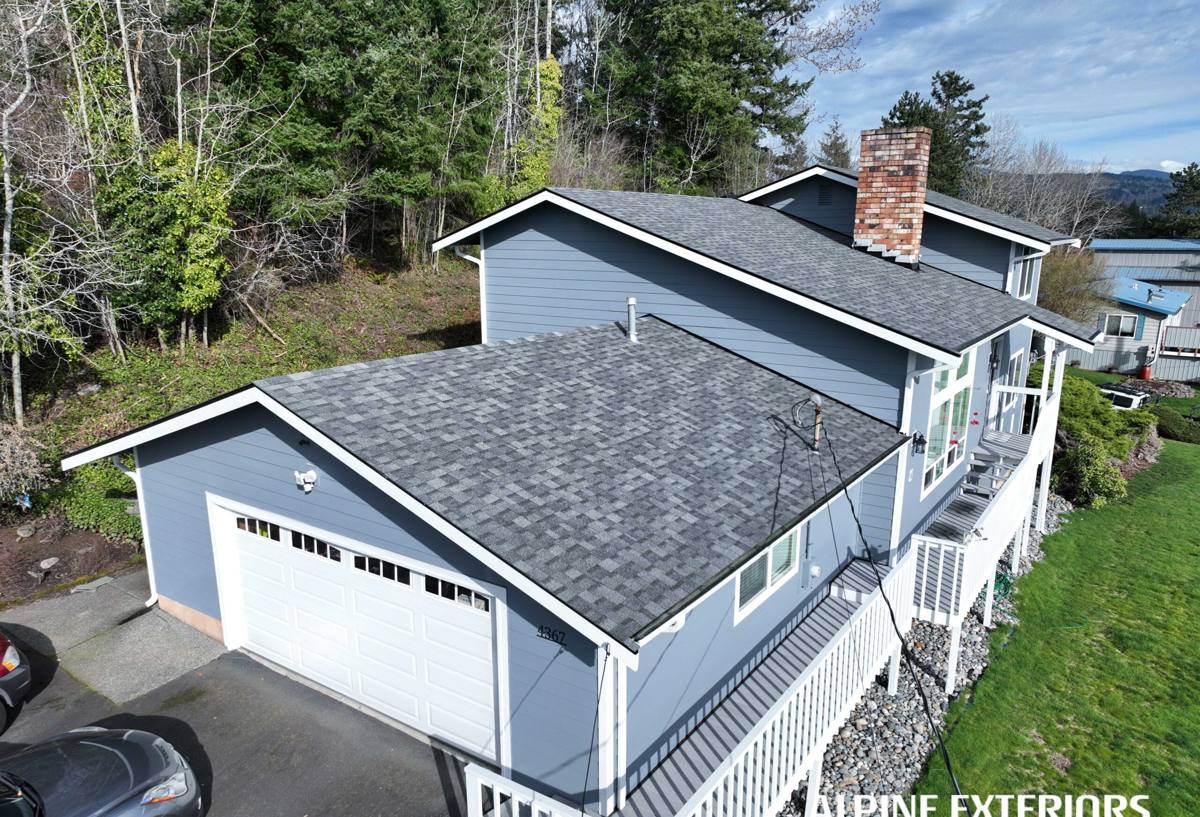
What Clearwater's Climate Actually Does to a Shingle Roof
UV and Heat
Florida sun bakes the asphalt oils out of a shingle over time, which is what eventually leads to granule loss, curling edges, and brittleness. This is a slow process, but it's constant, and it's a big part of why the same shingle line that lasts 25-30 years in a cooler state often gets 15-20 productive years on the Gulf Coast.
Wind-Driven Rain
A straight-down rainstorm is not what causes most leaks. Wind-driven rain — rain pushed sideways or even slightly upward under the shingle tabs during a squall — is what finds the weak points: under-sealed tabs, short nails, poor flashing, or gaps at penetrations. Clearwater's exposure to storms rolling off the Gulf means wind-driven rain is a regular event, not a once-a-decade hurricane scenario.
Salt Air
Being close to the water means airborne salt settles on every exterior surface, including the roof. Salt accelerates corrosion on exposed metal — nail heads, flashing, drip edge, and vent stacks — faster than it would inland. Roofs closer to the coast need corrosion-resistant fasteners and flashing more than roofs further into Hillsborough County.
Hurricane-Force Wind
Even outside a named storm, Tampa Bay sees strong straight-line wind events. Shingle uplift starts at the edges and corners of a roof first, which is exactly why edge and perimeter detailing (starter strip, drip edge, and nailing pattern at rakes and eaves) deserves more attention here than the field of the roof.
What a Correct Installation Looks Like Here
None of this requires exotic materials. It requires doing the ordinary parts of the job correctly and not skipping the details that don't show up in a quick visual inspection after the roof is done.
- Underlayment rated for wind-driven rain protection, not just a basic felt layer, especially on lower-slope sections
- Starter strip shingles at all eaves and rakes — not cut-down field shingles substituted in to save material
- Nailing pattern that matches the shingle manufacturer's high-wind specification, including nail count and placement, not just the minimum spec
- Corrosion-resistant flashing and fasteners at valleys, walls, and penetrations given the salt air exposure
- Proper sealing and flashing around every roof penetration — vent stacks, chimneys, skylights — since these are the most common leak origin points
- Attic ventilation that's adequate for Florida heat, so shingles aren't cooking from underneath as well as from the sun above
- Ice-and-water shield or equivalent self-adhered membrane at valleys and eaves, even though Clearwater doesn't get ice — the same membrane also blocks wind-driven rain intrusion
Skipping any one of these usually doesn't cause an immediate problem. It shows up two, five, or ten years later as a leak, granule loss, or shingles lifting in the next strong wind event — after the installer is long gone.
Shingle Types We Install and How They Fit Clearwater Homes
| Shingle Type | Wind Rating (typical) | Best Fit | Trade-Offs |
|---|---|---|---|
| 3-tab (standard) | Lower end of the range | Budget re-roofs, rental properties | Shorter lifespan in coastal UV/wind exposure; least expensive upfront |
| Architectural / dimensional | Mid-to-high, varies by line | Most Clearwater homes | Heavier, thicker profile handles wind and UV better; higher material cost than 3-tab |
| Impact-rated / Class 4 | Highest available for asphalt | Homes prioritizing storm resilience or insurance discounts | Higher upfront cost, but some insurers offer premium credits in wind-prone counties |
For most Clearwater homes we recommend architectural shingles as the baseline, with impact-rated lines discussed on a case-by-case basis depending on the home's exposure and the homeowner's insurance situation. We'll walk through what's actually available and reasonable for your roof rather than pushing the most expensive option by default.
Our Process for a Clearwater Roofing Job
Inspection and Assessment
We start by looking at the whole system, not just the shingles: decking condition, existing ventilation, flashing at every penetration, and any signs of past leaks in the attic. A shingle replacement on top of soft or damaged decking is a roof that fails early no matter how good the shingles are.
Tear-Off and Deck Inspection
We remove the old roofing down to the deck rather than layering over existing shingles. This lets us actually see and repair any damaged plywood or sheathing before it's covered up again — something you can't do with an overlay.
Underlayment and Flashing
This is where the wind-driven rain and salt air protection actually happens. We install underlayment and flashing suited to Gulf Coast exposure, not the minimum code allows.
Shingle Installation
Installed to the manufacturer's high-wind nailing specification, with attention to starter strips, valleys, and edge detailing — the areas most likely to fail first in a wind event.
Final Walkthrough
We review the completed roof with you, cover warranty paperwork, and make sure you know what routine maintenance (if any) is recommended going forward.
Maintenance That Actually Extends Roof Life Here
Asphalt shingles aren't zero-maintenance anywhere, and they're less so in a coastal Florida climate. A few habits make a real difference over the life of the roof:
- Keep gutters and valleys clear of debris so water doesn't pool or back up under shingles during heavy rain
- Trim back overhanging tree limbs that drop debris or create shade that keeps shingles damp longer after rain
- Have the roof checked after any major wind event, even if nothing looks obviously wrong from the ground
- Address small leaks or lifted shingles quickly — a $200 repair now is a lot cheaper than the deck damage that shows up if it's ignored for a year
- Have attic ventilation checked periodically, since blocked or inadequate ventilation shortens shingle life from underneath
Why Hiring a Crew That Already Works in Clearwater Matters
A roofing crew that mostly works inland or in a different climate zone will still know how to install a shingle roof — but they may not default to the wind-rated nailing pattern, the upgraded underlayment, or the corrosion-resistant fasteners unless a homeowner specifically asks. A crew that works Clearwater and the broader Tampa Bay area regularly builds those details into every job because they've seen what happens when they're skipped: the callback for a leak after the first real storm, or the shingle that lifted at the ridge two years in.
Local experience also means knowing which permitting and wind-mitigation requirements apply in Hillsborough and Pinellas County, and being able to speak accurately to what your insurance carrier may ask for in terms of documentation for wind mitigation credits. That's not something you learn from a manufacturer's install guide — it comes from doing the work here, repeatedly, and dealing with the aftermath when it's not done right.
Signs Your Clearwater Roof Needs Attention
| What You See | What It Likely Means |
|---|---|
| Granules collecting in gutters | Normal in small amounts as shingles age; heavy amounts signal accelerated wear from UV exposure |
| Curling or cupping shingle edges | Shingles drying out and losing flexibility — common in high-UV coastal exposure |
| Dark streaking | Usually algae growth, a cosmetic issue in Florida's humidity rather than a structural one |
| Shingles missing after a storm | Wind uplift — worth a full inspection, not just a patch of the missing area |
| Ceiling stains or attic water marks | Active or past leak — needs prompt investigation before decking damage spreads |
If your Clearwater home's roof is showing any of these signs, or it's simply getting close to the age where a replacement makes more sense than another repair, we're glad to take a look. Reach out for a free, no-pressure estimate using the form below — we'll give you a straight answer about what your roof actually needs.