 Tampa Siding
 Why Decks in Ybor City Wear Out Faster Than the National Average
Ybor City sits close enough to Tampa Bay that salt-laden air, near-constant summer humidity, and intense UV exposure all work on a deck at the same time. Most deck-building products sold nationally are engineered and rated for a much milder climate. In Hillsborough County, a deck has to survive year-round sun that breaks down wood fibers and fades finishes, wind-driven rain that gets pushed sideways under railings and into ledger boards, and the kind of tropical humidity that keeps lumber damp long after a storm has passed. Add in the occasional hurricane-force wind event, and you have a structure that's being tested from every direction, all year.
This isn't a reason to avoid having a deck — it's a reason to build or replace one correctly the first time. A deck put together with big-box lumber and standard hardware might look fine for a season or two, then start showing soft spots, corroded fasteners, and rail wobble well ahead of schedule. We see this pattern often enough in this neighborhood that we build every replacement deck assuming it will face that exact combination of stresses.
The Specific Failure Points We Watch For
- Ledger board attachment to the house — the single most common source of major deck failures anywhere, made worse here by moisture that never fully evaporates between rain events
- Fastener corrosion — standard hardware rusts and streaks far faster in salt-influenced air than the packaging usually implies
- Post base rot at ground contact, accelerated by Florida's humidity and irrigation overspray
- UV-driven surface checking and graying on unprotected or under-maintained wood
- Railing and stair connections loosening under repeated wind load over multiple storm seasons
Repair or Replace? How to Tell
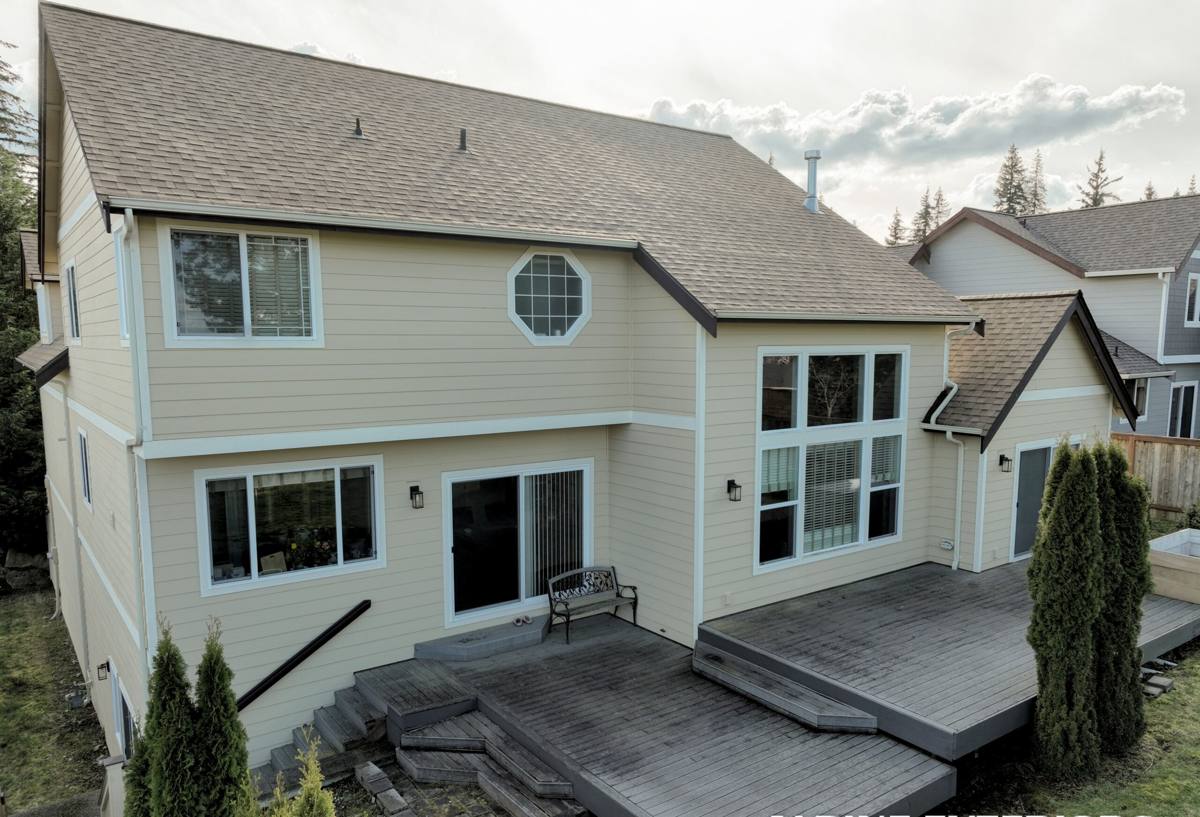
Not every tired-looking deck needs to come out. But there's a line where patching individual boards stops making financial sense and a full replacement becomes the honest recommendation. We walk every deck the same way before giving you an answer either way.
Signs You're Past the Repair Point
- Soft, spongy, or spreading gray/dark discoloration in the ledger board or support posts
- Structural framing that flexes noticeably when you walk across it
- Multiple generations of past repairs already patched into the same deck
- Railings or stairs that have loosened from their connection points, not just a single loose baluster
- Fasteners that have rusted, bled, or backed out across a wide area rather than a few isolated spots
- A deck older than 15–20 years built without a proper ledger flashing detail
If what you're seeing is limited to a handful of surface boards or one section of railing, repair is often the right call and we'll tell you that. Replacement makes sense once the framing itself — the part you can't see from the surface — is compromised.
What a Correct Deck Replacement Actually Involves
A deck replacement is a structural project, not a cosmetic one, even when the finished result looks like a simple upgrade. Doing it right in this climate means paying close attention to a few details that are easy to skip and hard to notice until they fail.
Ledger and Flashing
Where the deck attaches to the house is the part that has to be gotten right. Proper through-bolting into structural framing (not just the exterior sheathing), combined with correctly lapped flashing that sheds water away from the house rather than trapping it behind the ledger, is non-negotiable in a region that sees this much wind-driven rain.
Footings and Framing
Footings need to be sized and set to local frost-free, load-bearing standards, and framing lumber, joist spacing, and beam sizing need to match the actual load and span — not just whatever the lumberyard has in stock. Post bases should keep wood off direct ground or concrete contact to slow rot.
Fasteners and Connectors
We use corrosion-resistant, coastal-rated fasteners and structural connectors throughout — hangers, hurricane ties, and screws rated for the moisture and salt exposure this area sees, not the standard interior-grade hardware that shows rust streaks within a couple of years.
Wind Resistance
Railings, stair stringers, and the deck-to-house connection all need to be built to handle real wind load, not just vertical foot traffic. That's the difference between a deck that shrugs off a tropical storm and one that needs emergency repairs afterward.
Material Options for Ybor City Decks
There's no single "best" decking material — the right choice depends on your budget, how much upkeep you're willing to do, and how long you want to go before your next major project. Here's how the common options actually perform under Tampa's sun, rain, and salt air.
| Material | Upfront Cost | Maintenance | Climate Notes |
|---|---|---|---|
| Pressure-treated wood | Lowest | Annual sealing/staining recommended | Needs consistent upkeep to resist UV graying and moisture cupping; most affordable option |
| Composite decking | Mid to high | Occasional washing, no staining | Handles humidity and UV well when properly ventilated underneath; color choice affects surface heat |
| PVC/capped polymer | Highest | Lowest — washing only | Best resistance to moisture and salt air of the manufactured options; higher upfront cost offsets long-term upkeep |
| Tropical hardwoods | High | Periodic oiling for color retention | Naturally dense and rot-resistant but still needs maintenance to prevent UV fading |
Whatever surface material you choose, the framing underneath should always be built to the same structural standard — that's where most deck problems actually start, regardless of what's on top.
Our Deck Replacement Process
- On-site assessment — we inspect the existing structure, framing, ledger attachment, and any moisture or rot damage, and give you a straight answer on repair vs. replace
- Design and material selection — sized to your home, your budget, and how you actually use the space
- Permitting — we handle the Hillsborough County/City of Tampa permit and inspection process for you
- Demolition and disposal — old deck removed and hauled off, with the ledger area checked for hidden water damage to the house itself
- Framing and structural work — footings, posts, beams, joists, and ledger flashing installed to code and to a higher fastener/hardware standard than the code minimum
- Decking, railing, and finishing — surface material installed, railings secured, stairs finished
- Final walkthrough — we go over the finished deck with you before calling the job done
Permits and Local Considerations
Deck replacements in Ybor City typically require a permit through the applicable local building department, and inspections at key stages — footings, framing, and final. This isn't paperwork for its own sake: it's what confirms the structure actually meets Florida's wind and structural load requirements, which are stricter than what you'll find in most of the country for good reason. We pull the permits and coordinate inspections as part of the job, so you're not left tracking that down yourself.
Ybor City also includes some historic and mixed-density housing, so lot setbacks and, in some cases, appearance guidelines can factor into the design. We check those specifics for your property before finalizing a plan rather than assuming a one-size-fits-all layout.
What Drives the Cost of a Deck Replacement
| Factor | Why It Matters |
|---|---|
| Deck size and shape | Square footage and the number of angles/levels directly affect material and labor time |
| Decking material | Pressure-treated wood, composite, and PVC span a wide cost range, as shown above |
| Framing condition | Rotted or undersized existing framing may need full replacement, not reuse |
| Railing style | Standard baluster rail, cable rail, and glass panel systems vary significantly in cost |
| Elevation/stairs | Multi-level decks and staircases add framing complexity and labor |
| Permit and inspection scope | Larger or elevated structures may require additional engineering review |
We give you a written, itemized estimate before any work starts — no vague allowances, so you know what you're paying for and why.
Why a Crew That Already Works Ybor City Matters
Building a deck that holds up here isn't about following a generic manual — it's about knowing what actually fails on homes in this specific area and building past those weak points from the start. A crew that regularly works in Ybor City and the surrounding Tampa neighborhoods already knows which fastener grades hold up against the local salt air, how the county's inspectors expect ledger flashing and footings detailed, and how older Tampa-area homes are typically framed at the point where a new deck has to tie in. That local track record shows up as fewer surprises during the permit process and a deck that's built for the conditions it will actually face, not the conditions decking materials are tested under in a lab somewhere else.
It also matters after the job is done. A local contractor is easy to reach if a question comes up down the line, and has a reputation in the neighborhood worth protecting — which is a good incentive to get the details right the first time.
Keeping a New Deck in Good Shape
- Rinse off salt residue, pollen, and debris every few weeks, more often near the water
- Reseal or restain wood decking on the manufacturer's recommended schedule, typically every 1–2 years in this climate
- Wash composite/PVC decking periodically to prevent mildew buildup in shaded areas
- Check railing and stair connections for looseness after any major storm
- Keep gutters and downspouts clear so runoff doesn't pool near posts and footings
- Trim back vegetation that keeps deck boards shaded and damp
If your deck in Ybor City is showing its age or didn't survive the last storm season the way it should have, we're happy to take a look and give you a straight, no-pressure assessment. Fill out the form below for a free estimate.