 Tampa Siding
 Why New Tampa Roofs Take Extra Punishment
New Tampa sits in a part of Hillsborough County that gets the full range of what Florida weather can throw at a roof. Summer brings near-daily thunderstorm cells with heavy, wind-driven rain and hail that can arrive with little warning. Late summer and fall bring the real threat: tropical systems and hurricane-force wind gusts that lift shingles, drive water sideways under flashing, and pepper roofs with airborne debris. On top of that, the sun works on these roofs almost every day of the year, and the UV exposure is intense enough that it ages roofing materials faster than in most of the country.
None of this is unique to any one house — it's the baseline every roof in this area has to survive. What is specific to New Tampa is the mix of roof ages and roofing systems you find in its subdivisions, many built during different construction booms with different shingle grades and underlayment standards. A storm that barely marks one roof can tear into the roof next door if the materials or install quality were different to begin with.
What Actually Counts as Storm Damage
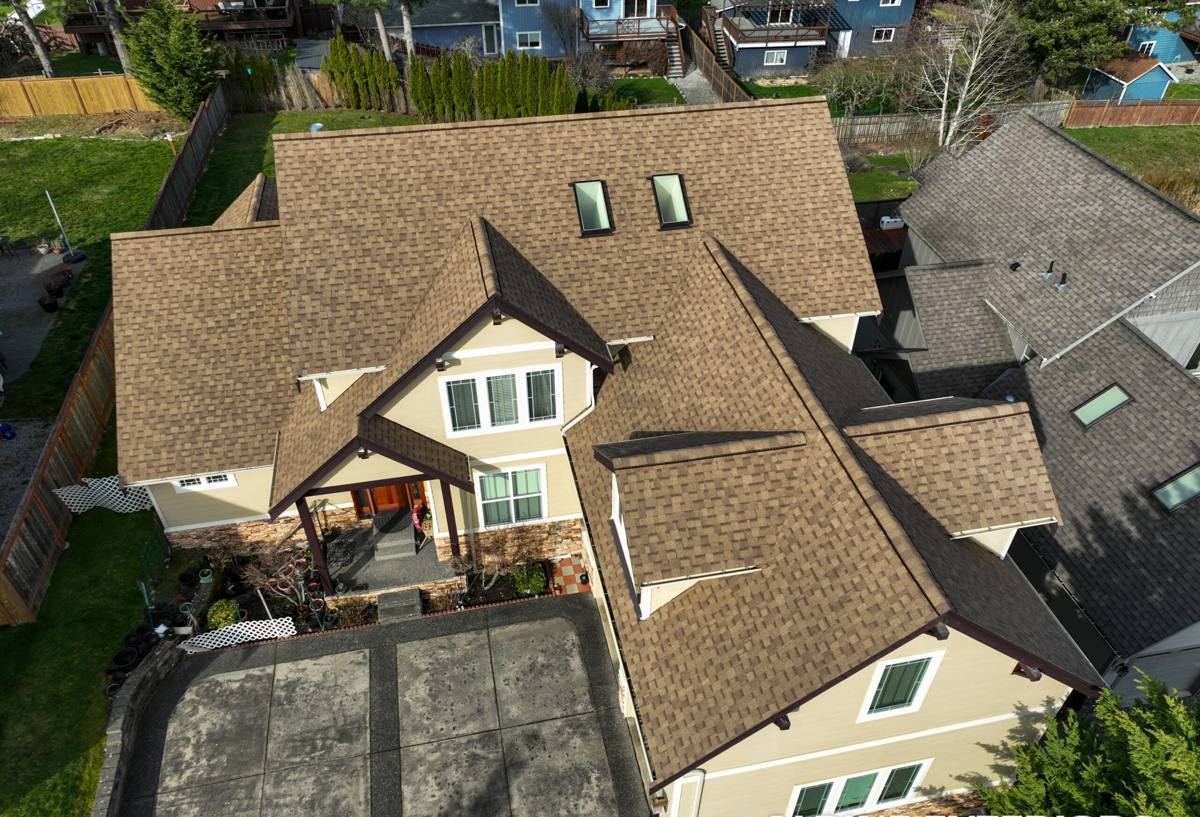
Homeowners often picture storm damage as a hole in the roof or missing shingles you can see from the driveway. Real storm damage is usually less obvious and more common than that:
- Wind-lifted or creased shingles that still look mostly intact but have broken their seal
- Bruised or fractured shingle mat from hail impact, which shows up as soft spots rather than visible holes
- Flashing pulled loose or bent around chimneys, skylights, and roof-to-wall transitions
- Wind-driven rain forced up under shingle edges and into the underlayment
- Granule loss that strips a shingle's UV protection without an obvious visual sign from the ground
- Debris punctures from tree limbs, fence panels, or blown roofing off a neighboring structure
A lot of this damage is invisible from the ground and only shows up on a close, hands-on inspection — or months later as a slow leak, a stain on a ceiling, or a spike in a homeowner's energy bill because insulation got wet.
Why Waiting Costs More Than the Repair Itself
A compromised roof doesn't fail all at once. Water finds the weak point, tracks along the decking, and soaks insulation and framing long before it ever shows up as a ceiling stain inside the house. In a humid climate like Tampa's, trapped moisture also means a faster path to wood rot and mold growth in the attic — problems that cost far more to fix than the original roof damage would have. Insurance carriers are also stricter than they used to be about claim timing; a storm-damage claim filed weeks or months after the event, with no documentation of when the damage occurred, is a much harder claim to win than one filed promptly with dated photos and a professional inspection report.
What a Correct Storm Damage Repair Actually Involves
Full Roof Assessment, Not Just a Patch
A proper storm repair starts with walking the entire roof, not just the section where damage is visible from the street. Wind and hail rarely stay confined to one slope, and a contractor who only fixes what's obvious often misses damage on a back slope or a low-visibility valley that fails a year later.
Decking Inspection
If water has been getting under the roofing system, the plywood or OSB decking underneath needs to be checked for soft spots, delamination, or rot. Any decking that's been compromised gets replaced before new roofing goes down — covering over bad decking is one of the most common shortcuts that leads to a repair failing again in the next storm.
Underlayment and Flashing
The underlayment is the roof's real waterproofing layer; the shingles or tiles are the wear surface on top of it. Any repair that doesn't address torn or displaced underlayment, and re-seat or replace damaged flashing at penetrations and roof-to-wall transitions, is only a cosmetic fix.
Matching Materials
Where a full replacement isn't warranted, we match shingle profile, color, and — where possible — the manufacturer's product line as closely as the market allows, so the repaired section blends in rather than standing out as an obvious patch.
Working the Insurance Claim
Most storm damage repairs in this area go through a homeowner's insurance policy, and how the claim is documented affects both the outcome and the timeline. We provide a written inspection report with dated photos that a homeowner can hand directly to their adjuster. We're also glad to meet the adjuster on-site to walk the roof together and point out damage that's easy to miss from a ladder inspection alone — hail bruising and wind-lifted seals in particular are often underestimated when they're not examined up close. We do not inflate estimates or manufacture damage to pad a claim; our job is an honest, defensible assessment that holds up to scrutiny.
Our Repair Process
- Emergency tarp-over if the roof is actively leaking or exposed, to stop further water intrusion while repairs are scheduled
- Full inspection of every slope, valley, penetration, and flashing point, with photo documentation
- Written scope and estimate that separates what's storm damage from any pre-existing wear, so the paperwork is clean for an insurance claim
- Decking repair where water intrusion has compromised the sheathing
- Underlayment and flashing repair or replacement at every affected point, not just the most visible one
- Shingle or roofing material repair matched to the existing roof
- Final walkthrough with the homeowner before we consider the job closed
Repair or Replace: How We Help You Decide
Not every storm-damaged roof needs to come off. But a repair that's cheaper today can be a poor decision if the roof is already near the end of its service life. Here's how we walk homeowners through that call:
| Factor | Leans Toward Repair | Leans Toward Replacement |
|---|---|---|
| Extent of damage | Localized to one slope or area | Spread across multiple slopes or the whole roof |
| Roof age | Under roughly 10-12 years | Nearing or past its expected service life |
| Decking condition | Sound, minimal water intrusion | Widespread rot or delamination found |
| Insurance coverage | Repair covers the actual damage | Adjuster approves full replacement |
| Long-term cost | Lower upfront cost, shorter remaining life | Higher upfront cost, full warranty reset |
We'll always give a straight answer on which side of that line your roof falls, including when a repair is genuinely the right call and a full replacement would just be spending more of the homeowner's money than the situation calls for.
Materials That Hold Up Here
For repairs and replacements alike, we favor roofing systems with a track record in Florida's UV and wind conditions — architectural shingles rated for high wind zones, properly fastened per current wind-load requirements, with underlayment upgraded to a synthetic or self-adhering product rather than the older felt underlayments that degrade faster under heat and moisture. We steer away from lower-grade shingle lines that look similar on a sample board but shed granules faster under intense sun exposure, since that shortens the service life of the whole roof regardless of how well the repair itself is installed.
Why Hiring a Crew That Already Works New Tampa Matters
A roofing crew that works this part of Hillsborough County regularly has a feel for which manufacturers, shingle lines, and underlayment systems actually hold up under repeated storm cycles here, versus which ones look fine on paper but underperform in practice. That local track record shortens the guesswork on material selection, speeds up sourcing shingle matches for older roofs, and means the crew showing up already understands the wind-load and building code requirements that apply in this county — not requirements from somewhere else in the state.
What to Do the Moment You Notice Storm Damage
- Photograph any visible damage from the ground — shingles in the yard, dented gutters, obvious tears — before cleanup
- Check the attic for water stains, damp insulation, or daylight coming through the decking
- Avoid walking the roof yourself; storm-damaged decking can be structurally unsafe underfoot
- Get a tarp over any active leak as soon as it's safe to do so
- Call for a professional inspection before filing or finalizing an insurance claim
- Keep all photos and inspection reports together for your claim file
If a recent storm has left you wondering whether your roof needs attention, we're happy to come take an honest look. The estimate is free, there's no pressure to sign anything on the spot, and you'll get a straight answer about what the roof actually needs — just fill out the form below to get started.