 Tampa Siding
 Building Decks for Riverview's Specific Climate
Riverview sits inland from Tampa Bay but still takes the full brunt of Florida's Gulf Coast weather — long stretches of intense UV, heavy summer humidity, wind-driven rain that comes in sideways during storm season, and the seasonal threat of hurricane-force gusts working their way up from the coast. A deck built to a generic national spec doesn't hold up here the way it might in a drier, milder climate. The fasteners corrode faster, the boards cup and crack under UV exposure, and framing that isn't properly rated for wind uplift becomes a real liability during storm season.
We build custom decks specifically with Hillsborough County's climate in mind — not as an afterthought, but as the starting point for every material choice, fastener spec, and structural decision we make. A deck that's going to sit under the Florida sun for the next fifteen to twenty years needs to be built differently than one going up in a cooler, drier region, and homeowners in Riverview deserve a contractor who treats that as standard practice, not an upsell.
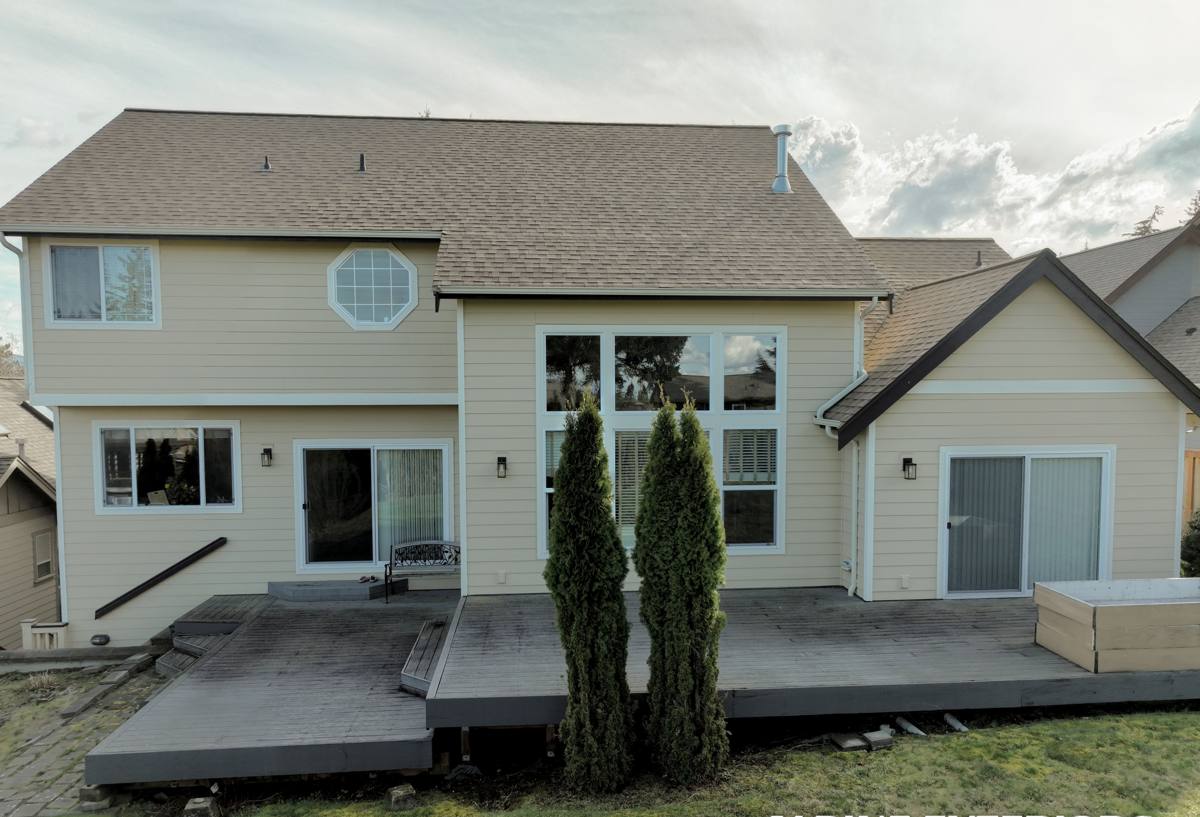
What a Correctly Built Deck Requires Here
Framing and Fasteners
Standard galvanized fasteners break down faster in Florida's humidity and the salt-influenced air that moves inland from the bay, especially on decks that sit low to the ground or near sprinkler systems and irrigated landscaping. We use stainless steel or heavy-duty coated fasteners rated for coastal and high-moisture environments, along with pressure-treated framing lumber that's rated for ground contact where it's needed. Cutting corners on fasteners is one of the most common ways a deck fails early — the boards can look fine while the connections underneath are already corroding.
Footings and Structural Support
Riverview's soil and drainage patterns vary block to block, and footing depth needs to account for both local frost-free requirements and the load the structure will actually carry. We size footings to the deck's real use — a deck built for a hot tub or a large gathering space needs deeper, more numerous footings than a simple platform deck, and we don't guess on this. It's calculated based on the design.
Ventilation and Moisture Management
Humidity is a constant in this part of Florida, and a deck that traps moisture underneath — especially low-clearance decks close to grade — is inviting rot and mildew even when the surface material is rated for wet climates. Proper spacing between boards, correct joist layout, and thoughtful grading underneath the structure all matter more here than they would in a dry climate.
Choosing the Right Decking Material for This Climate
Material choice is where a lot of Riverview homeowners get steered wrong, usually by whoever has the cheapest product on hand rather than what actually performs well locally. Here's an honest breakdown of what we see holding up — and what tends to cause problems — in Tampa-area conditions.
| Material | UV & Heat Performance | Moisture & Humidity | Maintenance | Typical Lifespan Here |
|---|---|---|---|---|
| Pressure-treated wood | Fades and can check/splinter without regular sealing | Prone to warping and rot if not sealed consistently | Annual sealing/staining recommended | 10-15 years with upkeep |
| Capped composite | Strong UV resistance, holds color well | Handles humidity and rain well, resists rot | Occasional washing, no sealing needed | 20-25+ years |
| PVC decking | Excellent UV and heat performance, very stable | Fully moisture-resistant, no wood core to rot | Low — occasional washing | 25+ years |
| Tropical hardwoods (e.g. ipe) | Naturally UV-resistant but will gray without oiling | Naturally rot-resistant when properly sealed | Regular oiling to maintain color | 25+ years with upkeep |
There's no universally "correct" choice — a lot of it comes down to budget, how much upkeep a homeowner actually wants to commit to, and the look they're after. What we won't do is put a moisture-sensitive, uncapped composite or an untreated softwood into full Florida sun and call it a long-term solution. If a lower-maintenance product fits the budget better, we'll say so plainly rather than pushing whatever has the highest markup.
Building for Wind and Storm Exposure
Hillsborough County sits well within hurricane risk territory, and even in years without a direct hit, Riverview sees strong straight-line winds and tropical storm systems that put real lateral and uplift stress on an outdoor structure. A deck that's only fastened for gravity load — not wind uplift — can start separating from the house or racking at the posts over time, and in a serious wind event that's a genuine safety issue, not just a cosmetic one.
Correct storm-rated construction includes:
- Ledger board attachment through-bolted into the home's structural framing, not just lag-screwed into siding or sheathing
- Joist hangers and structural connectors rated for the wind exposure category that applies to this part of Hillsborough County
- Post-to-beam and beam-to-footing connections engineered for uplift, not just downward load
- Guardrail and stair framing built to current Florida Building Code requirements, including baluster spacing and load ratings
- Proper flashing at the ledger connection so wind-driven rain doesn't work its way behind the siding and into the wall structure
This isn't optional detailing — it's what separates a deck that survives a decade of Florida storm seasons from one that needs repair after the first bad squall.
Design Considerations Specific to Riverview Properties
A lot of Riverview lots sit close to grade with minimal elevation change, which affects drainage planning under and around a new deck — water needs somewhere to go, and a deck built without accounting for that can turn a low spot in the yard into a standing-water problem. Homeowners with pools also need decking rated for chlorine exposure and consistent wet-foot traffic, which narrows the material list somewhat compared to a deck that's purely for outdoor dining and lounging.
Shade and orientation matter more here than in most parts of the country. A west- or south-facing deck with no coverage plan will be functionally unusable during the hottest stretch of a Tampa summer afternoon. We talk through pergolas, shade sails, or simple roof extensions as part of the design conversation — not as an add-on sold after the fact, but as part of making sure the space actually gets used.
Our Process for Riverview Deck Projects
We keep the process straightforward and communicate clearly at each stage, since the biggest source of frustration on deck projects is usually not knowing what's happening or when.
- On-site consultation: We walk the property, discuss how the space will actually be used, and take measurements and elevation notes specific to the lot
- Design and material selection: We lay out layout options and go through material trade-offs honestly, including realistic cost ranges for each
- Permitting: We handle the permit application and drawings required by Hillsborough County or the applicable jurisdiction
- Site prep and footings: Footings are dug and poured to spec before any framing begins
- Framing and structural work: Ledger, posts, beams, and joists go in with storm-rated hardware throughout
- Decking, railing, and stairs: Surface material and code-compliant railings are installed and finished
- Final walkthrough and inspection: We review the completed deck with the homeowner and coordinate the final county inspection
Permits and Code in Hillsborough County
Most custom deck projects in the Riverview area require a building permit, and decks attached to the home, decks above a certain height, or decks with pool proximity typically require an engineered plan set. Skipping the permit process might save time upfront, but it creates real problems down the line — unpermitted structures can complicate a home sale, cause issues with insurance claims after storm damage, and in some cases require removal. We pull the required permits as a standard part of every project rather than treating it as optional paperwork, and we build to the current Florida Building Code wind and structural requirements that apply to this area.
Maintaining a Deck in Tampa's Climate
Whatever material a homeowner chooses, a few habits go a long way toward getting the full expected lifespan out of a Riverview deck:
| Task | Frequency | Why It Matters Here |
|---|---|---|
| Rinse surface and clear debris | Every few weeks in growing season | Prevents mildew growth in humid conditions |
| Inspect fasteners and connections | Annually | Catches early corrosion before it becomes structural |
| Reseal or restain wood surfaces | Annually or as needed | UV and rain exposure break down wood finishes quickly |
| Check flashing and ledger area | Annually, especially post-storm-season | Wind-driven rain can work behind flashing over time |
Why Local Experience in Riverview Matters
A crew that already works regularly in this part of Hillsborough County isn't guessing at soil conditions, drainage patterns, permitting timelines, or the county's inspection expectations — we've been through that process here before. That familiarity translates into fewer surprises during the project: fewer permit delays, fewer redesigns because of a drainage issue that should've been caught at the design stage, and a structure that's actually built for what this region's weather does to outdoor construction year after year.
A deck that's technically finished but wasn't built with Tampa's UV exposure, humidity, and storm risk in mind ends up costing homeowners more over time — in repairs, in early replacement, or in insurance headaches after a storm. Building it correctly the first time, with materials and structural details matched to this climate, is what actually makes a custom deck a good long-term investment for a Riverview home.
If you're considering a custom deck for your Riverview property, we're happy to walk the site, talk through design and material options honestly, and put together a free, no-pressure estimate using the form below.