 Tampa Siding
 Why Siding Wears Differently in Riverview
Riverview sits inland from Tampa Bay in southern Hillsborough County, but "inland" doesn't mean sheltered. Homes here still take the full brunt of a Gulf Coast climate: hurricane-force wind events, sustained wind-driven rain during summer storm season, and some of the most intense year-round UV exposure in the continental United States. Add in Florida humidity that rarely lets up and the periodic salt air that rides in off Tampa Bay on prevailing winds, and you have a combination that punishes exterior building materials faster than almost anywhere else in the country.
Siding isn't just cosmetic. It's the primary barrier protecting the sheathing, framing, and insulation behind it. When siding fails in this climate — through cracking, delamination, moisture intrusion, or fastener pull-out in high wind — the damage doesn't stay on the surface. It moves inward, and by the time it's visible on drywall or in a musty smell, the repair bill has grown considerably.
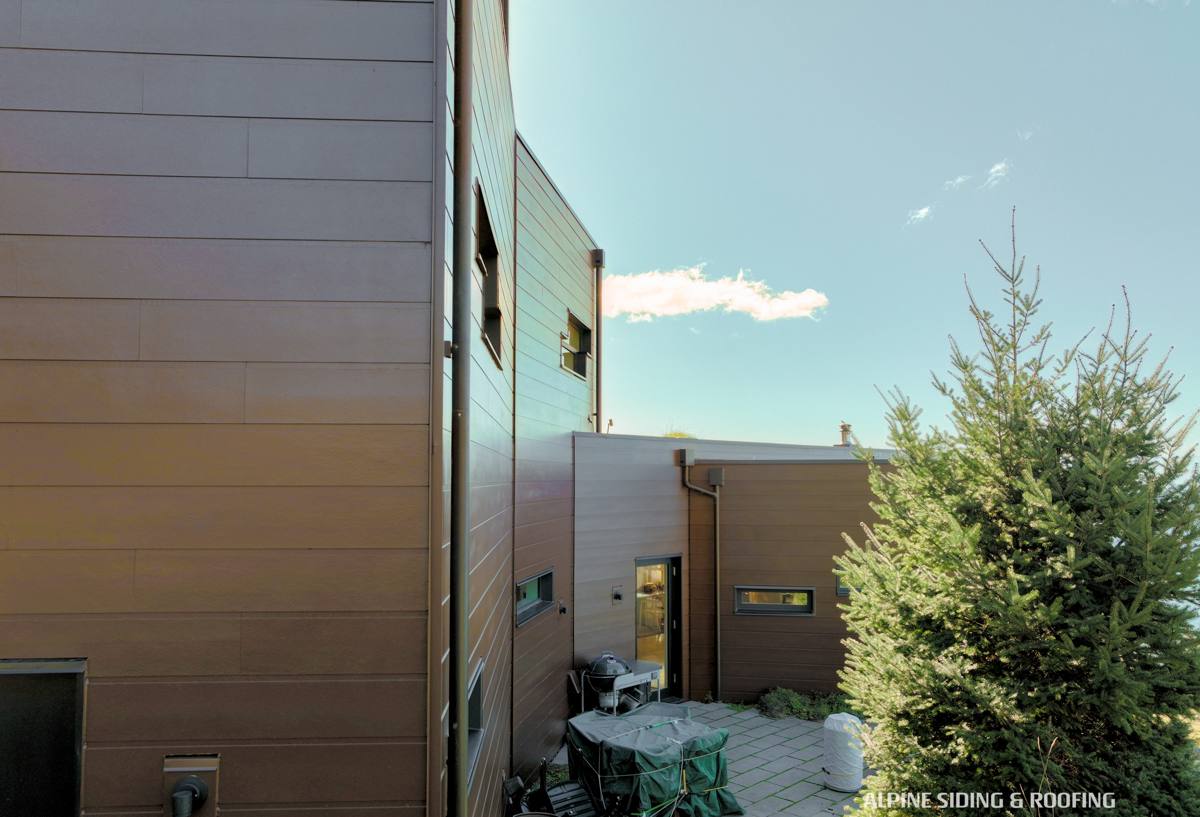
What Riverview Homes Need From Their Siding
Wind Performance
Hillsborough County's building code reflects its hurricane exposure, and siding installed on a Riverview home needs to meet wind-load requirements that are meaningfully stricter than what's required in much of the country. Fastening schedule, panel overlap, and manufacturer-approved installation methods all factor into whether siding actually performs in a named storm — not just whether it looks right the day it goes up.
UV and Heat Stability
Florida sun breaks down pigments and softens or embrittles many siding materials over years of exposure. A finish that fades, chalks, or becomes brittle within a decade isn't holding up its end of the deal, even if it was inexpensive to install.
Moisture Management
Between summer humidity, frequent afternoon thunderstorms, and wind-driven rain that gets pushed sideways into wall assemblies, Riverview siding needs to shed water reliably and resist swelling, rot, or fungal growth where moisture does find its way in.
Signs Your Riverview Home's Siding Needs Replacing
- Visible warping, buckling, or panels that no longer sit flat against the wall
- Cracking or splitting, especially along panel edges and butt joints
- Soft or spongy spots when pressed, indicating moisture damage underneath
- Paint that's peeling, bubbling, or needs repainting far more often than it should
- Visible gaps or separation at seams, corners, or around windows and doors
- A musty smell or signs of moisture on interior walls that back up to exterior siding
- Siding that's more than 20-25 years old, especially if it's never been fully replaced
Why Builder-Grade Siding Struggles Here
A large share of Riverview's housing stock was built in waves of rapid subdivision development, often with cost-driven siding choices that were never engineered specifically for a hurricane-exposed, high-UV climate. Vinyl siding can warp or crack in intense heat and doesn't hold up well to wind-borne debris. Hardboard and OSB-based products are vulnerable to swelling and rot if moisture gets past the face — and in a climate with this much wind-driven rain, moisture eventually finds a way in somewhere, whether through a nail hole, a caulk joint that's failed, or a corner that wasn't properly flashed.
This is exactly why we standardized on James Hardie fiber cement and don't install vinyl, LP SmartSide, or comparable engineered-wood products. Fiber cement is non-combustible, dimensionally stable in heat and humidity, and Hardie's HZ5 product line is specifically engineered for climates like ours — hot, humid, and hurricane-exposed. It won't warp in the sun, it resists moisture-driven rot because it's cement-based rather than wood-based, and it carries a factory-applied ColorPlus finish that's baked on rather than field-painted, which matters enormously under Florida UV.
Siding Material Comparison for This Climate
| Factor | Vinyl | Engineered Wood (LP-type) | James Hardie Fiber Cement |
|---|---|---|---|
| Hurricane wind rating | Lower impact resistance, can crack or blow off in high wind | Moderate, dependent on fastening | Engineered and rated for high-wind installation |
| UV / fade resistance | Fades and can become brittle over time | Paint fades, needs repainting | Factory ColorPlus finish resists fading far longer |
| Moisture / rot risk | Low rot risk but can trap moisture behind panels | Wood-based core, vulnerable if moisture penetrates | Cement-based, does not rot |
| Fire resistance | Combustible | Combustible | Non-combustible |
| Typical lifespan before major issues | 15-25 years | 10-20 years, highly install-dependent | 30-50+ years when installed to spec |
What a Correct Siding Replacement Involves
Tear-Off and Inspection
Removing old siding is also the moment to find out what's actually going on behind it. A correct replacement includes inspecting the sheathing for water damage or rot, checking framing for soft spots, and addressing anything found before new siding goes on — not covering it up.
Weather Barrier and Flashing
A proper weather-resistive barrier goes down first, with correct overlap and sealing at every penetration — windows, doors, hose bibs, vents. Flashing at windows, doors, and roof-to-wall transitions is where most long-term leaks originate if it's done wrong, and it's the detail that's easiest for a rushed crew to shortcut.
Manufacturer-Spec Installation
Hardie siding has specific fastening patterns, nail types, panel gaps, and clearances from grade and roof lines that are required for both the product warranty and correct wind performance. Installing it like generic siding — wrong nails, wrong spacing, no expansion gap — voids the warranty and defeats the engineering that makes it perform in a storm.
Joint and Trim Detailing
Butt joints, corners, and trim need to be sealed and finished correctly so water can't work its way behind the panels. This is detail work that shows up as a difference in performance five and ten years down the road, long after the job looks "done" to an untrained eye.
Our Process for Riverview Projects
1. On-Site Inspection and Estimate
We walk the exterior, check for existing moisture or structural issues, measure accurately, and give a written estimate based on what your home actually needs — not a generic square-footage guess.
2. Prep and Protection
Landscaping, walkways, and outdoor fixtures get protected before tear-off begins. We remove old siding section by section rather than stripping the whole house at once when weather is a factor, since Florida storms don't wait for a convenient day.
3. Installation to Manufacturer Spec
Every panel goes on following James Hardie's published installation guidelines — correct fasteners, correct spacing, correct flashing at every penetration. This is also what keeps your Hardie product warranty valid.
4. Final Details and Walkthrough
Caulking, touch-up, and cleanup happen before we call it finished, and we walk the exterior with you so you can see the completed work and ask questions before we consider the job done.
What to Expect During Your Project
- A clear written scope and timeline before work begins
- Daily site cleanup — no nails, scraps, or debris left in yards or driveways overnight
- Protection for landscaping, AC units, and outdoor living areas
- Direct communication if weather delays are needed rather than rushing installation in poor conditions
- A final walkthrough before the job is marked complete
Cost Factors for Riverview Siding Replacement
| Factor | How It Affects Cost |
|---|---|
| Home size and wall complexity | More linear footage, corners, and gables increase labor and material |
| Extent of underlying damage | Rotted sheathing or framing found during tear-off adds repair scope |
| Siding profile and trim detail | Lap width, shake accents, and custom trim affect material and labor |
| ColorPlus vs. field-painted finish | Factory finish costs more upfront but eliminates repainting cycles |
| Story height and access | Two-story sections require more equipment and labor time |
Why Working With a Crew That Knows Riverview Matters
Hillsborough County permitting, local wind-load requirements, and the realities of scheduling around Florida's summer storm pattern are all things a crew with local experience handles routinely instead of learning on your project. We know how Riverview's newer subdivisions are typically built, what siding issues tend to show up first in homes of a given age, and how to plan tear-off and installation around Gulf Coast weather so your home isn't left exposed longer than necessary.
We also stand behind the fact that we only install one siding system. That's a deliberate choice, not a limitation — it means every crew member is deeply familiar with one product's installation requirements rather than spread across several systems with different rules, and it means the warranty backing your investment is one we fully understand and stand behind.
Warranty and Long-Term Protection
James Hardie backs its fiber cement siding with a strong, transferable product warranty, and ColorPlus finishes carry their own finish warranty covering fading and chipping. That warranty protection is only as good as the installation behind it, though — which is why correct fastening, flashing, and clearances aren't optional details on our jobs. A warranty claim denied over an installation error is the worst outcome for a homeowner who thought they were covered.
If your Riverview home's siding is showing its age, or you're planning ahead rather than waiting for a failure, we're glad to walk your exterior with you and give you an honest read on what it needs. Reach out for a free, no-pressure estimate using the form below.