 Tampa Siding
 Why Hyde Park Decks Wear Out Faster Than the Rest of the House
Hyde Park is one of Tampa's older, more established neighborhoods, and a lot of the homes here have outdoor living space that's been added, rebuilt, or patched over decades. Decks sit outside the building envelope with no roof overhead and no siding to shed water — which means they take the full brunt of everything Hillsborough County's climate throws at a structure. Intense UV breaks down wood fibers and fades or chalks composite surfaces. Wind-driven rain gets up under boards and into fastener holes. Salt-laden air off Hillsborough Bay accelerates corrosion on anything metal — nails, screws, joist hangers, railing brackets. Add hurricane-force wind loading a few times a season, and a deck that looked fine five years ago can be hiding real structural problems today.
A lot of deck failures we see in this area aren't cosmetic — they're connection failures. The boards look worn, but the bigger issue is usually the framing underneath: rusted-through hardware, a ledger board pulling away from the house, or posts that have been sitting in standing water at the base. That's the difference between a deck that needs new boards and a deck that needs to be replaced.
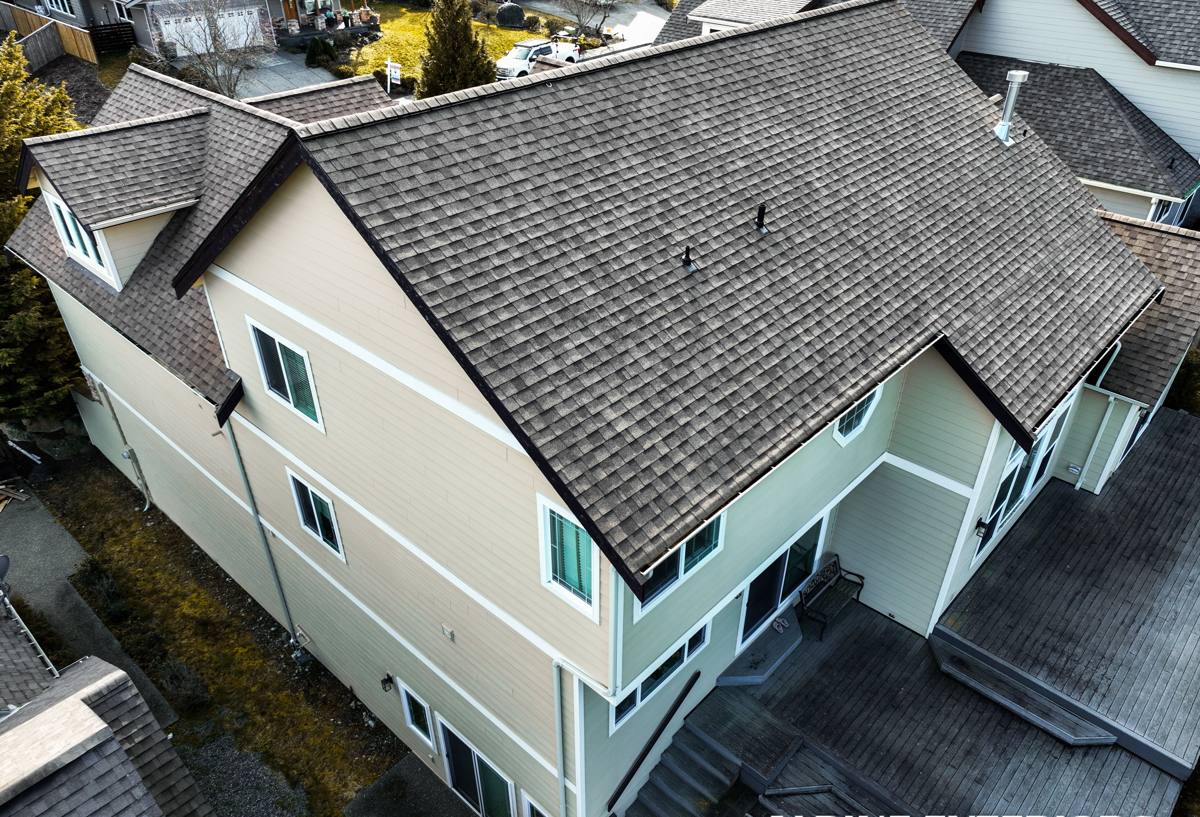
Repair, Resurface, or Full Replacement?
Not every tired-looking deck needs a full rebuild, but a lot of them do, and it's worth being honest about which one you're dealing with before spending money on the wrong fix.
Signs you can likely get away with repair
- A handful of individual boards are cupped, splintering, or soft, but most of the deck feels solid underfoot
- Railings are loose at a connection point but the posts themselves are sound
- Fasteners are visibly rusted but the wood around them hasn't gone soft
Signs you're looking at replacement
- Joists or beams are soft, spongy, or show rot when probed with a screwdriver
- The ledger board attachment to the house shows gaps, rust streaks, or movement
- Footings have shifted, settled unevenly, or show cracking
- More than a third of the surface boards are failing
- The deck predates current code requirements for guardrails, stair geometry, or ledger flashing
When the framing is compromised, resurfacing over it just hides the problem under new boards for a year or two. We'll tell you straight if a repair makes sense — replacement is the bigger job and we'd rather talk you out of it than into it when it's not needed.
Choosing a Decking Material for a Bay-Adjacent Climate
Every decking material has trade-offs, and in a coastal, high-UV, high-humidity market like Tampa those trade-offs matter more than they would inland. Here's how the common options actually perform once they're exposed to a Hillsborough County summer and hurricane season.
| Material | Upfront Cost | Maintenance | How It Handles Local Conditions |
|---|---|---|---|
| Pressure-treated pine | $ | Annual sealing/staining | Affordable and repairable, but needs consistent upkeep to resist UV graying and moisture cupping; fastener corrosion is the main long-term risk |
| Tropical hardwoods (ipe, cumaru, etc.) | $$$ | Periodic oiling to maintain color | Naturally dense and rot-resistant; holds up well in salt air but is unforgiving to install — fastening and expansion gaps have to be done correctly or boards will split |
| Capped composite | $$–$$$ | Occasional washing | Resists moisture and UV fading better than wood over time; performance depends heavily on ventilation underneath and correct fastener spacing for heat expansion |
| PVC/synthetic decking | $$$ | Low | Fully non-organic, so it won't rot; can get hot underfoot in direct summer sun and needs proper substructure support since it flexes differently than wood |
We don't push one product as the "right" answer for every Hyde Park home. We'll walk through how much sun exposure your deck actually gets, how close it sits to salt air drift off the bay, and how much upkeep you're honestly willing to do, then recommend a material that matches that — not whatever has the best margin.
Why fastener and hardware choice matters as much as the decking
In this climate, we've seen more decks fail at the hardware than at the boards. Standard galvanized fasteners can corrode faster than expected in salt-influenced air, especially in contact with pressure-treated lumber's chemical treatment. Our standard is stainless steel or coated fasteners and connectors rated for use with modern treated lumber, on every replacement — not an upgrade option, a baseline.
What a Correct Deck Replacement Actually Involves
1. Tear-off and structural assessment
We remove the old decking and railing down to the framing, then inspect joists, beams, posts, footings, and the ledger board attachment before deciding what gets reused. In a lot of older Hyde Park homes, the framing dimensions or spacing don't meet current code even if the wood itself is sound, so this step also flags anything that needs to change.
2. Ledger board and flashing
This is the single most common point of failure on Tampa decks. A ledger board that's bolted to the house without proper flashing lets wind-driven rain track behind the siding or fascia, rotting the rim joist from the inside out where you can't see it. We flash this connection correctly every time, whether the framing is new or being reused.
3. Framing and footings
New joists, beams, and posts go in to current span and spacing requirements, with hardware sized for hurricane-level wind and uplift loads, not just static weight. Footings are checked for depth and bearing — this matters more here than in drier climates, since Tampa's water table and seasonal rain can affect soil bearing capacity over time.
4. Decking, railing, and stairs
Boards are installed with proper gapping for material expansion, and railing posts are through-bolted into the frame rather than just screwed to the rim joist, which is a common shortcut that fails under lateral load. Stair stringers and guardrail height are brought up to current code.
5. Final inspection
We walk the finished deck before calling it done, checking railing rigidity, board fastening, and drainage under the structure. If your jurisdiction requires a permit inspection, we coordinate that as part of the job, not as an afterthought.
Permitting in Tampa and Hillsborough County
Deck replacement in this area typically requires a permit, since it involves structural framing, footings, and guardrails — not just cosmetic board replacement. Requirements can vary depending on whether you're inside city limits or unincorporated Hillsborough County, and whether your property falls under any historic-district review given Hyde Park's older housing stock. We handle the permit process as part of the job so you're not the one tracking down inspections, but it's worth knowing up front that a legitimate deck replacement isn't a weekend, no-paperwork project — and any contractor telling you otherwise is cutting a corner that becomes your liability later.
Keeping a New Deck Looking Right in This Climate
Whatever material you choose, a few habits make a real difference in how long it holds up against Tampa's sun, rain, and salt air.
- Rinse off salt residue, pollen, and organic debris a few times a year, especially after storm season
- Keep gutters and downspouts clear so runoff isn't dumping extra water onto or under the deck
- Trim back vegetation that shades boards and keeps them damp longer than they should be
- Check railing connections and stair fasteners annually — this is where corrosion shows up first
- Reseal wood decking on the schedule the product actually requires, not "whenever it looks dry"
- After any major storm, look underneath the deck for standing water or shifted footings
Why It Matters That We Already Work in Hyde Park
A deck replacement done by a crew unfamiliar with this neighborhood tends to miss the same things: they under-flash the ledger board because they're used to drier climates, they spec fasteners that aren't rated for salt exposure, or they don't know to check for the historic-district review that some Hyde Park properties fall under. Working locally in Hillsborough County means we've already run into these specifics on other homes nearby, so we're not learning them on your project. It also means we're a short drive away if a question comes up after the job is done, not a name from an app that never sets foot in the neighborhood again.
Getting Started
If your Hyde Park deck is showing its age — soft spots, rusted hardware, a railing that doesn't feel as solid as it used to — the honest first step is a real look at the framing, not a guess from a photo. We offer a free, no-pressure estimate: we'll assess what's actually going on underneath, tell you plainly whether repair or replacement makes sense, and walk you through material options that fit your budget and how the deck gets used. Use the form below to get a time on the calendar.