 Tampa Siding
 What Temple Terrace Siding Is Actually Up Against
Temple Terrace sits close enough to Tampa Bay that its homes deal with the same exterior punishment as the rest of Hillsborough County, even with its leafy, established neighborhoods softening the feel of the place. Siding here isn't just a cosmetic layer — it's the first line of defense against year-round UV exposure, sudden wind-driven rain that comes in sideways during summer storms, salt-tinged air moving inland off the Gulf, and the real possibility of hurricane-force winds during storm season. Add in Florida's humidity, which never really lets a house dry out completely, and you've got a climate that's genuinely harder on siding than most of the country.
A lot of siding failures we get called out to inspect in this area aren't dramatic. They're slow: a soft spot where caulking failed years ago, a warped panel that never should have absorbed water in the first place, paint that chalked and faded because it wasn't engineered for this much sun. By the time a homeowner notices, the damage is often already behind the siding, not just on it.
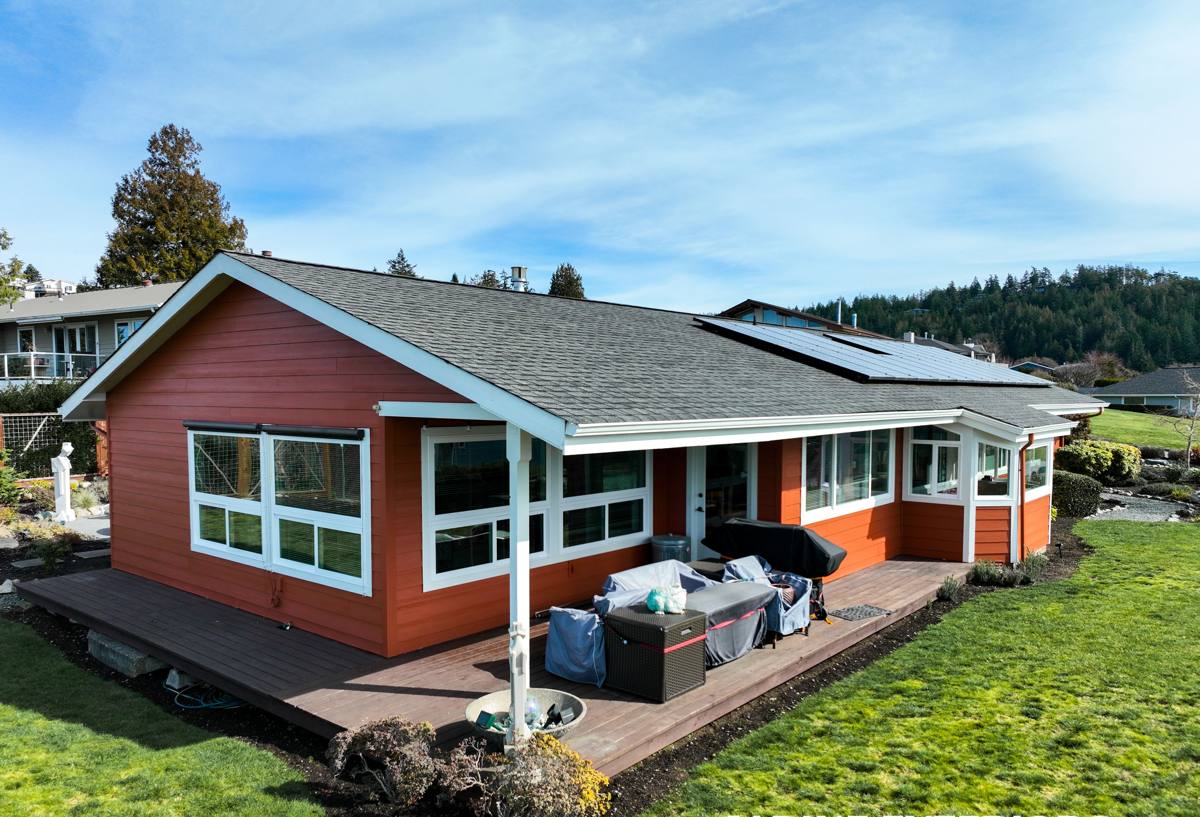
Why We Only Install James Hardie — Not the Alternatives
We get asked fairly often why we don't offer vinyl, LP SmartSide, Cemplank, Allura, or primed wood and cedar siding alongside Hardie. The honest answer is that we made a call as a company to install one system correctly rather than several systems adequately, and for a climate like Temple Terrace's, that system is James Hardie fiber cement.
Vinyl
Vinyl is inexpensive and low-maintenance in mild climates, but it softens and can deform in sustained high heat, and it's rated for wind resistance well below what a serious Gulf Coast storm can throw at a house. It also doesn't hold paint, so if it fades or gets damaged, your only real fix is replacement, not refinishing.
LP SmartSide and other wood-strand products
Engineered wood siding has improved over the years, but it's still an organic, wood-based product at its core. In a humidity environment like ours, any breach in the factory coating — a nail pop, a poorly sealed cut edge, a gap at a joint — gives moisture a path into wood fiber that will swell and deteriorate. That risk is manageable in drier climates. It's a much bigger liability here.
Cemplank and Allura
These are also fiber cement products, and fiber cement as a category is the right call for this region. But we standardized on James Hardie specifically because of its factory-applied ColorPlus finish, its climate-specific HZ product engineering, and the strength of its transferable warranty — details we cover below. Installing more than one fiber cement brand across our crews also means more than one set of fastening, flashing, and finishing specs to get exactly right, and precision is where siding jobs succeed or fail.
Primed spruce and cedar
Real wood siding looks great and has its place, but it demands ongoing maintenance — repainting, caulking, sealing end cuts — that most homeowners underestimate until they're several years in. In a climate that alternates between soaking humidity and intense UV, that maintenance cycle shortens fast.
None of this means those products are junk. It means that for Temple Terrace's specific mix of heat, storms, salt air, and moisture, we don't think they hold up to the standard we want to put our name behind — so we don't install them.
Why James Hardie Fits This Climate
James Hardie fiber cement siding is made from cement, sand, and cellulose fibers, which makes it non-combustible and dimensionally stable — it doesn't expand, contract, warp, or rot the way wood-based products can. Hardie also engineers specific product lines for different climate zones, and Gulf Coast Florida falls into their HZ5 category, built specifically to resist the moisture and humidity conditions common in our region.
The factory-applied ColorPlus finish matters just as much as the substrate. It's baked on under controlled conditions and formulated to resist UV fading, which is a genuinely different result than field-applied paint trying to hold up under direct Florida sun for years at a stretch. That finish also comes with its own dedicated warranty coverage against peeling, cracking, and fading, separate from the substrate warranty on the siding itself.
| Factor | James Hardie Fiber Cement | Vinyl | LP SmartSide / Engineered Wood | Cedar / Primed Wood |
|---|---|---|---|---|
| Wind resistance | Engineered and rated for high-wind regions | Lower wind ratings, can crack or blow off | Moderate, fastening is critical | Depends heavily on installation quality |
| Moisture/humidity behavior | Won't rot or swell; HZ5 line built for humid climates | Doesn't rot but can trap moisture behind panels | Vulnerable at breached edges and joints | Absorbs moisture, prone to rot without upkeep |
| UV/fade resistance | Factory ColorPlus finish resists fading | Can fade and become brittle in intense sun | Coating fades over time, needs repainting | Repainting required on a regular cycle |
| Fire resistance | Non-combustible | Combustible | Combustible | Combustible |
| Long-term cost | Higher upfront, lower lifetime maintenance | Lower upfront, replacement-only repairs | Moderate upfront, ongoing coating maintenance | Lower material cost, high maintenance labor cost |
What a Correct Hardie Installation Actually Involves
Hardie siding is only as good as the installation behind it. The product is engineered well; most of the failures we see on older jobs trace back to installation shortcuts, not the material itself. In a wind-driven-rain, high-humidity climate like Temple Terrace's, the details matter more than they would somewhere drier and calmer.
- Correct fastener type, spacing, and depth — over-driven or under-driven nails are one of the most common causes of early siding failure
- Proper clearance between the bottom edge of the siding and grade, roofing, decks, and patios to keep splash-back moisture away from the material
- Weather-resistant barrier installed and lapped correctly behind the siding, not just stapled up quickly
- Flashing at every window, door, and penetration point, installed to shed water outward rather than trap it
- Proper joint treatment and caulking at butt joints and trim intersections, using products compatible with the ColorPlus finish
- Field-cut edges sealed per manufacturer specification, since raw cut edges are the most vulnerable point on any fiber cement board
- Panels and planks installed plumb and level with consistent reveal, which affects both water drainage and how the finished wall performs over time
Any one of these done wrong won't necessarily show up right away. It shows up in year three or four, as a soft spot, a stain, or a section that starts failing well before the rest of the house.
Our Process for Temple Terrace Homes
- On-site inspection. We look at your current siding condition, the substrate underneath, and any problem areas — soffits, corners, areas near sprinklers or shaded, damp sides of the house.
- Product and color selection. We walk through Hardie's plank, panel, and trim options and ColorPlus color range based on your home's style and any HOA guidelines common in Temple Terrace's neighborhoods.
- Detailed written estimate. You get a clear scope of work — what's being removed, what's being replaced, what the flashing and moisture-barrier plan looks like, and a firm price.
- Permitting. We handle the Hillsborough County and Temple Terrace permitting process so the job is inspected and documented properly, not just completed quietly.
- Installation. Old siding and any compromised sheathing is removed, moisture barrier and flashing go in first, then Hardie product is installed to manufacturer spec with proper fastening and sealing.
- Final walkthrough. We go over the finished job with you directly, check every elevation, and make sure the details — trim, caulking lines, corners — are clean before we call it done.
Why Local Experience in This Area Matters
A crew that already works in Temple Terrace and the surrounding Tampa communities knows things a crew from out of the region has to learn on your dime. That includes how local permitting actually works, which wind-load and moisture-barrier requirements apply under Florida's building code in Hillsborough County, and what kind of drainage and clearance details hold up against the wind-driven rain this area gets during summer storm season and hurricane season alike.
It also means we've seen how different exposures around a Temple Terrace property age differently — a wall that faces prevailing wind and rain wears differently than a shaded, more protected side of the same house. That's the kind of detail that shapes how we sequence flashing, caulking, and even which trim details we recommend reinforcing.
Maintenance and Warranty Once It's Installed
One of the practical advantages of James Hardie in this climate is how little ongoing maintenance it actually needs compared to wood-based or vinyl alternatives. There's no repainting cycle to plan around, no sealing schedule for cut edges, and no soft spots to watch for the way you would with wood. Routine care is mostly a matter of rinsing off pollen, salt residue, and general grime a couple of times a year and doing a visual check after major storms for any impact damage or lifted caulking.
James Hardie backs its products with a manufacturer warranty on the fiber cement substrate and a separate warranty on the ColorPlus finish, and both are transferable if you sell the home — something worth mentioning to a future buyer, since it signals the siding was done with a real system, not a patchwork fix. We stand behind our own installation work as well, since even the best-engineered siding product depends on correct workmanship to deliver on that warranty.
Signs Your Current Siding May Already Be Failing
- Soft or spongy spots when you press on the siding, especially near the bottom edges or corners
- Visible warping, buckling, or gaps at seams and joints
- Paint or finish that's peeling, chalking, or noticeably faded on sun-facing walls
- Staining or discoloration that keeps returning after cleaning
- Rising energy bills that might point to compromised insulation behind damaged siding
- Visible daylight or drafts around window and door trim
If any of these sound familiar, it's worth having the siding looked at before the next storm season rather than after damage has already spread behind the surface.
If you're weighing a siding replacement or repair for a Temple Terrace home, we're happy to come take a look and give you a straightforward, no-pressure estimate — no scare tactics, just an honest read on what your siding needs and what it would take to do it right with James Hardie.