 Tampa Siding
 Why Carrollwood Homes Wear Out Siding Faster Than People Expect
Carrollwood sits inland from Tampa Bay, but "inland" in Hillsborough County still means a full dose of Gulf Coast weather. Summers bring months of intense, direct UV that bakes the south- and west-facing walls of a house. Afternoon storms roll through most of the year, often arriving sideways on gusty wind rather than falling straight down, which drives water into laps, corners, and trim joints that a calmer climate would never test. During hurricane season, sustained tropical-storm and hurricane-force winds put real pressure on siding fasteners and butt joints. Even away from the immediate coastline, salt-laden air moves inland on sea breezes and slowly attacks fasteners, trim, and paint film over the years.
Layer in Florida's year-round humidity — including the extra moisture that collects around Carrollwood's tree canopy and lakefront lots, where shaded walls stay damp longer after a storm passes — and you have an environment that punishes any siding material with a weak moisture strategy. Paint fails early, seams open up, and anything wood-based or wood-fiber-based is at constant risk of swelling, rot, and pest intrusion. This page is about what that means specifically for James Hardie fiber cement siding on a Carrollwood home, and what a correctly done installation actually involves.
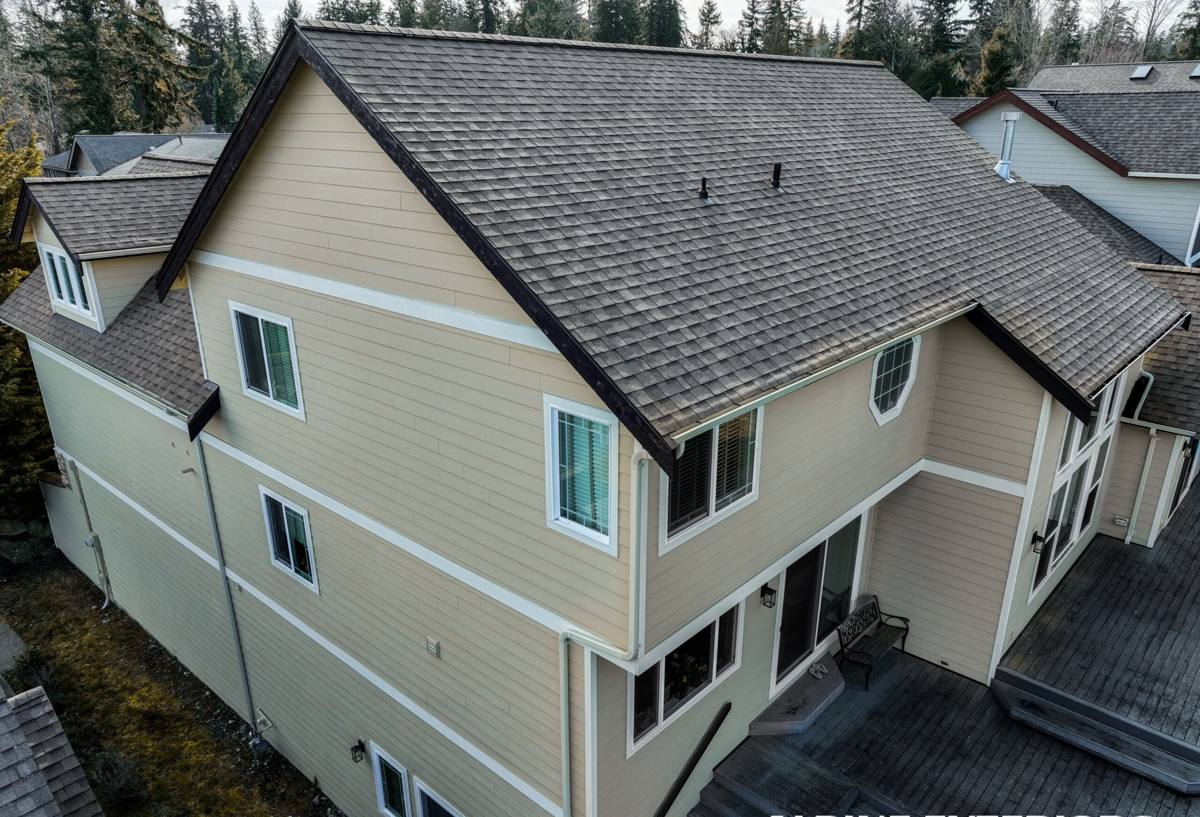
Why We Install Only James Hardie in This Climate
We don't install vinyl, LP SmartSide, cedar, primed spruce, or other fiber cement brands, and Carrollwood is exactly the kind of climate that explains why. Fiber cement as a category resists moisture, fire, and pests far better than wood-based sidings, but not all fiber cement is engineered the same way, and installation quality matters as much as the product itself.
Climate-specific engineering
James Hardie manufactures its HZ5 product line specifically for climate zones like ours — hot, humid, and hurricane-exposed. The formulation and factory-applied finish are built around the reality that Gulf Coast homes deal with more wind-driven rain and UV exposure than siding sold in the rest of the country. That's a meaningful difference from a one-size-fits-all product.
A factory finish that doesn't rely on field paint
ColorPlus finish is baked on and cured at the factory under controlled conditions, not brushed or sprayed on site in Tampa's humidity. Field-applied paint in high-humidity conditions is more prone to uneven cure and early failure, and repainting an entire house every several years is a maintenance cost most homeowners don't budget for until it's due.
Non-combustible core
Fiber cement doesn't feed a fire the way wood-based siding can, which matters for insurance conversations and for peace of mind, particularly on homes near dry brush or with neighbors close by.
What a Correct James Hardie Installation Actually Involves
The product only performs the way it's rated to if it goes on correctly. This is the part that separates a siding job that lasts twenty-plus years from one that needs rework in five.
Flashing and water management first
Every window, door, and penetration needs proper flashing and a drainage plane behind the siding before a single plank goes up. In a climate that gets wind-driven rain from multiple directions, water that gets behind the cladding has to have somewhere to go. Skipping or shortcutting this step is the single most common cause of hidden rot and mold behind siding that looks fine from the street.
Clearances and fastening to spec
James Hardie publishes specific requirements for ground clearance, fastener spacing, and fastener penetration into structural framing — not just the sheathing. Homes in this part of Florida fall under wind provisions in the Florida Building Code, and fastening schedules have to meet that code. In wind-prone areas these details are not optional; they're what keeps siding attached during a tropical storm rather than peeling off in sheets.
Caulking, joints, and expansion gaps
Butt joints, corners, and trim intersections need the right sealant, applied correctly, with the gaps James Hardie specifies for material movement. Caulk that's applied too thin, in the wrong location, or skipped to save time is one of the most common causes of early water intrusion on fiber cement jobs done by crews that don't install it regularly.
Matching the Right James Hardie Profile to a Carrollwood Home
James Hardie makes several distinct product lines, and the right one for a given house usually comes down to its original architecture and the look you want, not just budget.
HardiePlank lap siding
The most common choice for the ranch, split-level, and traditional single-family homes found throughout Carrollwood. It replicates a classic horizontal wood-lap look while giving you moisture and fire resistance that wood-based siding never had.
HardiePanel vertical siding
Used for a more modern look, board-and-batten styling, or accent walls and gables. Vertical panel systems have their own flashing and joint details, which is one more reason experience with this specific product matters more than general siding experience.
HardieShingle siding
Gives the texture of individual shingles or shakes without the ongoing maintenance burden that cedar shingles carry in a humid climate — a common trade-off homeowners ask about when weighing their options.
Our Process on a Carrollwood Job
- On-site inspection of the existing walls, sheathing, and any moisture or rot found once old siding comes off.
- Removal of the old siding and inspection/repair of the wall assembly — this step gets skipped by crews in a hurry, and it's where hidden problems surface.
- Installation of a code-compliant weather-resistive barrier and flashing at every penetration before any Hardie product goes up.
- Installation of James Hardie panels, planks, or trim per manufacturer fastening and clearance specifications for our wind zone.
- Sealing, caulking, and finish detailing at joints, corners, and trim.
- Final walk-through so you can see the completed work and ask questions before we consider the job done.
Cost Factors on a Carrollwood James Hardie Project
Every home is different, so we won't quote a number here that doesn't mean anything without seeing your walls in person. What we can tell you is what actually moves the price up or down, and why we walk every home before giving a number.
| Factor | Why It Matters |
|---|---|
| Tear-off condition | Rotten sheathing or hidden moisture damage found under old siding adds repair work before new siding can go on. |
| Product line and profile | Lap siding, vertical panel, and shingle-style systems have different material and labor costs. |
| Trim and architectural detail | Homes with more corners, window trim, and accent features take more cutting, fitting, and caulking time. |
| Wall height and access | Two-story walls and difficult access add scaffolding and labor time. |
| Color and finish | Factory ColorPlus finishes come in a range of standard colors; custom colors can affect lead time and cost. |
Why Hiring a Crew That Already Works Carrollwood Matters
Fiber cement is installed the same way on paper everywhere, but the practical details of doing the job right in this specific area come from experience here, not from a manual.
- Familiarity with Hillsborough County permitting and inspection expectations, so the job doesn't stall waiting on paperwork.
- Knowledge of the wind-load and fastening requirements that apply to homes in this part of Florida.
- Experience with the range of construction styles found across Carrollwood's older and newer neighborhoods, including how existing sheathing and framing typically hold up.
- An understanding of how sun exposure and shade from mature trees affect which sides of a house wear out first, which shapes how we sequence and detail the work.
- A reachable local crew if a warranty question or follow-up item comes up after the job is finished, rather than a company that installed once and left the area.
Maintenance and Warranty, in Plain Terms
James Hardie siding installed to spec is genuinely low-maintenance compared to wood-based alternatives, but "low-maintenance" doesn't mean "no maintenance." An occasional rinse to remove salt residue and pollen, prompt attention to any caulking that cracks over time, and keeping irrigation and sprinklers from constantly soaking the base of the walls all extend the life of the job. After any significant storm, it's worth a quick visual check of joints, corners, and trim for anything that came loose or opened up, the same way you'd check a roof.
James Hardie backs its products with a substantial transferable limited warranty, and that warranty is tied to installation being done according to their specifications — another reason correct installation isn't optional. A homeowner who later sells the house benefits from that transferability, which isn't something every siding manufacturer offers.
What to Ask Before You Hire Anyone for This Job
Whoever you hire, ask these questions before signing anything:
- Do you install James Hardie regularly, and can you explain their fastening and clearance requirements from memory?
- Will you inspect and repair the wall sheathing before installing new siding, not just cover over what's there?
- What flashing and weather barrier will you use behind the siding, and where?
- Are you licensed and insured to work in Hillsborough County, and can you provide proof?
- What does your warranty cover versus what's covered by James Hardie's manufacturer warranty?
If a contractor can't answer these clearly, that's worth knowing before the job starts, not after.
If you're weighing a siding project in Carrollwood, we're happy to take a look and give you a straightforward, no-pressure estimate — just fill out the form below.