 Tampa Siding
 Why Land O' Lakes Roofs Wear Out Faster Than the National Average
Roofs in the Tampa Bay area don't get to coast through mild weather the way roofs do in most of the country. A roof over a Land O' Lakes home works year-round against sun, humidity, and storm season, and the wear shows up faster than most homeowners expect. If you moved here from somewhere with four mild seasons, it's worth resetting your expectations for how long a roof actually lasts in this climate.
Three things do most of the damage: intense, near year-round UV exposure that bakes asphalt shingles and dries out the oils that keep them flexible; wind-driven rain that gets pushed sideways into laps, flashing, and fastener lines instead of running straight off the slope; and hurricane-force wind events that test every nail, clip, and seam a roof has. Add in the salt-laden air that moves inland off the Gulf, and metal fasteners, flashing, and vents corrode quicker than manufacturer literature written for northern climates ever accounts for.
None of this means a roof in this area is doomed to fail early — it means the roof has to be built and installed correctly for this climate from the start, not installed the same way a crew would build one in a drier, calmer part of the country.
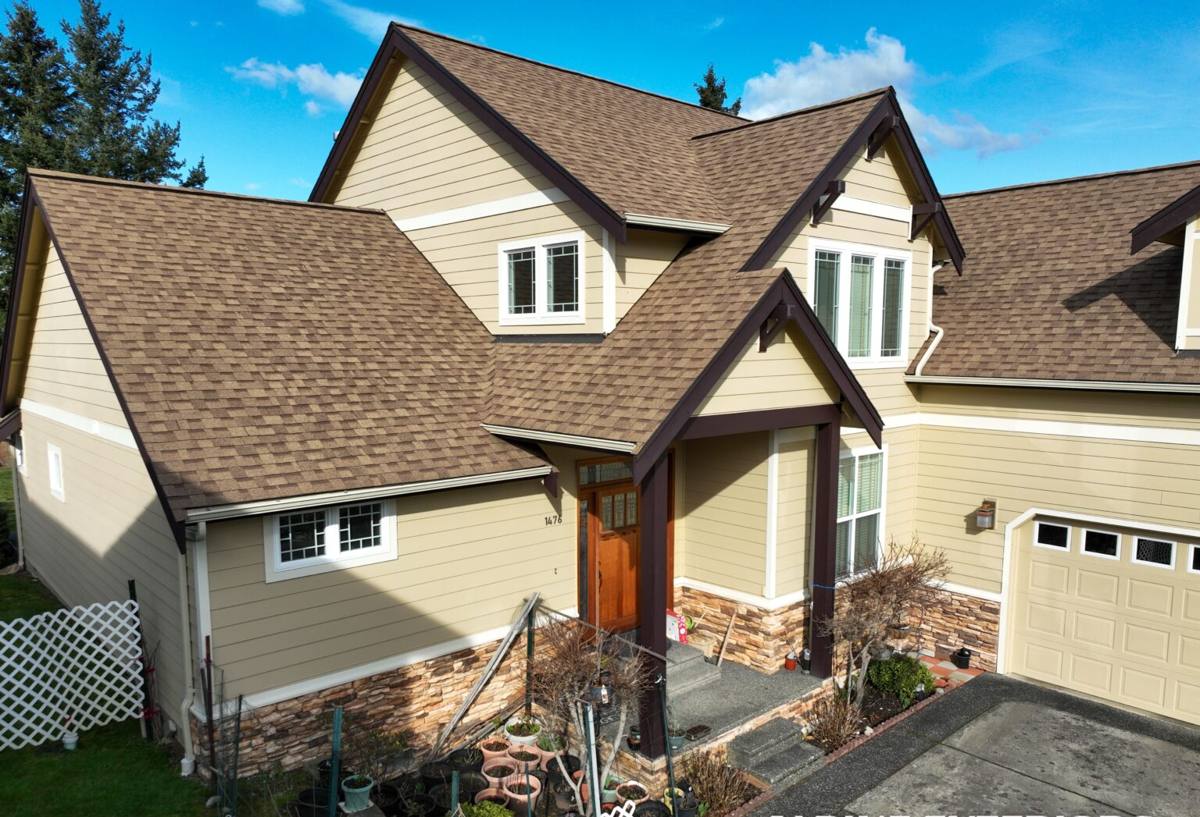
Signs Your Land O' Lakes Roof May Be Due for Replacement
Most roofs don't fail all at once. They give warning signs for months, sometimes years, before a leak actually shows up inside the house. Catching these early is the difference between a planned roof replacement and an emergency one during storm season.
- Shingles that are cupping, curling at the edges, or missing granules in patches
- Bald or shiny spots on shingles where the granule coating has worn through
- Soft spots, sagging, or visible dips anywhere on the roof plane
- Daylight visible through the attic decking, or damp insulation after rain
- Rusted, lifted, or missing flashing around chimneys, vents, and skylights
- Granules collecting in gutters or at the base of downspouts
- A roof that's 18-20+ years old and has never had a full tear-off
- Rising energy bills that track with poor attic ventilation or failing underlayment
Any one of these on its own might just mean a repair. Several of them together, especially on an older roof, usually mean it's time to start budgeting for a full replacement rather than patching the same trouble spots every storm season.
What a Correct New Roof Installation Actually Involves
A new roof is a system, not just a layer of shingles. Skipping or shortcutting any one of the following steps is where most premature failures and denied warranty claims trace back to.
Full Tear-Off and Deck Inspection
We remove the old roofing material down to the deck rather than layering over it. That's the only way to actually see the condition of the plywood or OSB underneath — soft, delaminated, or water-stained decking gets replaced before anything new goes down. Installing new roofing over a compromised deck just hides a problem that will resurface as a leak later.
Underlayment Built for Wind-Driven Rain
In a climate where rain rarely falls straight down, underlayment matters as much as the shingle itself. We use synthetic or self-adhering underlayment in the areas most exposed to wind-driven moisture — valleys, eaves, and roof edges — because standard felt alone doesn't hold up well against water pushed sideways under wind pressure.
Flashing at Every Penetration
Chimneys, plumbing stacks, skylights, and wall-to-roof transitions are where the vast majority of roof leaks originate — not the open field of shingles. Properly formed and sealed metal flashing at every one of these points is non-negotiable, and it's one of the details that separates a roof that lasts from one that leaks within a few years.
Wind-Rated Fastening
Given the wind exposure here, nailing pattern and fastener count matter. We follow manufacturer wind-rated installation specs rather than the minimum code requirement, because meeting the bare minimum on a roof that has to survive hurricane season isn't the standard we hold our own installs to.
Attic Ventilation
A hot, poorly ventilated attic shortens shingle life from underneath, cooking the underlayment and shingle mat with trapped heat even when the top side looks fine. We check and correct intake and exhaust ventilation balance as part of every full replacement, not as an upsell.
Roofing Material Options for This Climate
There's no single "best" roofing material — the right choice depends on your home's structure, your budget, and how long you plan to own it. Here's how the common options actually compare for a Tampa Bay-area home.
| Material | Typical Lifespan | Wind Performance | Maintenance | Relative Cost |
|---|---|---|---|---|
| Architectural asphalt shingle | 20-30 years | Good, when rated and installed to spec | Low to moderate | $ |
| Standing seam metal | 40-50+ years | Excellent | Low | $$$ |
| Concrete or clay tile | 40-50+ years | Very good when properly fastened | Moderate (underlayment fails before tile does) | $$$ |
| 3-tab asphalt shingle | 15-20 years | Fair | Low to moderate | $ |
Tile roofs are common and attractive in this region, but it's worth knowing that on a tile roof, the underlayment beneath the tile is usually the first thing to fail — the tile itself often outlasts it. That's why the underlayment quality and installation matter as much as the visible material on top, regardless of which option you choose.
Permits, Wind Mitigation, and Insurance
New roof installations in this area require a building permit and inspection — that's true whether your home falls under Hillsborough County or a neighboring jurisdiction. A permitted, inspected job also gives you a paper trail that matters at resale and for insurance claims down the road.
It's also worth asking your contractor for a wind mitigation inspection once the new roof is complete. Florida insurers offer real premium discounts for verified features like a properly nailed roof deck, secondary water barrier, and hurricane-rated roof-to-wall connections. Many homeowners never claim this discount simply because no one filed the paperwork after the install.
Our Installation Process
- On-site inspection and honest assessment of whether you need a repair or a full replacement
- Written estimate with material options, timeline, and scope in plain language
- Permit pulled with the local building department before any work begins
- Full tear-off, deck inspection, and any necessary deck repair
- Underlayment, flashing, and ventilation installed to manufacturer and wind-rated specs
- New roofing material installed and fastened to spec
- Full site cleanup, including a magnetic sweep for stray nails
- Final walkthrough with you, plus scheduling of the county inspection
What Affects the Cost of a New Roof
Every roof is different, so we won't quote a number without seeing the house, but these are the factors that move the price up or down the most:
| Factor | Why It Matters |
|---|---|
| Roof size and pitch | More surface area and steeper slopes both increase material and labor time |
| Number of layers to remove | Tearing off two layers costs more than one |
| Deck condition | Rotted or delaminated plywood/OSB has to be replaced before new roofing goes on |
| Material chosen | Asphalt, metal, and tile carry very different material and labor costs |
| Roof complexity | Valleys, dormers, skylights, and multiple penetrations add flashing labor |
| Ventilation upgrades | Adding or correcting intake/exhaust vents is a smart add-on, not always included in base price |
Be cautious of a quote that's dramatically lower than everyone else's — it's usually a sign of shortcuts in underlayment, fastening, or flashing that won't show up until the next big storm.
Why It Matters That Your Crew Already Works in Land O' Lakes
A roofing crew that regularly works in and around Land O' Lakes already knows the county permitting process, the inspectors, and the specific wind and rain exposure homes here deal with. That familiarity shows up in small but real ways — fewer permit delays, fewer surprises during inspection, and an install built for the way weather actually behaves in this part of the Tampa Bay area rather than a generic national playbook.
It also matters for accountability. A local crew is still around next hurricane season if a question comes up, and has a reputation in the community worth protecting — not just a job that's finished and forgotten once the check clears.
If your roof is showing its age or you just want an honest opinion on whether repair or replacement makes more sense for your home, we're happy to take a look. Reach out for a free, no-pressure estimate using the form below.