 Tampa Siding
 Land O' Lakes Roofs Take a Beating Most Homeowners Don't See Coming
Land O' Lakes sits close enough to Tampa Bay that its homes get hit by the same weather pattern year after year: long stretches of intense UV that bake shingles from above, sudden afternoon thunderstorms that drive rain sideways into roof edges and flashing, and — every few seasons — a tropical system or hurricane-strength wind event that tests every fastener, seam, and vent on the roof. None of that is unusual for the Tampa area. What's unusual is how often the damage from it goes unnoticed until a small problem becomes a big one.
A roof doesn't have to lose shingles in a dramatic way to be storm-damaged. Wind can lift a shingle just enough to break its seal without tearing it off. Hail-sized debris and heavy rain can bruise or crack a shingle's mat without punching a visible hole. UV exposure that would be a slow, even process elsewhere in the country moves faster here, so a roof that's already a little older going into storm season has less margin left before wind and water find a way in. This page is about what an honest, correctly done storm damage repair looks like for a Land O' Lakes home, and what to expect from a crew that actually works this area on a regular basis.
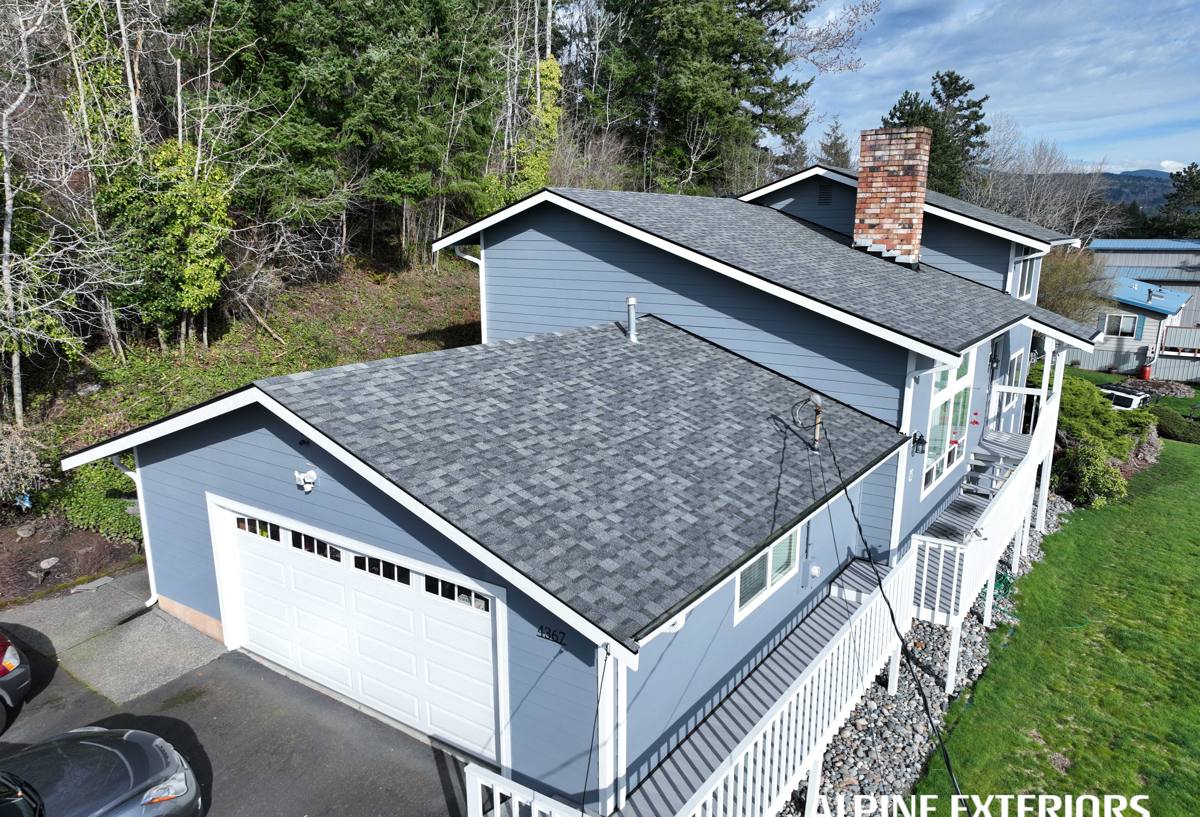
What Actually Counts as Storm Damage
Not every roof issue after a storm is storm damage in the way an insurance policy or a manufacturer's warranty defines it, and not every problem is visible from the ground. A proper inspection separates what the storm caused from what was already wearing out.
Wind-Related Damage
High wind doesn't just tear shingles off — more often it loosens the adhesive seal strip between shingles without removing them. That leaves shingles that look intact from the street but flap and work loose with every subsequent gust, letting wind-driven rain get underneath. Ridge caps and shingles near roof edges and corners take the worst of this because wind pressure concentrates there.
Impact Damage
Hail, falling branches, and wind-blown debris can bruise the asphalt mat of a shingle — soft spots that crack and leak months later — or crack tile roofing, which is common on homes in this part of Florida. Impact damage is often subtle enough that a homeowner never spots it without someone getting on the roof and checking.
Flashing and Penetration Damage
Flashing around chimneys, skylights, vent pipes, and roof-to-wall transitions is sealant and thin metal, not shingle material, and it's usually the first thing a storm compromises. A lot of "mystery leaks" after a storm trace back to flashing that shifted or a sealant bead that failed, not the shingles themselves.
Hidden Water Intrusion
The damage that costs homeowners the most is the kind that isn't obvious right after the storm — water that got under a seal or through a compromised flashing joint and is slowly soaking the decking underneath. Left alone through a Florida summer, that moisture becomes rot, and eventually mold, before it ever shows up as a stain on a ceiling.
Why Waiting Costs More Here Than It Would Up North
In a drier, cooler climate, a small unrepaired leak might sit for a season without much consequence. In the Tampa Bay area's heat and humidity, that same leak accelerates. Wet decking doesn't get a chance to fully dry between rain events, which speeds up rot and creates the kind of environment mold needs to take hold. A repair that would have been a simple shingle replacement two weeks after a storm can turn into a decking and insulation repair three months later, at several times the cost, just because the water intrusion had time and humidity working in its favor.
This is also why we push back gently on the idea of "waiting to see if it leaks." By the time a storm-damaged roof visibly leaks inside the house, the damage on top has usually been progressing for a while. A post-storm inspection isn't about finding a reason to sell a job — it's about catching the problem while it's still a roof repair instead of a roof-and-interior repair.
What a Correct Storm Damage Repair Actually Involves
Emergency Mitigation First
If a roof has active exposure — missing shingles, a torn section, a compromised area over living space — the first step is stopping water from getting in any further. That usually means tarping the affected area securely enough to survive more wind and rain before the permanent repair happens, not a quick cover that fails in the next storm.
A Full Roof Inspection, Not a Spot Check
Storm damage rarely stays confined to one obvious spot. A correct inspection covers the whole roof — every slope, all flashing points, ridge lines, and the attic or decking from underneath where accessible — because wind and hail don't damage roofs in a neat, single location. We document what we find with enough detail to support a repair scope or an insurance claim, whichever applies.
Matching Materials and Technique
A repair should hold up the same way the rest of the roof does. That means matching shingle type, profile, and color as closely as the market allows, using fasteners and flashing details that meet current Florida Building Code wind requirements, and tying the repaired section into the surrounding roofing so it sheds water the way it's supposed to — not just patching over the visible damage.
Repair vs. Replace, Decided Honestly
Sometimes a storm reveals that a roof was already near the end of its useful life, and a patch repair would just be delaying a full replacement by a year or two at added cost. We'll tell you when that's the case. Just as often, a roof is fundamentally sound and a focused repair is the right, more affordable answer. That call should be based on the roof's actual condition and age, not on which answer is easier to sell.
Repair or Replace: How the Decision Actually Gets Made
Homeowners often ask us to just give them a straight answer up front, but the honest answer depends on a handful of specific factors. Here's how we weigh them:
| Factor | Leans Toward Repair | Leans Toward Replacement |
|---|---|---|
| Roof age | Under roughly 10-12 years, otherwise in good shape | Nearing or past the shingle manufacturer's expected service life |
| Extent of damage | Isolated to one or two areas or slopes | Spread across multiple slopes or the majority of the roof |
| Decking condition | Solid, dry decking under the damaged area | Soft, delaminated, or water-stained decking found during inspection |
| Shingle availability | Current shingle line still in production and matchable | Discontinued or badly weathered shingles that won't match a patch |
| Insurance scope | Adjuster approves a repair-level scope | Adjuster's own inspection supports full slope or full roof replacement |
No single factor decides it alone — we look at the whole picture and explain our reasoning, including when a repair is genuinely the more sensible and less expensive path.
Our Process, Start to Finish
- Initial call and scheduling — we get basic details about the damage and get someone out to look at the roof, prioritizing active leaks and exposed areas.
- On-site inspection — a full roof and, where accessible, attic inspection with photo documentation of every area of concern, not just the spot you called about.
- Written scope and honest recommendation — a clear explanation of what's damaged, what caused it, and whether repair or replacement makes sense, with a straightforward price range.
- Insurance coordination, if applicable — we can walk the roof with your adjuster and provide our documentation to support your claim.
- The repair itself — matched materials, correct flashing and fastening technique, and cleanup that leaves your property free of nails and debris.
- Final walkthrough — we go over the completed work with you before we consider the job done.
Storm Damage and Your Insurance Claim
Filing a storm damage claim in Florida has gotten more scrutinized in recent years, and adjusters are more likely to push back on claims that lack solid documentation. This is one of the practical reasons hiring a local, established crew matters: we know what documentation an adjuster expects to see, and we can meet them at the property to point out damage that isn't obvious from a ground-level look or a satellite photo review.
We're not a public adjuster and we don't negotiate your policy for you, but we will give you an honest, detailed record of the roof's condition and the storm-related cause of the damage, which is the foundation of a fair claim outcome either way it goes.
Why a Crew That Already Works in Land O' Lakes Makes a Real Difference
Storm damage repair isn't a one-size-fits-all service, and a crew that only shows up after a hurricane makes landfall is starting from zero on every job. A crew that already works the Land O' Lakes area and the broader Tampa Bay region has a few practical advantages:
- Familiarity with the roofing systems and shingle types common on homes built in this area's various developments and construction eras.
- A working relationship with local permitting requirements, so repairs that need a permit don't stall out.
- Faster response after a widespread storm event, because we're not driving in from out of the area or working through a call center.
- Accountability — we're not a storm-chasing outfit that leaves town once the immediate rush of work dries up. If something needs a warranty call six months later, we're still local.
That last point matters more than people expect. After any significant storm, Florida sees an influx of out-of-town and out-of-state crews looking for quick work. Some are legitimate; a lot are gone before a warranty issue ever surfaces. A local company with a fixed address and an ongoing presence in the Tampa area has a reason to stand behind the work.
Protecting Your Roof Between Storms
Most storm damage claims we see involve a roof that had smaller, unaddressed issues before the storm made them worse. A little routine attention goes a long way in this climate:
- Have your roof visually inspected at least once a year, and always after any significant wind or hail event, even if you don't see obvious damage from the ground.
- Keep gutters and valleys clear so wind-driven rain has a clear path off the roof instead of pooling at weak points.
- Trim back tree limbs that overhang the roof — they're one of the most common sources of impact damage in wind events.
- Address small issues (a lifted shingle corner, a cracked pipe boot, a gap in flashing sealant) as soon as they're found, before UV and rain have time to make them worse.
- Keep a record of your roof's age, shingle type, and any prior repairs — it speeds up both future inspections and insurance claims.
None of these steps prevent storm damage outright — nothing does, given how hard this climate is on roofing — but they reduce how much a given storm can do and make any repair that is needed simpler and less expensive.
Get an Honest Look at Your Roof
If your Land O' Lakes home has been through recent wind, hail, or heavy rain and you're not sure whether what you're seeing is cosmetic or a real problem, the fastest way to find out is a straightforward inspection. We'll tell you plainly what we find, what it means, and what your realistic options are — no pressure, no inflated scope. Use the form below to request a free estimate and we'll get a local crew out to take a look.