 Tampa Siding
 Why Clearwater Roofs Wear Out Faster Than the National Average
A roof in Clearwater does more work every year than a roof almost anywhere else in the country. It spends summer afternoons under some of the most intense UV exposure in the continental U.S., gets pushed and lifted by hurricane-season winds every June through November, absorbs wind-driven rain that finds its way under weak flashing and lifted shingles, and sits close enough to the Gulf that salt-laden air slowly corrodes fasteners, drip edge, and any exposed metal. None of these forces are rare or occasional here — they're the baseline. A roofing system designed for a milder climate simply doesn't hold up to that combination decade after decade.
That's the starting point for any honest conversation about a new roof in Clearwater: this isn't about picking the cheapest option or the most popular shingle color. It's about matching the materials and installation details to what the Tampa Bay climate actually does to a roof, year after year.
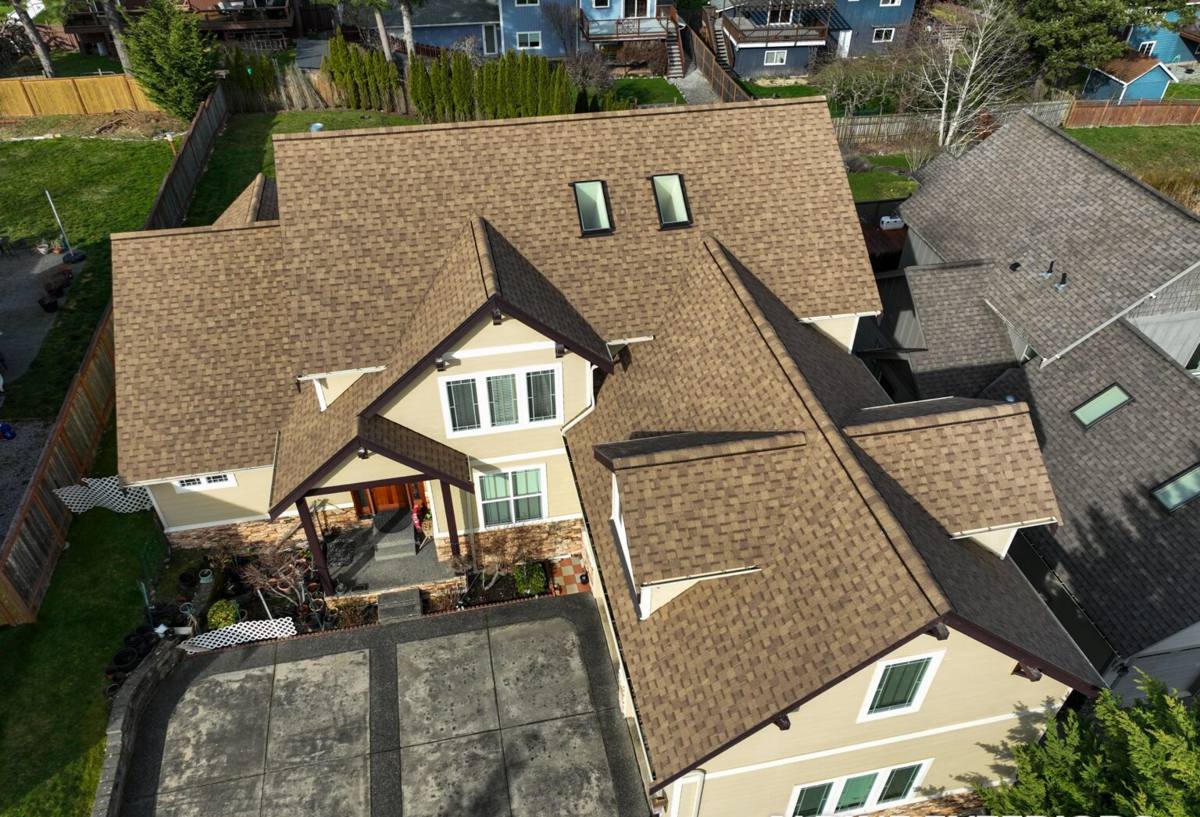
Signs a Clearwater Home Needs Replacement, Not Another Repair
Homeowners often call us after a leak, but the roof's condition usually tells a longer story. A few patterns we see often in this area:
- Granule loss heavy enough to show bald patches or fill gutters with grit — a sign UV exposure has broken down the shingle's protective layer
- Curling or cupping shingle edges, which lets wind get underneath during storms
- Soft spots or sagging in the decking, often from long-term moisture intrusion at valleys or penetrations
- Repeated flashing failures around chimneys, skylights, or roof-to-wall transitions
- A roof already past 15–20 years old that's taken multiple named storms without a full inspection
If a roof is showing two or more of these, patch repairs tend to become a cycle of diminishing returns — you're spending money to delay a replacement that's coming anyway, without fixing the underlying age and wear.
Matching the Roofing System to the Gulf Coast Climate
There's no single "best" roofing material for every Clearwater home — it depends on the roof's structure, the home's style, and the homeowner's priorities on cost, longevity, and maintenance. Here's how the common options actually compare for this climate:
| Material | Typical Lifespan Here | Wind Performance | Maintenance Reality |
|---|---|---|---|
| Architectural asphalt shingle | 18–25 years | Good, when rated and installed for high-wind zones | Lowest upfront cost; granule loss from UV over time |
| Concrete or clay tile | 30–50 years | Excellent when properly fastened | Higher upfront cost; underlayment usually needs replacement before the tile does |
| Standing seam metal | 40–50+ years | Excellent; among the best for wind uplift resistance | Higher cost; minimal ongoing maintenance |
A detail homeowners often miss: on tile roofs, the tile itself frequently outlasts the underlayment beneath it. If the underlayment fails first, the tile can look fine while the roof is actually leaking. We factor that into what we recommend, not just the sticker price of the tile.
What We Actually Install
We install shingle, tile, and metal roofing systems, and we'll tell a homeowner honestly if a certain product isn't a good fit for their roof's slope, structure, or budget rather than push whatever has the best margin. Our standard is straightforward: we only install systems and fastening methods rated for this region's wind exposure, because anything less is a callback waiting to happen.
What a Correct Installation Actually Involves
A new roof is only as good as what's underneath the visible surface. Cutting corners here is invisible on installation day and painfully obvious three years and one tropical storm later.
Tear-Off and Decking Inspection
We remove the old roofing down to the deck rather than layering over it. That's the only way to find rotten decking, hidden past leaks, or damaged framing before they're sealed under a new roof. Any compromised decking gets replaced, not patched over.
Underlayment and Dry-In
Synthetic or self-adhering underlayment goes down as the roof's real waterproofing layer — the shingles or tiles above it are the first line of defense, but the underlayment is what keeps the house dry if wind-driven rain ever gets past them. In this climate, that's not a hypothetical.
Flashing and Penetrations
Chimneys, vents, skylights, and roof-to-wall junctions are where most leaks start. Correct flashing — new, properly lapped, and sealed — matters more to long-term performance than almost any other single detail on the roof.
Fastening for Wind
Nailing patterns, fastener count, and (for tile) attachment method are matched to the wind speed requirements for this part of Florida, not just the manufacturer's minimum spec sheet. This is the detail that most affects how a roof performs in a hurricane, and it's also the one that's easiest for a rushed crew to shortcut because it's invisible once the roof is finished.
Ventilation
Proper attic ventilation keeps shingles cooler, extends their life, and helps prevent moisture buildup in the attic — an easy step to skip and a costly one to get wrong.
Permits, Codes, and Wind Mitigation in the Tampa Bay Area
Roofing work in Pinellas and Hillsborough County requires a permit and inspections tied to the Florida Building Code's wind-borne debris and uplift requirements for this region. That's not paperwork for its own sake — the code exists because of what this area's storms actually do to roofs. A licensed roofing contractor pulls the permit, schedules the required inspections, and builds to the code rather than around it.
Once a new roof passes final inspection, it's also worth having a wind mitigation inspection done. That inspection documents the roof's construction details — deck attachment, roof-to-wall connections, roof shape, and more — and can lower a homeowner's windstorm insurance premium meaningfully. It's a separate inspection from the building permit process, but a new roof is the natural time to get it done.
How Our Process Works
- Inspection and honest assessment — we look at the whole roof system, not just the obvious problem spot, and tell you plainly whether repair or replacement makes sense.
- Material and system selection — we walk through the real trade-offs (cost, lifespan, wind rating, appearance) for your specific roof.
- Permitting — we pull the required permit and handle scheduling the inspections the county requires.
- Tear-off and deck repair — old roofing comes off, decking gets inspected, and any damage is repaired before anything new goes down.
- Dry-in — underlayment goes on immediately so the home isn't exposed to weather mid-project.
- Installation — flashing, fastening, and ventilation are installed to the standard the wind zone requires, not the minimum that will pass a quick glance.
- Final inspection and walkthrough — we confirm the county inspection passes and walk the finished roof with you.
What Drives the Cost of a Clearwater Re-Roof
Every roof is different, so we don't publish blanket prices — but these are the factors that actually move the number up or down:
| Factor | Why It Matters |
|---|---|
| Roof size and pitch | More square footage and steeper slopes both increase labor and material |
| Number of existing layers | Multiple old layers mean more tear-off labor and disposal cost |
| Decking condition | Rotten or damaged decking sections add replacement cost that's rarely known until tear-off |
| Material choice | Shingle, tile, and metal carry very different material and labor costs |
| Roof complexity | Valleys, dormers, chimneys, and skylights all add flashing work and time |
| Permit and inspection fees | Set by the county, not negotiable, and required for the work to be legal and insurable |
Be cautious of any quote that's dramatically lower than others for the same scope — it usually means something is being skipped, whether that's underlayment quality, fastening detail, or decking repair that gets discovered and charged for later.
Why a Crew That Already Works in Clearwater Matters
Roofing crews who work regularly in this specific area know the inspection expectations of the local building departments, understand what the Gulf Coast's combination of sun, salt, and storm exposure actually does to different materials over time, and can move fast when a storm-damaged roof needs a fast, correct response rather than a rushed one. A crew that's mostly worked inland or in a different climate zone may not build the same margin of caution into fastening and flashing details — details that don't show up as a problem until the next major storm tests them.
We're based out of Tampa and work throughout the greater Tampa Bay area, including Clearwater, so this isn't unfamiliar territory — it's the environment we build for every day.
Protecting Your New Roof After Installation
A correctly installed roof still benefits from basic upkeep in this climate. A short annual routine goes a long way:
- Clear gutters and downspouts so water isn't backing up under the roof edge
- Trim back overhanging branches that can drop debris or scrape shingles in wind
- Have the roof visually checked after any major named storm, even if there's no visible leak
- Watch for rust streaking or corrosion around metal flashing and fasteners, especially closer to the water
- Keep an eye on attic ventilation — blocked vents can shorten a roof's effective lifespan
None of this requires a service contract or specialized equipment — it's the same kind of routine attention that protects any major investment in a coastal climate.
If your Clearwater roof is showing its age, took storm damage, or you're just planning ahead, we're happy to take a look and give you a straight answer — repair or replace — along with a free, no-pressure estimate. There's no obligation, and no pressure tactics; just an honest assessment from a crew that works in this climate every day.