 Tampa Siding
 Siding Installation Built for Town 'n' Country's Climate
Town 'n' Country sits in unincorporated Hillsborough County, close enough to the Gulf and Tampa Bay to feel salt-laden air on a breezy day, and far enough inland to still take a direct hit whenever a tropical system tracks up the peninsula. That combination is rough on exterior siding. Homes here deal with hurricane-force wind gusts during storm season, wind-driven rain that gets forced sideways into wall assemblies, some of the most intense year-round UV exposure in the continental United States, and a steady dose of salt in the air that accelerates corrosion of fasteners and trim. Siding that isn't specified and installed for this environment doesn't fail gracefully — it fails early, usually starting at the seams, corners, and fastener points.
We install siding in Town 'n' Country regularly, which matters more than it might sound. A crew that mostly works inland North Florida or out-of-state jobs doesn't have the same instinct for how a Hillsborough County wind zone, a west Tampa lot's sun exposure, or a summer's worth of afternoon storms will treat a wall assembly over the next fifteen years. We do, because we're here.
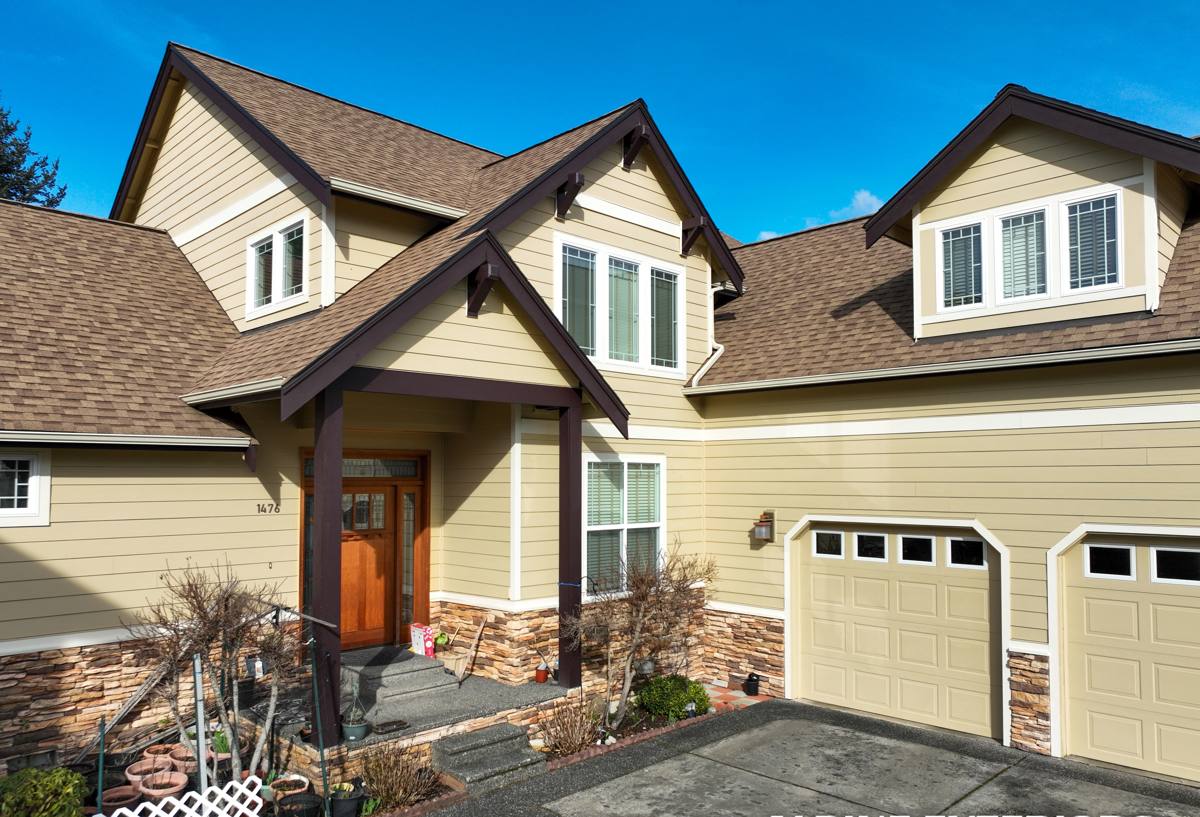
What Local Homes Actually Need From Their Siding
Before we talk installation technique, it's worth being specific about what "climate-appropriate siding" means for a Town 'n' Country house rather than treating it as a marketing phrase.
Wind and Water, Not Just One or the Other
Most siding failures we see in this area aren't caused by wind alone or rain alone — they're caused by wind-driven rain finding a gap that wind alone would never have exposed. A 60 mph gust pushes water sideways and upward, past laps and under j-channel that would shed water fine in a normal rain. That means the water-management details — flashing, laps, sealant joints, weep paths — carry more of the load here than they would in a drier, calmer climate.
UV That Doesn't Let Up
Tampa gets strong sun exposure most of the year, not just in summer. Paint films that are fine in cooler climates chalk, fade, and crack faster here, especially on south- and west-facing walls. Whatever finish goes on your siding needs to be engineered for sustained UV, not just rated for it on a spec sheet.
Salt Air and Metal Fatigue
You don't have to be beachfront to feel salt air's effects — it travels well inland on prevailing winds. Fasteners, flashing, and any exposed metal trim corrode faster here than they would forty miles inland in a landlocked state. Material choice and fastener spec matter more in this county than in most of the country.
Why We Install Only James Hardie Fiber Cement
We made a deliberate decision to install one siding system — James Hardie fiber cement — rather than offer a menu of vinyl, engineered wood, or other fiber cement brands. Fiber cement doesn't feed the wood-rot cycle that engineered wood products can be prone to if a seal fails, it doesn't soften or warp in heat the way vinyl can on a west-facing wall in a Tampa summer, and it's non-combustible, which matters in a state where afternoon lightning starts real fires. Hardie's ColorPlus factory-applied finish is baked on and warranted against fading and chipping in a way field-applied paint can't match, which matters given how much UV this area gets. Hardie also engineers specific product lines for different climates — its HZ5 designation covers the humid, storm-prone Southeast — rather than selling one national product regardless of where it ends up. We're not going to pretend every siding product on the market is equally bad; some perform well in the right conditions. But for what Hillsborough County weather does to a house year after year, Hardie is the product we're willing to put our name behind, and it's the only one we install.
What Correct Installation Actually Involves
Siding installation is where a good product either earns its warranty or gets undermined by shortcuts. The material matters, but installation quality is what determines whether that material lasts 30 years or 10.
Substrate and Moisture Barrier
Before any siding goes up, the wall needs a sound substrate and a correctly lapped weather-resistant barrier. In a wind-driven-rain climate, the house wrap or building paper has to be lapped shingle-style — every seam overlapping the one below it — so water is directed out, not trapped in.
Flashing at Every Penetration
Windows, doors, hose bibs, light fixtures, and any other wall penetration need proper flashing integrated with the water-resistant barrier, not just caulked over afterward. Caulk is a maintenance item; flashing is the actual water management system. This is the single most common shortcut we see on jobs that failed early.
Fastening and Clearances
Hardie specifies fastener type, spacing, and placement, and those specs assume Florida's high-wind design requirements. Panels also need correct clearance from grade, roofing, and decking — usually a minimum gap — so moisture wicking and splash-back don't sit against the bottom edge of the siding.
Joint Treatment and Caulking
Butt joints, corners, and trim intersections need to be treated per manufacturer spec with a paintable, high-quality sealant rated for sustained sun exposure — not whatever caulk happened to be on the truck that day.
Our Process for Town 'n' Country Projects
- On-site assessment. We look at your current siding's condition, the substrate underneath if it's exposed anywhere, your home's wind exposure, and any problem areas — window returns, roof-to-wall transitions, low-clearance sections.
- Detailed proposal. You get a scope that specifies the Hardie product line, profile, and color, plus what's happening with trim, flashing, and any substrate repair — not a one-line "install siding" quote.
- Permitting. Hillsborough County requires permits for siding replacement, and the wind-load and product-approval documentation gets pulled and submitted correctly the first time.
- Tear-off and substrate check. Old siding comes off, and we inspect the sheathing underneath for hidden moisture damage before anything new goes up — covering a compromised substrate just moves the problem down the road.
- Water-resistant barrier and flashing. Correctly lapped, correctly integrated at every penetration, before a single piece of siding goes up.
- Installation to Hardie spec. Fastening, clearances, and joint treatment done to manufacturer requirements, not shortcuts.
- Final walkthrough. We go over the finished job with you before we call it done.
Signs Your Current Siding Needs Attention
- Soft or spongy spots when you press on the siding, especially near the bottom courses
- Visible warping, buckling, or panels pulling away from the wall
- Paint that's chalking heavily, peeling, or fading unevenly wall to wall
- Cracked or missing caulk at joints, corners, and window trim
- Rust streaks running down from fasteners or metal trim
- A musty smell or visible staining on interior walls that share an exterior wall
- Visible daylight or gaps at panel seams or around window and door trim
Any one of these on its own might just need a repair. Several together, especially on a home that's due for a full re-side, usually means the water-management layer underneath has been compromised for a while.
What Drives Cost on a Town 'n' Country Siding Job
| Factor | Why It Matters Here |
|---|---|
| Home size and number of stories | More wall area and more scaffolding or lift access needed for two-story sections |
| Tear-off vs. install over existing substrate | Tear-off costs more upfront but lets us inspect and fix hidden moisture damage before it's covered again |
| Trim and architectural detail | Homes with more window trim, gable detail, or accent bands take more labor per square foot |
| Substrate repair needed | Rot or water damage found during tear-off has to be corrected before new siding goes up — skipping this defeats the point of replacing siding at all |
| Product line and profile | Hardie offers several plank widths, textures, and panel styles at different price points |
| Color | ColorPlus factory finishes come in a standard palette; custom field-painted colors add cost and give up some factory finish warranty coverage |
Hiring a Crew That Already Works in Town 'n' Country
Installation quality is the biggest variable in how long siding lasts, and installation quality comes down to the crew, not just the product listed on the invoice. A contractor who works this area regularly already knows Hillsborough County's permitting process, already understands the wind-load requirements that apply to Tampa Bay area homes, and has seen firsthand what happens when flashing details get skipped on a house that later takes a direct hit from a tropical system. That local track record is worth asking about directly when you're vetting anyone to re-side your home.
Questions Worth Asking Before You Hire
- Are you a licensed and insured contractor able to work in Hillsborough County, and can you provide proof?
- Will you pull the required permit, or is that left to me?
- What siding product and profile are you specifying, and why that one for this house?
- What's your flashing detail at windows, doors, and roof-to-wall transitions?
- What happens if you find rotted or water-damaged sheathing during tear-off?
- What warranty covers the material, and separately, what warranty covers your labor?
After Installation: Keeping It Performing
Fiber cement siding installed correctly is low-maintenance, not no-maintenance. A yearly walk-around — checking caulk lines at trim and penetrations, looking for any fastener staining, and rinsing off accumulated salt and pollen buildup — goes a long way toward getting the full service life out of the material. A small caulk crack is a five-minute fix when caught early, and a moisture problem if it's ignored through a couple of hurricane seasons.
If your Town 'n' Country home's siding is showing its age, or you'd rather get ahead of it before the next storm season, we're happy to take a look and give you a straightforward, no-pressure estimate — just fill out the form below.