 Tampa Siding
 Why Siding Wears Out Faster in Town 'n' Country
Town 'n' Country sits in Hillsborough County on Tampa's west side, close enough to open water and airport-corridor wind patterns that homes here take a harder beating than the national average siding product was ever engineered for. Four things stack up against your exterior year after year: intense, near-constant UV exposure that bakes and fades weaker materials from the outside in; wind-driven rain that gets pushed sideways into laps, seams, and trim during our summer storm season; hurricane-force gusts that test every fastener and every seam whether or not a named storm ever makes landfall here; and salt-laden air that rides in on Gulf and bay breezes and accelerates corrosion on fasteners, trim, and anything not built to resist it. None of these forces is dramatic on any single day. The damage shows up cumulatively — a home that looked fine at year eight and suddenly needs real work by year twelve.
That combination is exactly why siding replacement in this part of Hillsborough County isn't a one-size-fits-all job. What holds up on a home in a drier, milder climate can fail here well before its rated lifespan, and the fix isn't just "better caulk" — it's the right material, installed with the right details, by a crew that has actually dealt with these conditions before.
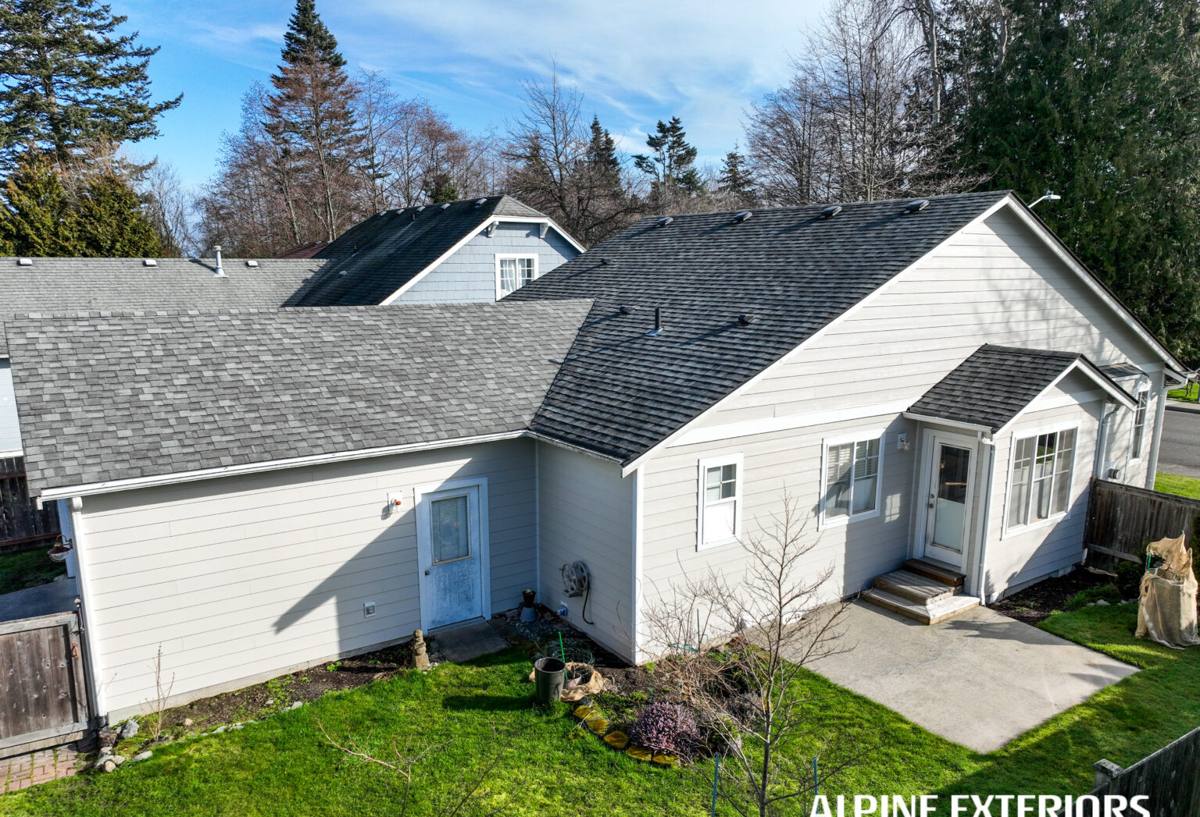
Signs Your Home Needs Replacement, Not Another Repair
Patch jobs make sense for isolated damage. They stop making sense once the underlying material itself has failed in more than one place. Walk your exterior and look for these:
- Soft or spongy spots when you press on the siding, especially near the bottom courses and around window and door trim
- Visible warping, buckling, or panels that no longer sit flat against the wall
- Paint that's peeling, bubbling, or that you've had to repaint more than once in the last several years just to keep it presentable
- Cracking or splitting along seams, corners, or butt joints
- Rising utility bills alongside drafts you can feel near exterior walls
- Visible gaps, separation, or fasteners backing out at seams and corners
- A musty smell or discoloration on interior walls that share an exterior wall with damaged siding
- Siding that's more than 20-25 years old, regardless of how it looks today
If you're seeing two or more of these across different areas of the house, you're looking at a replacement conversation, not a repair.
What a Correct Siding Replacement Job Actually Involves
Tear-Off and Substrate Inspection
The single most important part of a siding job happens before a single new piece goes up. Old siding has to come off cleanly so the crew can inspect the sheathing underneath for rot, delamination, or moisture damage that's been hiding behind the old material. Skipping this step — or worse, installing new siding directly over compromised sheathing — just buries a problem that will resurface, usually as a much more expensive one.
Weather-Resistive Barrier and Flashing
Given how much wind-driven rain this area sees, the weather-resistive barrier and flashing details matter as much as the siding itself. Every window, door, and penetration needs proper flashing that directs water back out and down, not into the wall cavity. This is the part of the job that's invisible once it's finished and is also the part most likely to be shortcut by a crew that isn't used to doing this correctly the first time.
Fastening for Wind Uplift
Siding that looks identical to a neighbor's can perform very differently in a wind event based on fastener type, spacing, and placement alone. Correct fastening schedules account for the wind loads this area actually sees, not a generic minimum. This is one of the areas where cutting corners doesn't show up on installation day — it shows up the first time a serious storm rolls through.
Why We Install Only James Hardie Fiber Cement
We made a deliberate decision to install James Hardie fiber cement siding exclusively — not vinyl, not LP SmartSide, not other fiber cement brands like Cemplank or Allura, and not primed wood or cedar. Each of those products has legitimate uses, and none of them is a bad product on its own terms. But when we weighed how each one actually holds up against Hillsborough County's UV load, humidity, wind-driven rain, and salt air over a 20-30 year ownership window, Hardie was the only one we were comfortable putting our name behind.
| Material | How It Handles This Climate | Long-Term Maintenance |
|---|---|---|
| Vinyl siding | Can soften, warp, or become brittle under sustained high heat and UV; seams can open under wind | Low upfront, but replacement rather than repair once damaged; color is baked into a thin surface layer |
| LP SmartSide (engineered wood) | Wood-based core is sensitive to sustained moisture exposure if any seam or cut edge is compromised | Depends on caulking and paint being maintained consistently; gaps in maintenance shorten lifespan |
| Other fiber cement (Cemplank, Allura) | Similar base material to Hardie, but finish systems and warranty structures vary by manufacturer | Varies; factory finish quality and transferable warranty terms differ |
| Primed wood or cedar | Attractive but the most vulnerable to humidity, insects, and UV without diligent, repeated upkeep | Highest ongoing maintenance; repainting and caulking on a recurring cycle |
| James Hardie fiber cement | Non-combustible, engineered HZ product lines built for high-humidity, high-UV, high-wind climates | Factory-applied ColorPlus finish holds color far longer than field-painted materials |
The factory-applied ColorPlus finish is a big part of that decision. It's baked on and warrantied by the manufacturer, which removes a lot of the guesswork and recurring cost that comes with field-painted siding in a climate this tough on paint. Combined with Hardie's climate-engineered HZ formulations and a strong transferable warranty, it's the product we can stand behind when a homeowner asks us how it'll look in fifteen years, not just on install day.
Our Siding Replacement Process
Inspection and Written Estimate
We start with an on-site inspection of your current siding, trim, and visible substrate condition, and give you a written estimate that spells out material, scope, and price — no vague allowances you find out about later.
Permitting
Siding replacement in Hillsborough County requires a permit, and we handle that process as part of the job rather than leaving it to you. Permitted work also means an inspector verifies the installation meets code, which is a real layer of protection for you as the homeowner.
Installation
Tear-off, substrate repair where needed, weather-resistive barrier and flashing, then the Hardie siding itself installed to manufacturer fastening specifications and local wind requirements.
Final Walkthrough
We walk the finished job with you, point out anything you should know for future maintenance, and make sure everything matches what was on the estimate.
Hillsborough County Permits and Wind Requirements
Florida's building code sets minimum wind-resistance standards for exterior work, and those requirements are taken seriously during permit review and inspection in Hillsborough County. A siding job done without a permit might look fine on the surface, but it hasn't been verified against those standards — and that can become your problem later, whether at resale or after the next storm. Working with a crew that pulls permits as a matter of course, rather than as an afterthought, is one of the simplest ways to protect yourself here.
What Siding Replacement Costs in Town 'n' Country
Every home is different, so we don't quote a number until we've actually seen yours. What we can tell you is which factors move the price up or down, so an estimate makes sense when you get one.
| Cost Factor | Why It Matters |
|---|---|
| Total square footage of siding | The most direct driver of material and labor cost |
| Number of stories and access difficulty | Taller walls and tight lot lines take more time and equipment |
| Substrate condition underneath old siding | Rot or moisture damage found during tear-off adds repair scope |
| Trim, soffit, and fascia work | Often replaced or repaired at the same time for a consistent, weathertight result |
| Siding profile and ColorPlus color selection | Certain profiles and premium colors carry different material costs |
Be cautious of any bid that's dramatically lower than the others you collect — it usually means something is missing, whether that's substrate repair, proper flashing detail, or the fastening schedule the job actually needs.
Why Local Experience in This Neighborhood Matters
A crew that regularly works in Town 'n' Country and the surrounding Hillsborough County area already knows the permitting process here, has a working relationship with local suppliers so material delays don't stall your project, and has seen firsthand how the local wind and moisture conditions actually treat different siding materials over time. That's different from a crew working from a generic playbook written for a different climate. It shows up in the small decisions — flashing details, fastener choice, how tightly a schedule can realistically be held during our wetter months — that add up to a job that still looks and performs well a decade later.
Protecting Your Investment After Installation
James Hardie siding installed correctly is low-maintenance, not no-maintenance. Rinse it periodically to clear salt residue and airborne grime, keep an eye on caulking at trim joints, and address any impact damage promptly rather than letting it sit. Combined with the manufacturer's transferable warranty, a small amount of routine attention is what lets this siding actually reach the lifespan it's built for in a climate like ours.
If your siding is showing its age or you just want an honest read on its condition, we're happy to take a look. The estimate is free, there's no pressure, and you'll get a straight answer about what your home actually needs — use the form below to get started.