 Tampa Siding
 What Westchase's Climate Does to Siding Over Time
Westchase sits inland from Tampa Bay in northwest Hillsborough County, but "inland" doesn't mean protected. Every home here still faces the same weather that batters the coast: tropical systems that bring hurricane-force gusts, months of intense subtropical UV, wind-driven rain that gets pushed sideways into wall assemblies during summer storms, and salt-laden air that drifts in off the Gulf and Tampa Bay on an ordinary afternoon breeze. Siding is the first line of defense against all four, and in this part of Florida it works harder, year-round, than siding in most other parts of the country.
Much of Westchase was built out through the 1990s and 2000s as a master-planned community, which means a large share of homes are now reaching the point where original siding, trim, and paint are aging out at roughly the same time. That's not a coincidence — it's what happens when a whole neighborhood gets built in a similar window. If houses around you are starting to get re-sided or repainted, it's a reasonable prompt to check whether your own exterior is further along than it looks from the curb.
UV exposure alone does more damage in Tampa than most homeowners expect. Sustained sun breaks down pigment and can make some siding materials brittle over time, and that's before wind and moisture get involved. Add a direct hurricane track or even a glancing tropical storm, and any weak point in the siding system — a loose fastener, a gap in flashing, a caulk joint that's already failed — turns into an entry point for water.
Why HOA Guidelines Make Material Choice Even More Important in Westchase
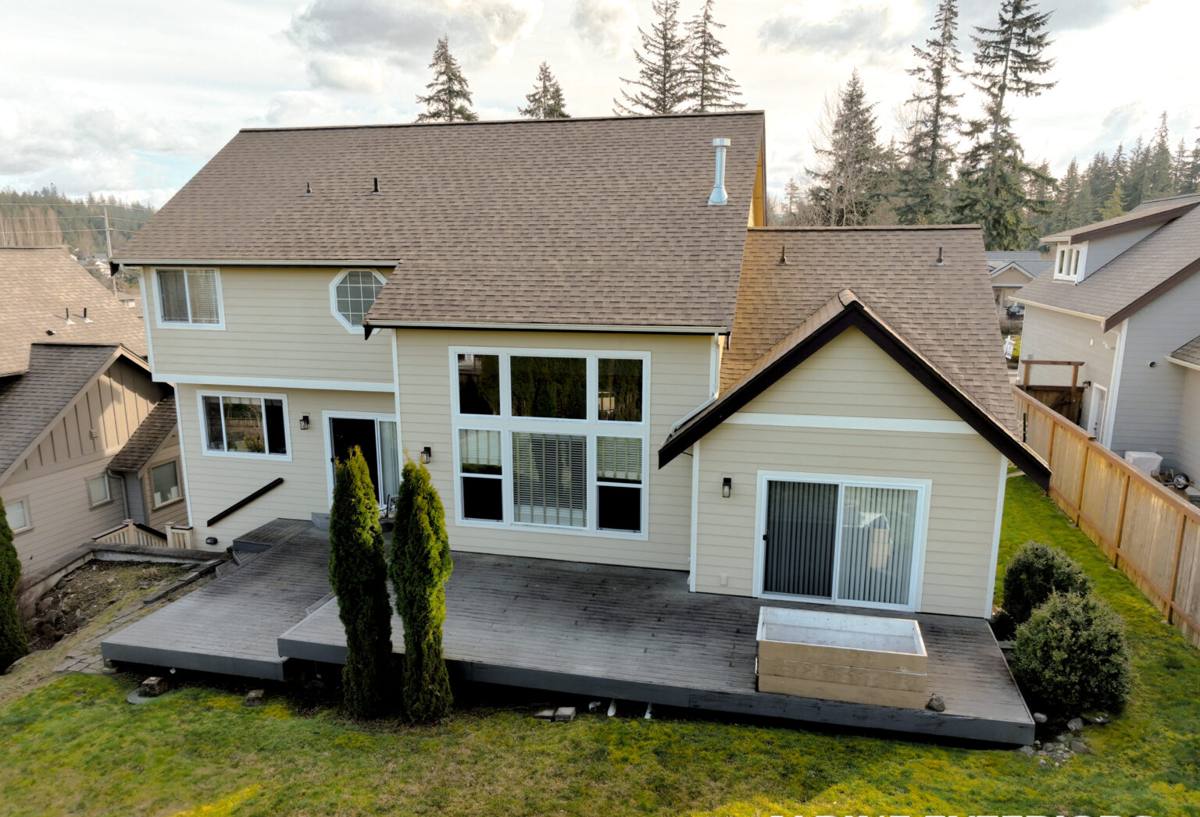
Many sections of Westchase fall under homeowners' association architectural standards that govern acceptable siding colors, styles, and sometimes materials. That adds a layer most Tampa homeowners outside a planned community don't have to think about: whatever you install has to look right for years, because you may not get an easy do-over if a color fades unevenly or an HOA board flags a mismatch down the road.
This is one of the practical reasons we only install James Hardie fiber cement siding with its factory-applied ColorPlus finish. The color is baked on at the factory under controlled conditions, not brushed on in the field, so it holds a consistent, HOA-approvable shade far longer than a job-site paint job typically does. We've been through enough HOA submittals in Hillsborough County to know what documentation a board wants to see, and we build that into the estimate up front instead of leaving you to sort it out after the fact.
It's also worth knowing that HOA architectural committees generally care about long-term consistency across the neighborhood, not just what looks good on install day. A material that fades, chalks, or discolors unevenly over a few Florida summers can turn into an HOA compliance conversation you didn't sign up for. Starting with a finish engineered to hold its color avoids that problem before it starts.
What a Correct Siding Installation Actually Involves
Siding failures in Tampa are rarely about the siding material itself — they're almost always about what happened, or didn't happen, underneath it. A correct installation is mostly invisible once the job wraps up, which is exactly why it's so easy for a rushed crew to cut corners nobody notices until the next hurricane season puts them to the test.
Moisture Management Behind the Siding
Every wall assembly needs a continuous water-resistive barrier, properly lapped and sealed at every seam, with flashing integrated at each window, door, and wall penetration so wind-driven rain has nowhere to go but back out. Skip this step, or install it out of sequence, and moisture gets trapped behind the siding where it can rot sheathing and framing long before the siding itself shows any visible problem.
Fastening and Clearances
James Hardie publishes exact fastener types, spacing, and embedment specs for a reason: siding that isn't fastened to spec is siding that can work loose in sustained hurricane-force gusts. We also hold proper clearance off the ground, roof lines, and other hard surfaces, because siding installed too tight against grade or a roofline wicks up moisture and undermines even a material engineered to resist it.
Trim, Corners, and Penetrations
Corners, trim boards, and anywhere a pipe, vent, or fixture passes through the wall are the spots that fail first if the job is rushed. Caulking has to be the right product for the joint, not a one-size-fits-all tube pulled off the truck, and it has to be maintained over time — no caulk lasts forever under direct Florida sun.
Our Process for Westchase Siding Installation
Assessment and Measurement
We start on-site, not from a satellite photo or a phone call. We look at your current siding's actual failure points, check the sheathing wherever we can access it, and measure for the specific James Hardie HZ5 product line engineered for high-wind, high-moisture climates like ours — not a generic climate zone rating.
Tear-Off and Prep
Old siding and any compromised trim come off down to the sheathing. We repair or replace any wood that's already taken on water damage before anything new goes up. Installing new siding over a soft, water-damaged wall is a guaranteed callback, and it's the single most common shortcut that leads to early failures.
Installation and Finish Details
Water-resistive barrier and flashing go in first, then the Hardie boards or panels, fastened to manufacturer spec, with trim and corners finished to hold up against sun and salt air without becoming the next weak point in the system.
Final Walkthrough
We walk the finished job with you before calling it done, and if your section of Westchase requires HOA sign-off, we make sure the finished product matches exactly what was submitted and approved so there's no back-and-forth after the fact.
Siding Options Compared for Hillsborough County Homes
| Factor | Vinyl | Engineered Wood (e.g., LP SmartSide) | James Hardie Fiber Cement |
|---|---|---|---|
| Wind resistance | Can crack or blow off panels in sustained gusts | Holds up structurally but panel and seam integrity depends heavily on install quality | HZ5 product line engineered and rated for high-wind zones like ours |
| Moisture behavior | Doesn't absorb water but traps it behind panels if installed wrong | Wood-based core is vulnerable to swelling and rot if any moisture gets past the finish | Cement-based composition doesn't swell or rot from moisture exposure |
| UV / color retention | Can fade and become brittle under sustained subtropical sun | Field-applied paint fades and needs repainting on a recurring cycle | Factory-applied ColorPlus finish engineered for UV, holds color far longer |
| Combustibility | Combustible | Combustible (wood-based) | Non-combustible |
| Typical upkeep | Low upfront, but limited repair options once a panel is damaged | Repainting and edge-sealing on a recurring schedule | Occasional caulk and touch-up; no repainting cycle required |
We're not going to tell you every other product on this list is junk. Vinyl and engineered wood both have a place in the market, and plenty of homes carry them for years without incident. But we made a professional decision to install one product system, because we were tired of standing behind installs where the material itself was working against Tampa's climate instead of with it. That's why every Westchase siding job we take on is James Hardie, start to finish, with no exceptions.
Signs Your Westchase Home Needs New Siding
- Visible cracking, buckling, or warping anywhere on the siding field
- Soft spots when you press on the wall near the bottom courses or around windows and doors
- Paint or color that's faded unevenly, especially on the sun-exposed sides of the house
- Caulk that's pulled away, cracked, or gone missing at corners, trim, and penetrations
- A musty smell or visible staining on interior walls that back up to exterior siding
- Siding that's original to the home and has never been replaced since it was built
- Visible gaps or separation at seams and corners after the last major storm
Maintenance and Warranty After Installation
James Hardie backs its siding with a strong transferable warranty, and the ColorPlus finish carries its own separate finish warranty on top of that — a real advantage if you sell the home before you're done owning it, since a fresh warranty transfer is a selling point in itself. Maintenance is minimal compared to painted materials: an occasional rinse to clear salt residue and pollen buildup, a periodic look at caulk joints around trim and penetrations, and that's largely the extent of it. There's no recurring repainting cycle to budget for, which matters over the 15 to 20 year stretch most homeowners actually live in a house. We'll walk you through the specific maintenance schedule for your exact product line at the time of install.
Why a Tampa Crew That Already Works Westchase Matters
Siding installation isn't a job you want a crew learning on your house. A crew that already works in Westchase knows the HOA submission process, has already dealt with the particular mix of home styles and lot layouts found throughout the community, and understands how Hillsborough County permitting and inspection actually works in practice, not just on paper. That local familiarity shows up in fewer surprises mid-project, a smoother HOA approval, and a finished install that's built specifically for the wind, rain, sun, and salt air this part of Tampa deals with every single year.
If your Westchase home's siding is showing its age, or you're simply planning ahead before the next storm season builds, we'd be glad to take a look. Reach out for a free, no-pressure estimate — we'll walk your home's exterior with you and give you a straight answer on what it actually needs.