 Tampa Siding
 Why Deck Replacement Looks Different in Westchase
Westchase is one of the more established planned communities on Tampa's west side, and a lot of the decks, pool deck platforms, and lanai extensions that went up when the neighborhood was built are now well into their second decade. Framing lumber and decking that looked fine in year one starts showing real wear long before that in Hillsborough County, and once a deck reaches this age, patching a board here and a post there stops being worth the labor. A full replacement is a chance to rebuild the structure the way our climate actually treats outdoor wood and composite, not the way a generic install somewhere up north would assume.
Westchase homes also tend to have decks tied into screened lanais, pool cages, or covered patios rather than standing alone in the open yard. That changes how a replacement has to be sequenced and flashed, since the deck surface, the cage footers, and the house's stucco or siding all meet in the same few square feet and every seam has to shed water correctly.
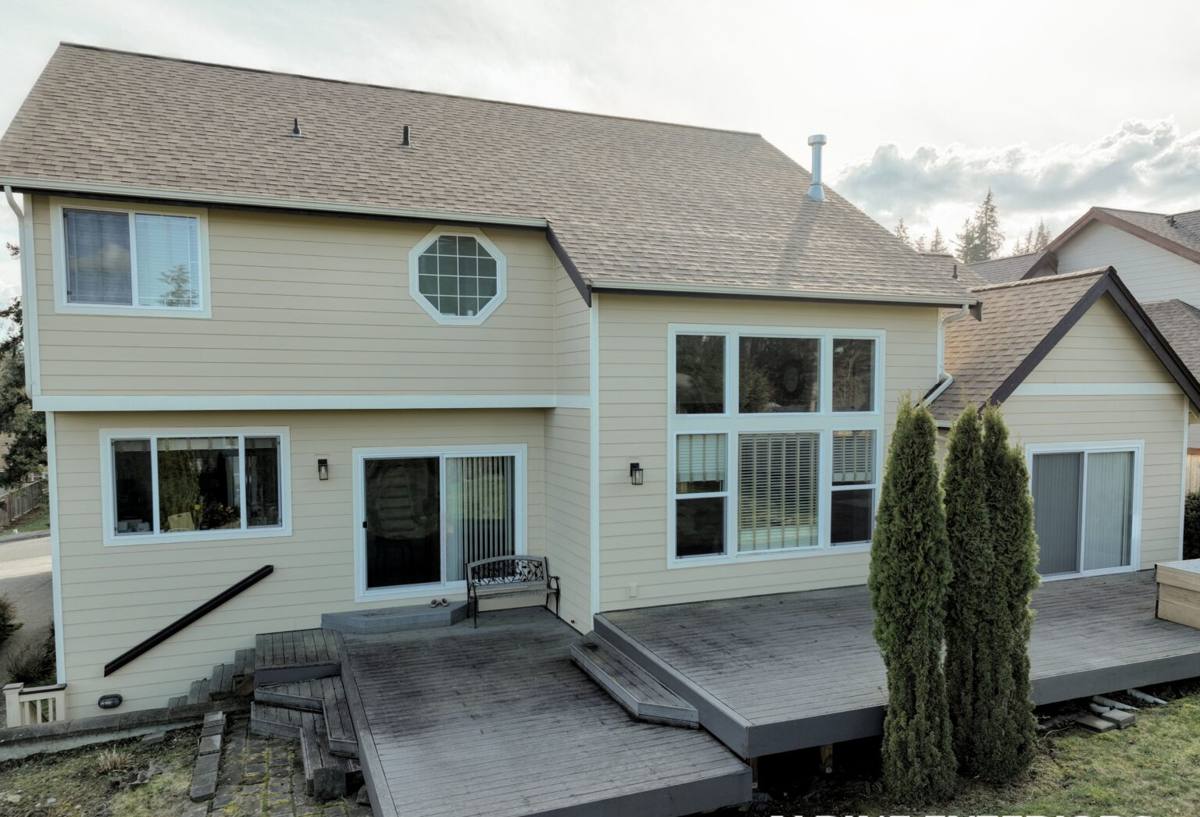
What Tampa's Climate Does to a Deck Over Time
Hillsborough County doesn't have a mild off-season for outdoor structures. Between the sun, the humidity, and the storm pattern, a deck here is under stress essentially year-round.
Sun and UV
Tampa gets intense, direct UV exposure for most of the year. On uncovered decking it breaks down the surface fibers of wood and the resin binders in composite boards, which is what causes graying, splintering, and chalky fading. Boards on the west or south side of a Westchase lot, with no shade from mature landscaping, will show this faster than a shaded section of the same deck.
Moisture and Humidity
Between afternoon thunderstorms, high ambient humidity, and irrigation overspray that's common in Westchase's landscaped yards, deck framing rarely gets a chance to fully dry out. That sustained moisture is what drives wood rot at ledger boards, post bases, and anywhere two pieces of lumber sit face to face without a gap for airflow. It's also what corrodes the wrong fasteners from the inside out, long before the decking on top shows any problem.
Wind and Storm Loading
Tampa Bay sits in a hurricane-exposed wind zone, and even in a normal storm season, wind-driven rain gets pushed sideways under railings and through gaps that would never see water in a calmer climate. A deck's post spacing, footing depth, and connection hardware all need to be sized for that wind loading, not just for the static weight of people standing on it.
Salt air off Tampa Bay is a slower factor but a real one — it accelerates corrosion on fasteners and hardware even well inland from the immediate coastline, which is part of why decks built with the wrong grade of screws or brackets tend to fail at the connections before the wood itself gives out.
Signs Your Westchase Deck Needs Replacing, Not Just Repair
Not every tired-looking deck needs a full teardown. But there's a point where repair is just delaying the inevitable and spending money that won't carry forward into the new structure. Here's what tells us a deck has crossed that line:
- A screwdriver or awl sinks into the ledger board, joists, or posts with light pressure — a sign of rot, not just surface weathering.
- The deck feels springy, bouncy, or noticeably different underfoot in one section versus another.
- Fasteners are rusted, bleeding orange streaks into the wood, or backing out on their own.
- The ledger board — where the deck attaches to the house — shows gaps, water staining, or soft framing behind the stucco or siding line.
- Railings wiggle at the post connections even after tightening.
- More than a handful of boards are cupping, splitting along their length, or delaminating if it's composite.
- The deck was never permitted or was built undersized for its footprint, which shows up as excessive flex or an unstable railing height.
If it's mostly surface graying with a structurally sound frame underneath, that's a repair or refinish conversation. If it's any combination of the items above, replacement is the honest recommendation.
Permits, Codes, and Westchase HOA Considerations
Deck replacement in unincorporated Hillsborough County and the City of Tampa requires a building permit, and inspectors will check footing depth, post-to-beam connections, joist hangers, and railing height against the Florida Building Code — which, given our wind zone, is stricter on structural connections than codes in most other parts of the country. Skipping the permit might save a few days up front, but it becomes a real problem at resale, since an unpermitted structure typically has to be disclosed and can hold up a closing.
Westchase also has an established community association, and many sections of the neighborhood carry deed restrictions or architectural guidelines that apply to exterior changes, deck replacement included. Requirements and review timelines vary by section and can change over the years, so we'd rather confirm what applies to your specific property than assume — but budgeting a couple of extra weeks for HOA sign-off alongside the county permit is a reasonable expectation for most homes in the neighborhood.
Decking Material Options: What Holds Up Here
Every decking material sold nationally will hold up somewhere. The question for a Westchase homeowner is which ones hold up to Tampa's specific combination of UV, humidity, and storm exposure without turning into a maintenance chore.
| Material | Upfront Cost | Maintenance | How It Handles Our Climate |
|---|---|---|---|
| Pressure-treated pine | Lowest | Sealing/staining every 1-2 years | Affordable and strong when installed right, but it moves, cracks, and grays fastest under Tampa sun and humidity if maintenance lapses |
| Tropical hardwood | Highest | Periodic oiling to hold color | Naturally dense and rot-resistant, ages to a silver-gray if left unsealed, heavy enough that framing must be sized to match |
| Capped composite | Mid-to-high | Occasional washing, no sealing | Resists moisture and UV fading well; lower-grade uncapped composite can absorb humidity and mildew in shaded, damp spots |
| PVC decking | High | Lowest — no sealing, resists staining | Fully synthetic, doesn't absorb moisture, handles humidity and salt air with the least upkeep, but can run hotter underfoot in direct sun |
There's no universal right answer — a shaded deck under mature trees behaves differently than one facing west with full afternoon sun, and a deck attached to a pool cage has different footing needs than an open one. We walk through these trade-offs against your actual lot and budget rather than defaulting to one product for every job.
Framing, Fasteners, and the Details That Actually Matter
The decking surface is what everyone notices, but the framing underneath it is what determines whether the deck lasts five years or twenty-five in this climate.
Ledger Board and Flashing
Where the deck attaches to the house is the single most common failure point on older Tampa-area decks, because it's the one connection where water constantly runs toward the structure. Correct flashing — metal or membrane, properly lapped so water sheds outward and down, never trapped against the house — is non-negotiable, especially where the deck meets stucco or a lanai frame.
Fasteners and Hardware
Standard zinc-coated screws and joist hangers corrode faster than most homeowners expect once you factor in Tampa's humidity and coastal air influence. Stainless steel or hot-dip galvanized fasteners and connectors cost more upfront but are what actually holds a deck's structural connections together for the long run — this is one of the few places where cutting corners shows up as a safety issue, not just a cosmetic one.
Footings and Post Spacing
Footing depth and post spacing need to account for our wind exposure, not just vertical load. This matters more for taller decks and any structure integrated with a screened enclosure, where the deck's stability and the cage's anchoring interact.
Our Deck Replacement Process
- On-site assessment. We inspect the existing structure, probe the framing for rot, and check how the deck ties into the house, pool cage, or lanai.
- Design and material selection. We go over decking and railing options against your budget, sun exposure, and how you actually use the space.
- Permitting. We handle the Hillsborough County or City of Tampa permit application and coordinate with your HOA's architectural review if your section of Westchase requires it.
- Demolition. The old deck comes out, including hauling away the old material — we don't leave debris for the homeowner to deal with.
- Framing. New ledger board, flashing, posts, footings, and joists go in to current code, with corrosion-resistant hardware throughout.
- Rough inspection. The county inspects the framing before decking goes down, which protects you as the homeowner as much as it satisfies the permit.
- Decking and railing installation. Boards and railings go in per manufacturer spec, since composite and PVC products have specific fastening and gapping requirements that affect the warranty.
- Final inspection and walkthrough. We do a final walk of the finished deck with you before calling the job complete.
Cost Factors to Expect
Deck replacement pricing swings widely based on size, material, and structural complexity, so we won't quote a number that doesn't mean anything without seeing the job. What actually moves the price on a Westchase project:
- Size and shape — a simple rectangle is more efficient to frame than a multi-level deck or one wrapping around a pool.
- Material choice — pressure-treated framing with composite or PVC decking typically costs more upfront than an all-wood deck but less over time in maintenance.
- Height and stairs — elevated decks need more substantial framing and railing than a low deck at grade.
- Demo and disposal — removing an old deck, especially one with embedded concrete footings, adds labor.
- Integration with a pool cage or lanai — coordinating footings and flashing around an existing screen enclosure takes more planning than a standalone deck.
- Permit and HOA review timelines — not a cost driver on the invoice, but it affects your project schedule.
We give a firm, itemized quote after the on-site assessment, not a rough number over the phone, because the variables above matter too much to guess at.
Why a Crew That Already Works Westchase Matters
A contractor who's already done deck work in Westchase knows the neighborhood's HOA review process, has a working relationship with the Hillsborough County permit office, and has already seen how the pool cages and lanai layouts common to the area interact with a deck rebuild. That familiarity translates directly into fewer surprises mid-project — no guessing at what an inspector will flag, no scrambling to figure out architectural review requirements after demo has already started.
It also means the crew has firsthand experience with how Tampa's specific mix of sun, humidity, and storm exposure treats different materials on real decks in this area, not just manufacturer specs written for a national market. That's the difference between a deck that's built to a code minimum and one that's actually built for where it sits.
If your Westchase deck is showing its age or you're planning a replacement as part of a larger backyard update, we're happy to come take a look and give you a straight, no-pressure assessment and estimate — fill out the form below to get started.